

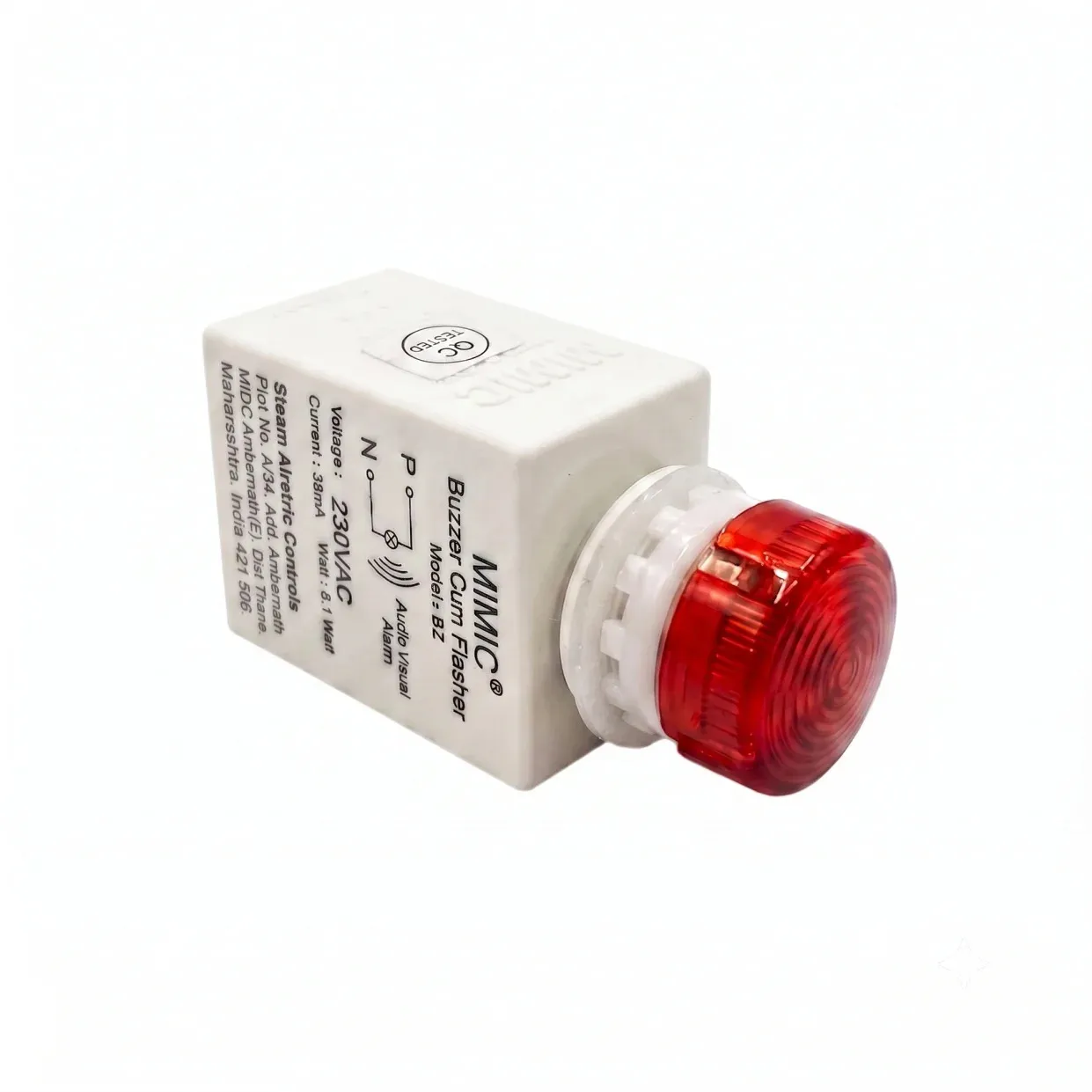

Industrial automation has changed the way manufacturing facilities manage production activities. Modern plants use electrical control circuits, sensors, programmable logic controllers, and monitoring equipment to manage different operations. Along with automatic control, effective communication of equipment status is also important. A Buzzer Cum Flasher is a signalling component that supports this requirement by combining an audible alarm with a flashing visual indication.
The Importance of Signalling in Automation
Automated systems perform multiple activities with limited manual intervention. However, operators and maintenance personnel still need information about machine status, electrical faults, and selected process conditions.
Signalling devices provide a convenient way to communicate this information. Indicator lamps display visual status, while audible devices provide sound-based notifications. A Buzzer Cum Flasher combines both functions to offer two forms of indication from one installation point.
For example, when a compatible control output activates the device, the buzzer produces sound and the LED begins flashing. This makes the signal available to personnel through both hearing and sight.
How Does a Buzzer Cum Flasher Work?
The operating principle is based on an electrical activation signal supplied through a suitable control circuit.
The basic sequence generally includes:
- A sensor, relay, PLC output, or other control component generates a signal.
- The electrical signal reaches the alarm device through the connected circuit.
- The internal electronic arrangement activates the audible output.
- The flashing LED produces a visual indication.
- The signals remain active according to the control circuit and device configuration.
The exact operating behaviour depends on the selected model and the external circuit design.
Applications in Automated Manufacturing
Machine Monitoring
Production machines often use sensors and control circuits to monitor operating conditions. Audible and visual indicators can communicate selected machine warnings to operators.
PLC-Based Control Panels
Programmable logic controllers manage several industrial processes. Their output arrangements can activate suitable signalling devices when programmed conditions occur.
Conveyor Systems
Conveyor installations may require warning indications during selected operating events, maintenance activities, or fault conditions.
Packaging Equipment
Automated packaging lines contain motors, sensors, and other electrical components. Signalling equipment can help communicate selected machine conditions.
Production Monitoring Stations
Centralised monitoring stations may use audible and visual signals to help operators identify equipment alerts across different sections.
Features That Matter in Automation Applications
When selecting a Buzzer Cum Flasher, the technical characteristics should match the automation system.
Electrical compatibility: The operating voltage must match the connected control circuit.
Sound performance: The audible output should be appropriate for the surrounding working environment.
LED visibility: The flashing indication should be visible from the operator’s normal viewing position.
Mounting arrangement: Panel cutout dimensions and available space should be checked before installation.
Operating environment: Temperature, humidity, and enclosure protection should be suitable for the installation location.
Benefits of Combined Audible and Visual Signalling
A combined signalling unit can simplify certain panel arrangements because both indications are available in one device.
Some practical advantages include:
- Two signalling methods within one compact enclosure.
- Convenient installation in compatible panel openings.
- Clearer communication of selected machine conditions.
- Reduced need for separate audible and visual components in suitable applications.
- Flexible use in different electrical control arrangements.
These advantages depend on the control panel design and the specific requirements of the installation.
Choosing the Right Voltage Configuration
Voltage selection is one of the most important steps when choosing an industrial alarm device. Automation systems may use different AC and DC control supplies depending on their design.
A Buzzer Cum Flasher should be selected only after checking the rated supply voltage and tolerance mentioned in the technical documentation.
The BZ1–BZ6 range from Mimic Products lists different configurations, including 12–24V AC/DC, 24V DC, 110V AC, 110V DC, and 230V AC. The exact ordering code should be checked to ensure that the selected model matches the required supply.
Mimic Products BZ1–BZ6 Series
Mimic Products offers panel-mounted audio-visual signalling equipment for electrical and automation applications. Its BZ1–BZ6 series combines a high-output audible buzzer and a flashing LED in a compact unit.
The published product information specifies a 22.5 mm panel cutout, at least 95 dB sound output at one metre, and 60–120 flashes per minute. The product is intended for applications such as automation panels, control desks, switchgear, distribution boards, and machinery monitoring.
For detailed specifications and model information
Frequently Asked Questions
1. What is the role of signalling equipment in automation?
It communicates selected machine conditions and alerts to operators and maintenance personnel.
2. Can a PLC activate an audible and visual alarm?
Yes. A compatible PLC output and properly designed control circuit can activate a suitable alarm device.
3. Why is voltage compatibility important?
An incorrect supply voltage can affect operation and may damage the equipment.
4. Is combined signalling useful in production facilities?
It can be useful where operators need both audible and visible indications of machine conditions.
5. What should be considered during installation?
Check electrical ratings, panel dimensions, wiring instructions, protection requirements, and accessibility.
Conclusion
Industrial automation depends on reliable control and clear communication of equipment status. A Buzzer Cum Flasher provides an integrated method of producing audible and visual indications for compatible control circuits. Its application in machinery panels, PLC systems, and production monitoring stations makes it a relevant component in industrial signalling arrangements.
Selecting the correct voltage, mounting size, and technical configuration is essential for dependable operation. The BZ1–BZ6 series from Mimic Products provides different model options for industrial panel applications.
Also Visit: 110V DC Flasher Buzzer: A Practical Solution for Industrial Warning Systems



Join the conversation