

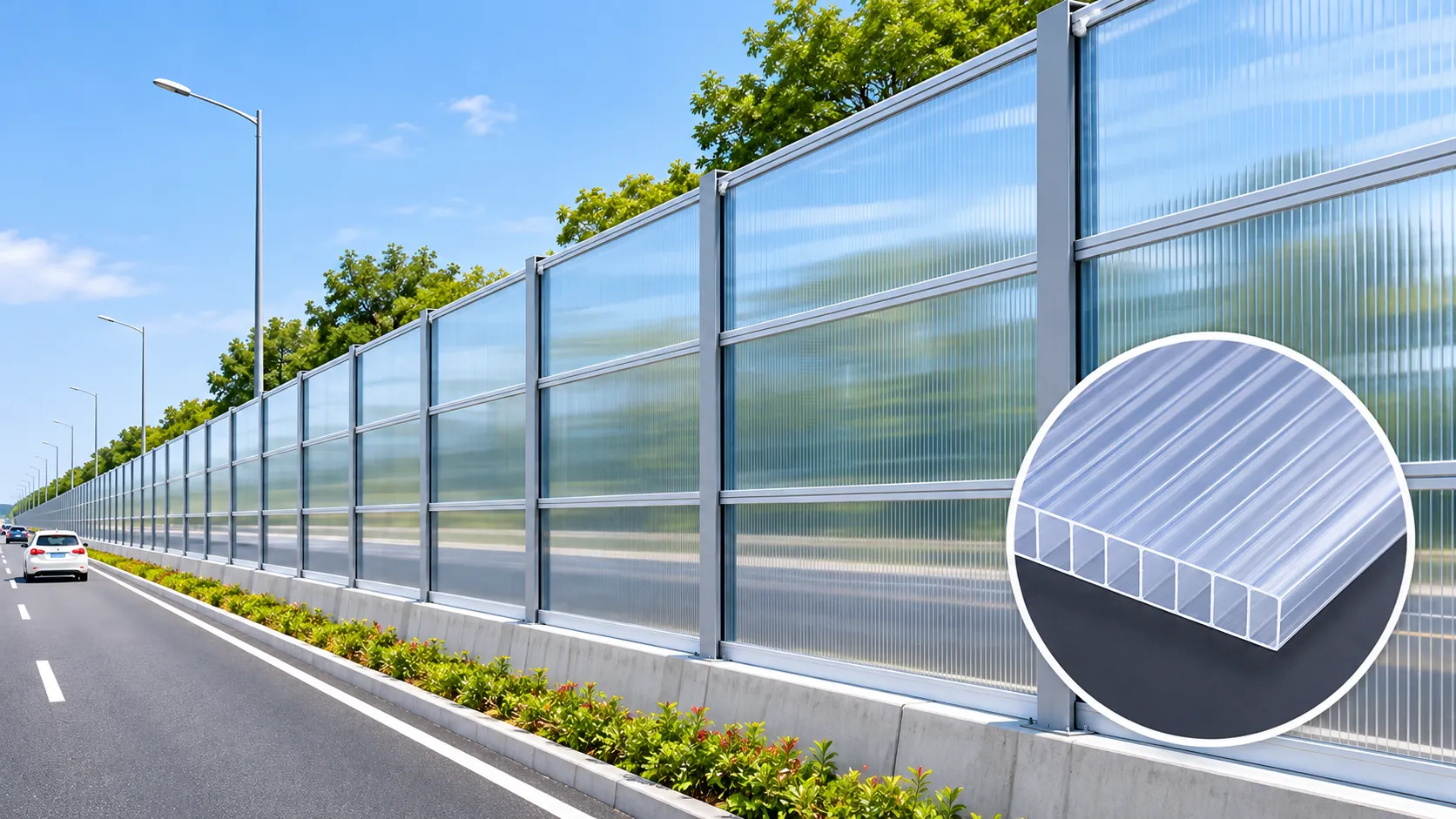

Noise from busy roads, railway lines, and industrial plants
is a growing concern for communities everywhere. Concrete walls can reduce
sound, but they also block daylight, restrict views, and make spaces feel
enclosed. A polycarbonate
acoustic barrier solves this problem by lowering noise levels while keeping
the surroundings open, bright, and visually appealing.
The Working Principle
Polycarbonate barriers depend on material density, rigidity,
and airtight installation. Clear, high-grade sheets are fixed within steel or
aluminium frames. When sound waves hit the panel, most of the energy is
reflected rather than transmitted. EPDM rubber gaskets and sealed joints close
gaps that could allow noise to leak, helping the barrier deliver consistent
insulation along its full length.
Main Advantages
Exceptional durability: Polycarbonate is highly
resistant to impact, far surpassing glass and acrylic. It copes with road
debris, hail, and vandalism without shattering into dangerous pieces.
Natural light and visibility: Transparent panels
prevent shadowing and keep nearby buildings well lit. Drivers also experience
better visual comfort compared with travelling beside solid walls.
Lightweight build: Reduced panel weight eases the
load on bridges and elevated structures, simplifies transport, and shortens
installation schedules.
UV and weather protection: Coated sheets resist
yellowing, fading, and brittleness, remaining clear through years of sun, rain,
and pollution.
Low maintenance: Routine washing is typically enough
to keep panels clean, and the material does not corrode or rot.
Common Applications
- Highways,
expressways, and flyovers - Metro
corridors and railway lines - Factories,
substations, and power plants - Airport
boundaries and nearby areas - Residential
colonies beside arterial roads - Hospitals,
schools, and commercial campuses - Generator
rooms and rooftop mechanical equipment
Design and Engineering Factors
An effective installation starts with a site noise survey.
Results guide the choice of barrier height, panel thickness, and total length.
Structural engineers must also consider wind pressure, vibration, thermal
expansion, and drainage so the system remains stable over time. Because clear
panels reflect sound, projects with echo concerns can combine transparent
sections with absorptive panels to balance acoustic outcomes.
Aesthetic flexibility adds further value. Panels come in
clear, tinted, and frosted finishes, helping designers manage glare, privacy,
and visual harmony with nearby architecture. Bird-safe markings can be included
to reduce collision risk.
Sustainability Benefits
Polycarbonate is recyclable and has a long service life,
which reduces replacement waste. Lightweight components cut transport energy
and speed up construction, creating less site disruption and fewer emissions
than heavy masonry walls. This supports projects that aim to meet environmental
goals.
Choosing a Reliable Manufacturer
Performance in the field depends on quality materials,
accurate design, and skilled installation. Select a provider with tested
products, proper documentation, and proven project experience. Ecotone
Acoustic Limited brings technical expertise and a performance-driven
approach to noise control for demanding environments. To review specifications
and customisation options, explore the polycarbonate
acoustic barrier solutions and discover how transparent noise protection
can strengthen your next project.


Join the conversation