
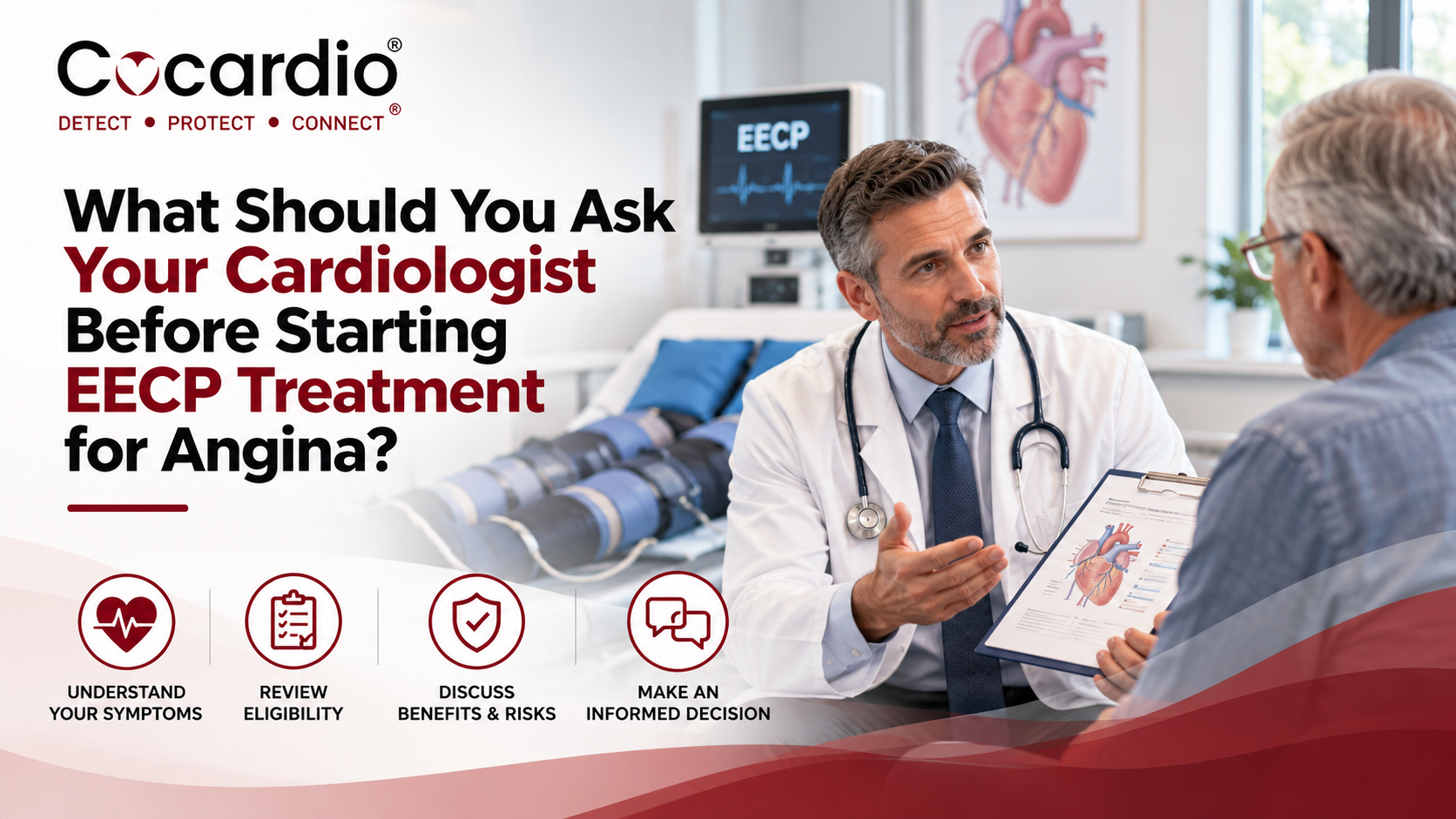

EECP uses inflatable cuffs around the legs that inflate and deflate in coordination with your heartbeat. The treatment is designed to influence blood flow and circulation while the patient rests on a treatment table. Although EECP may improve symptoms and exercise tolerance in some patients with chronic stable angina, it is not appropriate for every cardiovascular condition. Your cardiologist can help determine whether it fits into your existing treatment plan. So before you search for eecp treatment near me, read ahead.
EECP Treatment Near Me: What Should Your Cardiologist Review First?
Your cardiologist should review your cardiovascular diagnosis, current symptoms, medical history, and previous testing. This may include information about coronary artery disease, previous heart attacks, angioplasty, stents, or bypass surgery. Your physician should also consider other conditions that could affect treatment safety, including certain heart rhythm problems, vascular conditions, or significant valve disease. A thorough review helps establish whether further evaluation is needed before considering EECP.
Does EECP Replace Medication or Other Heart Treatments?
EECP does not replace prescribed cardiac medications, emergency treatment, or procedures that your cardiologist considers necessary. It is generally considered an additional treatment option for selected patients whose chronic angina remains troublesome despite appropriate medical management. Patients should continue taking prescribed medications unless their treating clinician recommends a change. Never stop or reduce heart medication simply because you are considering EECP.
Question 1: Is My Chest Pain Caused by Chronic Stable Angina?
The first question to ask is whether your symptoms are consistent with chronic stable angina. Angina commonly occurs when the heart muscle does not receive enough oxygen-rich blood to meet its needs. Symptoms may include chest pressure, tightness, or discomfort during physical activity or emotional stress, although presentations vary. Confirming the cause matters because not all chest pain originates from coronary artery disease.
How Is Stable Angina Different From an Emergency?
Stable angina generally follows a relatively predictable pattern, such as discomfort during exertion that improves with rest or prescribed medication. New, worsening, prolonged, or unexpected chest discomfort may indicate a more urgent problem. Chest pain accompanied by severe shortness of breath, fainting, cold sweats, or other concerning symptoms requires immediate medical assessment. EECP is not an emergency treatment for a heart attack or unstable angina.
What Tests Might Be Relevant?
Your cardiologist may review previous electrocardiograms, echocardiograms, stress testing, coronary imaging, or other cardiovascular investigations. The appropriate evaluation depends on your symptoms, medical history, and existing findings. Not every patient needs the same tests before discussing EECP, and additional testing should be determined by the treating clinician. Ask your cardiologist which findings support your diagnosis and whether any important questions remain unanswered.
Question 2: Am I an Appropriate Candidate for EECP?
Eligibility is one of the most important considerations before scheduling treatment. EECP is most commonly considered for selected patients with chronic stable angina who continue to experience symptoms despite appropriate treatment. Your cardiologist should evaluate whether the potential benefits outweigh the risks in your particular situation. A patient who benefits from EECP may have a different medical profile from someone for whom the treatment is unsuitable.
Which Medical Conditions Could Affect Eligibility?
Certain conditions may make EECP inappropriate or require additional assessment before treatment. Examples can include unstable cardiac symptoms, some significant heart rhythm abnormalities, severe peripheral vascular disease, or certain aortic valve conditions. A history of blood clots, bleeding concerns, or other circulatory problems may also be relevant to the screening process. The significance of each condition must be evaluated by a qualified clinician rather than determined from an online checklist.
What If I Have Previously Had a Stent or Bypass Surgery?
Some patients continue to experience angina after coronary stenting or bypass surgery. Persistent symptoms do not automatically mean that EECP is the next appropriate treatment. Your cardiologist may need to investigate whether symptoms reflect ongoing ischemia, progression of disease, another cardiac condition, or a noncardiac cause. EECP eligibility should be considered only after the clinical situation has been appropriately assessed.
Can an Eligibility Checklist Help Me Prepare?
A checklist can help you organize your symptoms, previous procedures, medications, and questions before your appointment. The EECP Therapy Eligibility Checklist for Persistent Angina – CoCardio® Patient Guide provides a patient-oriented starting point for discussing treatment considerations. Use it to prepare questions rather than to decide independently whether you qualify. Your cardiologist and the treating EECP team must make the actual clinical assessment.
Question 3: What Benefits Can I Realistically Expect From EECP?
When considering eecp therapy for angina, ask your cardiologist what improvement would be meaningful for your particular symptoms. Some appropriately selected patients report less frequent angina or improved ability to perform physical activities after treatment. However, individual responses vary, and symptom improvement is not guaranteed. Establishing realistic goals can help you evaluate whether EECP is worth considering.
Will EECP Eliminate My Chest Pain?
EECP should not be presented as a guaranteed cure for angina. Some patients may experience meaningful symptom improvement, while others may have limited or no noticeable benefit. Your cardiologist can explain how your underlying condition and treatment history may influence expectations. A useful goal may be reducing symptom burden or improving daily function rather than expecting complete elimination of discomfort.
Can EECP Improve My Ability to Exercise?
Exercise tolerance is one of the outcomes that may be considered when evaluating EECP. For someone whose stable angina limits walking or other daily activities, improved tolerance may be personally meaningful. However, changes in exercise capacity should be interpreted in the context of the patient’s overall cardiovascular health. Ask your cardiologist what activities are appropriate during treatment and whether supervised cardiac rehabilitation or other exercise guidance is recommended.
How Will We Measure Whether Treatment Helps?
Discuss how your symptoms and daily activities will be assessed before and after the treatment course. Your care team may consider angina frequency, use of prescribed symptom-relief medication, or changes in activity tolerance. Keeping a symptom diary can help you describe patterns and discuss progress more clearly. These observations should complement clinical follow-up rather than replace medical evaluation.
Question 4: Can EECP Prevent Coronary Artery Disease From Getting Worse?
Patients sometimes encounter the phrase eecp for coronary artery disease prevention while researching cardiovascular care. It is important to distinguish symptom management from proven prevention of heart attacks or progression of coronary artery disease. EECP has not been established as a treatment that removes arterial plaque or reliably prevents future cardiovascular events. Ask your cardiologist which evidence-based preventive treatments remain necessary regardless of whether you receive EECP.
Does EECP Remove Blockages From Coronary Arteries?
EECP does not physically remove plaque or reopen a blocked coronary artery in the way that a revascularization procedure may address a narrowing. Its proposed benefits involve changes in circulation and vascular function rather than direct plaque removal. Patients should be cautious about claims suggesting that EECP reverses all forms of coronary artery disease. Any questions about existing blockages should be discussed using your actual cardiac test results.
What Preventive Treatments Should Continue?
Managing coronary artery disease often involves medication, cardiovascular risk-factor management, and lifestyle measures appropriate to the individual. Your cardiologist may recommend cholesterol management, blood pressure control, diabetes care, smoking cessation, or other interventions. These measures address cardiovascular risk in ways that EECP has not been shown to replace. The treatment plan should remain focused on your overall cardiovascular health rather than EECP alone.
Question 5: Is EECP Safe With My Current Medications?
People considering EECP often take several medications for cardiovascular conditions or related health concerns. Your cardiologist and EECP provider should review all prescription medications, over-the-counter products, and relevant supplements. Medication use can influence clinical assessment, especially when blood pressure, heart rhythm, or bleeding concerns are present. Do not adjust your treatment independently in preparation for an EECP appointment.
Should I Stop Blood Thinners Before Treatment?
Do not stop anticoagulants or antiplatelet medications unless your prescribing clinician specifically instructs you to do so. These medications may be essential following certain cardiac procedures or for managing other cardiovascular risks. Their use should be reviewed alongside your medical history and any relevant bleeding or bruising concerns. Your treating clinicians can determine whether additional precautions or an alternative plan are necessary.
What If I Take Medication for Blood Pressure?
Blood pressure medications are common among patients with coronary artery disease and other cardiovascular conditions. Your clinical team should review your usual readings, medication schedule, and any history of dizziness or low blood pressure. Monitoring requirements may differ according to your individual health status. Ask whether there are any specific instructions for taking your regular medication on treatment days.
Question 6: What Happens During an EECP Treatment Session?
Understanding the treatment process can help you prepare for the practical commitment involved. During EECP, cuffs are placed around the legs and connected to equipment that coordinates their inflation and deflation with the cardiac cycle. Patients generally remain lying down while the system operates under clinical supervision. The experience is noninvasive, but cuff pressure can feel unusual and may cause discomfort for some people.
How Long Does a Typical EECP Course Take?
A commonly used EECP treatment schedule consists of approximately 35 one-hour sessions, often delivered over seven weeks. However, the appropriate course and scheduling arrangements should be confirmed with the treating provider. Completing repeated appointments requires a meaningful time commitment, particularly for working adults or people managing other medical appointments. Ask whether your health circumstances or scheduling constraints could affect your ability to complete the recommended course.
What Side Effects Should I Ask About?
Potential side effects may include temporary leg discomfort, skin irritation, bruising, or fatigue. Some patients may need additional precautions because of vascular, cardiac, or other medical conditions. Your provider should explain what sensations are expected and which symptoms require immediate attention. Report unusual pain, significant discomfort, or new symptoms promptly rather than assuming they are normal.
Can I Continue Working During the Treatment Course?
Many patients want to understand whether EECP appointments can fit around employment and family responsibilities. The answer depends on your symptoms, general health, treatment schedule, and your clinician’s recommendations. Some people may continue their usual activities, while others need adjustments because of their underlying cardiac condition. Ask your cardiologist what activity restrictions or practical precautions apply specifically to you.
Question 7: How Much Does EECP Therapy Cost?
Before starting treatment, ask for a clear explanation of the expected financial commitment. EECP therapy cost may depend on the provider, treatment course, insurance arrangements, and individual coverage eligibility. Some insurance plans may cover EECP for patients who meet specific medical criteria, but coverage is not universal. Confirm the financial details before assuming that treatment will be fully reimbursed.
What Should I Ask My Insurance Provider?
Ask whether EECP is covered under your particular policy and whether prior authorization is required. You should also clarify applicable deductibles, copayments, coinsurance, and any network restrictions. The insurer may require documentation supporting medical necessity or eligibility criteria. Request confirmation of the relevant coverage terms rather than relying solely on general statements about insurance acceptance.
What If My Insurance Does Not Cover EECP?
If coverage is unavailable or limited, ask the provider for a written estimate of expected out-of-pocket expenses. Clarify whether the estimate covers the full treatment course or only individual sessions. You may also ask whether any payment arrangements are available, without assuming that a particular option is offered. Understanding the financial commitment in advance can help you make an informed decision.
Question 8: How Do I Choose an EECP Provider Near Me?
Searching for EECP therapy near me is often the beginning of a broader decision about clinical suitability and provider experience. Location matters because a typical course can involve frequent appointments over several weeks. However, convenience should not take priority over appropriate medical screening, clinical supervision, and communication with your cardiologist. Choose a provider that can clearly explain its assessment process, treatment expectations, and follow-up arrangements.
What Questions Should I Ask the Treatment Team?
Ask who determines eligibility, how medical information is reviewed, and what monitoring takes place during treatment. You should also ask how the provider communicates with your cardiologist if symptoms change or concerns arise. Clarify what happens if you miss an appointment or experience discomfort during a session. Clear answers can help you understand the provider’s process before committing to a treatment course.
What Is the Difference Between EECP and ECP?
Patients may encounter the term ecp therapy when researching external counterpulsation. The terms ECP and EECP are sometimes used in overlapping ways, although equipment and treatment terminology can vary. Ask the provider which system is used and whether the proposed treatment corresponds to the protocol recommended by your cardiologist. The important consideration is the actual treatment being delivered, its clinical indications, and the provider’s screening process.
Question 9: How Can I Prepare for My First EECP Consultation?
Preparing for your consultation can help you get clearer answers and avoid overlooking important details. Bring an accurate medication list, relevant cardiac records, and information about previous procedures when available. Write down when your symptoms occur, what seems to trigger them, and whether their pattern has changed. Your consultation should focus on establishing clinical suitability before discussing scheduling or payment.
What Should Be on My Question List?
Start by asking whether your diagnosis and symptom pattern make EECP a reasonable option. Follow with questions about contraindications, expected benefits, treatment duration, and possible side effects. Ask how the provider will coordinate with your cardiologist and monitor your response. Finally, clarify insurance requirements, estimated costs, and the next steps if you are considered eligible.
Should I Bring Previous Cardiac Test Results?
Previous test results may provide useful context for the clinical team reviewing your eligibility. These could include recent imaging reports, stress test findings, or records from prior coronary procedures. Your cardiologist can advise which records are most relevant to the decision. Bringing accurate documentation may help the consultation focus on your current needs rather than incomplete medical history.
Question 10: What Happens if EECP Does Not Improve My Symptoms?
Not every patient experiences the same response to EECP, and improvement cannot be guaranteed. Before starting, ask your cardiologist what the follow-up plan will be if symptoms remain unchanged. Persistent angina may require reassessment of the diagnosis, medication plan, or other available management options. Understanding these possibilities helps ensure that EECP is considered within a continuing medical care plan.
Will I Need Follow-Up After Completing Treatment?
Follow-up can help your clinicians assess symptoms, activity tolerance, and any changes in your health status. The appropriate timing and type of review depend on your medical condition and treatment plan. Your cardiologist may continue monitoring coronary artery disease and related risk factors regardless of the EECP outcome. Do not interpret temporary symptom improvement as a reason to discontinue routine cardiovascular care.
Why Consider CoCardio® in Encinitas for an EECP Consultation?
Patients looking for eecp treatment near me in Encinitas, California, can explore CoCardio® as a local option for discussing EECP. An initial inquiry can help clarify the consultation process, what medical information may be needed, and how eligibility is assessed. The decision to proceed should depend on your clinical history and guidance from your cardiologist rather than location alone. CoCardio® can be contacted to discuss the next steps and questions to raise before scheduling treatment.
What Should You Discuss Before Requesting an Appointment?
Be prepared to explain whether you have been diagnosed with chronic stable angina and whether symptoms continue despite current treatment. Mention relevant cardiac procedures, medications, and any concerns about treatment suitability. Ask what documentation is required and whether a cardiology referral or additional evaluation is necessary. These details can help establish whether an EECP consultation is an appropriate next step.
How Can You Contact CoCardio®?
CoCardio® serves patients seeking information about EECP in Encinitas, California. If you have been searching for eecp treatment near me, you can use the contact form to request information about the consultation process. You can also call +1(858) 500-1399 to discuss appointment inquiries and practical questions. Any decision about receiving treatment should follow an appropriate clinical eligibility review.
Conclusion: Ask the Right Questions Before Starting EECP
EECP may be worth discussing when chronic stable angina continues to interfere with daily life despite appropriate medical care. Before starting, ask your cardiologist about your diagnosis, eligibility, potential benefits, contraindications, and the treatments you should continue. Understanding the session schedule, possible side effects, insurance arrangements, and follow-up plan is equally important. A well-informed decision should be based on your individual medical circumstances rather than promises of guaranteed relief.
Request an EECP Consultation With CoCardio®
If you are considering eecp treatment near me, contact CoCardio® in Encinitas to learn about the consultation process and discuss your next steps. Share your relevant cardiac history and any recommendations from your cardiologist so the appropriate screening requirements can be explained. The team can provide information about appointment inquiries and the practical aspects of exploring EECP. Use the form below to submit your inquiry, or call +1(858) 500-1399.
Request an EECP Consultation: https://cocardioinc.com/#Form
Location: Encinitas, California
Phone: +1(858) 500-1399
Website: https://cocardioinc.com/
Medical Disclaimer
This article is intended for general educational purposes and does not constitute medical advice, diagnosis, or treatment recommendations. EECP is not suitable for every patient, and eligibility must be determined by qualified healthcare professionals after reviewing individual medical circumstances. EECP does not replace prescribed medications, emergency cardiac care, or evidence-based treatment for coronary artery disease. If you experience new, severe, prolonged, or worsening chest pain, particularly with shortness of breath, sweating, fainting, or other concerning symptoms, call 911 or seek emergency medical care immediately.



Join the conversation