

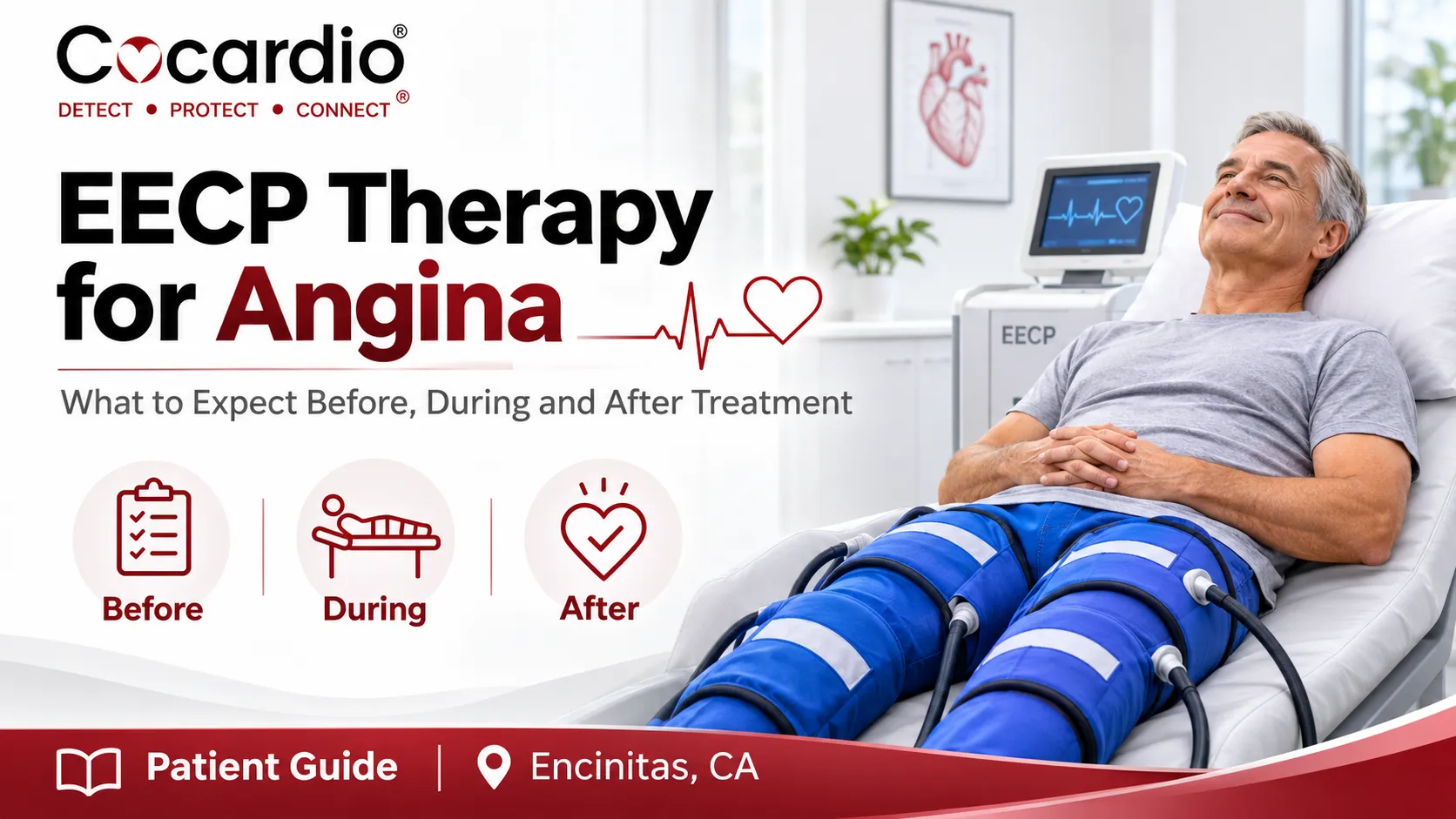
Living with chronic angina can make everyday activities challenging, especially when chest discomfort continues despite prescribed medication. For selected patients whose symptoms remain difficult to control, eecp therapy for angina may offer an additional approach to symptom management. However, understanding how the procedure works, what happens during treatment, and who may benefit is essential before making a decision. Patients should also know that external counterpulsation does not replace established cardiovascular treatments or emergency medical care.
At CoCardio®, we understand that exploring an unfamiliar cardiovascular procedure can raise questions about safety, treatment schedules, costs, and expected outcomes. Our Encinitas, California, practice provides heart function consultations and circulation-focused services through CoCardio Boost™. These services are designed to complement conventional cardiovascular care and support informed patient decisions. This guide explains the treatment experience from initial screening through follow-up and highlights important questions to discuss with your cardiologist.
How Does EECP Therapy for Angina Work?
Angina occurs when the heart muscle does not receive enough oxygen-rich blood to meet its needs, often during physical exertion or emotional stress. Coronary artery disease is a common cause, although other conditions can produce similar symptoms. External counterpulsation therapy uses inflatable cuffs positioned around the lower body to influence circulation in synchronization with the heartbeat. This noninvasive approach has been studied as a potential symptom-management option for certain patients with chronic refractory angina.
Understanding the Counterpulsation Process
During treatment, inflatable cuffs are secured around the calves, thighs, and sometimes the buttocks. The equipment uses electrocardiogram signals to coordinate cuff inflation during diastole, the phase when the heart relaxes. The cuffs rapidly deflate before the next heartbeat, which can influence arterial pressure and cardiac workload. This process does not physically remove coronary plaque or open blocked arteries.
What Does the Medical Evidence Suggest?
The 2023 American Heart Association and American College of Cardiology guideline states that enhanced external counterpulsation may be considered for symptom relief in patients with chronic coronary disease, refractory angina, and no other treatment options. This is a Class 2b recommendation, indicating that the potential benefit is less firmly established than strongly recommended cardiovascular treatments. Some clinical studies have reported improvements in angina symptoms and exercise tolerance, although results vary and important evidence limitations remain. Treatment has not been established as a method of preventing heart attacks, reversing coronary artery disease, or improving survival.
Who May Be Eligible for EECP Treatment?
Treatment suitability depends on the patient’s cardiovascular diagnosis, current symptoms, medical history, and available conventional treatment options. Individuals with chronic angina that remains inadequately controlled despite appropriate medical management may be considered for further evaluation. A cardiologist should determine whether medication adjustments, additional diagnostic testing, or coronary procedures are more appropriate. Not everyone experiencing chest discomfort or coronary artery disease is a candidate for external counterpulsation.
Patients With Persistent Chronic Angina
Chronic stable angina often causes predictable discomfort during activities that increase the heart’s oxygen demand. Patients may experience chest pressure while walking, climbing stairs, or performing other physical tasks. When symptoms remain troublesome despite guideline-directed treatment, a cardiologist may evaluate whether an additional intervention is reasonable. The decision should be based on confirmed ischemic symptoms, treatment history, and available medical alternatives.
Conditions That Require Additional Screening
Certain cardiovascular and vascular conditions may affect the safety or suitability of counterpulsation. These can include significant aortic regurgitation, particular heart rhythm disturbances, uncontrolled hypertension, peripheral vascular disease, and suspected blood clots. Patients should provide complete medical histories and discuss recent changes in symptoms before beginning treatment. A qualified healthcare professional must determine whether any contraindications or additional precautions apply.
What Happens Before Your First EECP Session?
The initial consultation provides an opportunity to review cardiovascular history and determine whether further medical evaluation is necessary. Patients should be prepared to discuss their diagnosis, previous procedures, medications, and current symptoms. Relevant records may include recent cardiac tests, previous stent or bypass information, and recommendations from a treating cardiologist. This assessment helps establish realistic expectations and identify potential safety concerns.
Preparing Your Medical Information
Bring an updated list of medications, including prescribed cardiovascular drugs and relevant over-the-counter products. Record when chest discomfort occurs, how long it lasts, and whether prescribed medication provides relief. You should also mention previous cardiac procedures, circulation problems, and any history of blood clots or significant rhythm disturbances. Clear medical information can help the clinical team determine whether additional assessment or specialist guidance is needed.
Preparing for Your Appointment
Your provider should explain clothing recommendations, appointment duration, transportation considerations, and any specific preparation requirements. Comfortable clothing may help with the placement of lower-body compression cuffs, although patients should follow the center’s instructions. Do not discontinue prescribed medication or change your normal treatment routine unless your clinician advises you to do so. Confirm scheduling arrangements and ask how missed appointments are handled before committing to a multiweek course.
What Happens During an EECP Session?
A typical session involves several stages, beginning with a review of symptoms and preparation for treatment. Patients lie on a padded treatment table while compression cuffs are positioned securely around their lower body. Monitoring equipment tracks the cardiac cycle and coordinates inflation and deflation of the cuffs. Staff should supervise the procedure, monitor patient comfort, and respond to concerning symptoms.
Step 1 – Initial Assessment
Before treatment begins, the team may review symptoms, vital signs, and any changes since the previous appointment. Patients should report new chest discomfort, shortness of breath, dizziness, or other unusual symptoms. These changes may require additional assessment or postponement of the session. Treatment should never proceed automatically when symptoms suggest an unstable cardiovascular condition.
Step 2 – Positioning and Monitoring
Once the patient is positioned comfortably, the cuffs are secured around the lower extremities. Electrocardiogram sensors help synchronize the equipment with the patient’s heartbeat. Proper positioning and cuff fitting are important for comfort and appropriate equipment operation. Patients should communicate any pressure-related discomfort before and during treatment.
Step 3 – Rhythmic Compression
The cuffs repeatedly inflate and release according to the programmed cardiac timing. Patients generally experience firm, rhythmic squeezing around the legs and lower body. The sensation should be tolerable, and significant pain should be reported immediately. Treatment personnel may assess the symptoms and determine whether adjustments or further evaluation are needed.
Step 4 – Completing the Session
At the end of treatment, the compression cuffs and monitoring equipment are removed. Staff may review the patient’s comfort, symptoms, and any adverse effects experienced during the visit. Some individuals may notice temporary fatigue, soreness, bruising, or skin irritation following treatment. Patients should ask which symptoms are expected and when medical attention is necessary.
How Many Sessions Are Usually Recommended?
A conventional treatment course commonly consists of approximately 35 one-hour sessions over seven weeks. Appointments are often scheduled five days per week, although individual clinical programs may use different schedules. The repeated visits require patients to consider transportation, work commitments, and other daily responsibilities. Your healthcare professional should explain the proposed treatment duration and how progress will be monitored.
Can You Continue Normal Daily Activities?
Some patients can continue working and performing routine activities during the treatment course when their cardiovascular condition allows. However, the procedure itself does not establish that driving, strenuous exercise, or physically demanding employment is safe. Individuals with exertional symptoms may require specific activity recommendations or restrictions from their treating clinician. Patients should not increase exercise intensity simply because they feel better after a few sessions.
What If You Miss an Appointment?
Scheduling interruptions may occur because of work commitments, transportation problems, or other medical appointments. Patients should contact the treatment provider to discuss how missed sessions affect the proposed schedule. Additional appointments may be necessary depending on the program and individual circumstances. Avoid independently shortening or extending the treatment course without professional guidance.
What Results Can Patients Realistically Expect?
The goal of counterpulsation in eligible patients is potential improvement in chronic angina symptoms and daily functioning. Some individuals report reduced chest discomfort or improved activity tolerance following a completed treatment course. However, not every patient experiences meaningful improvement, and the durability of benefits varies. Symptom relief should never be interpreted as proof that blocked arteries have reopened or cardiovascular disease has been cured.
Does Treatment Replace Angina Medication?
No, external counterpulsation does not replace medications prescribed for coronary artery disease or chronic angina. Some cardiovascular medications relieve symptoms, while others reduce the risk of serious complications. Patients should continue their prescribed treatment plans unless their clinician recommends adjustments. Improvements in symptoms do not automatically mean that medications are no longer necessary.
What Happens After the Treatment Course?
Follow-up evaluation may include reviewing angina frequency, physical activity tolerance, medication use, and treatment-related side effects. Healthcare professionals can use this information to assess whether the intervention provided meaningful symptom improvement. Patients should continue regular cardiology appointments and established cardiovascular risk management. Repeat treatment should be considered only after appropriate medical reassessment rather than automatically scheduled.
Can EECP Prevent Coronary Artery Disease?
Patients sometimes encounter information about eecp for coronary artery disease prevention while exploring circulation-focused services. However, available clinical evidence does not establish that external counterpulsation prevents coronary plaque formation, heart attacks, or cardiovascular death. Evidence-based prevention includes appropriate cholesterol management, blood pressure control, smoking cessation, physical activity, and individualized medical care. Patients should distinguish possible angina symptom relief from proven strategies for reducing long-term cardiovascular risk.
Is It a Noninvasive Alternative to Heart Surgery?
External counterpulsation is a Non invasive heart treatment because it does not require surgical incisions or catheter placement. However, it should not be considered equivalent to coronary stenting or bypass surgery, which address selected forms of obstructive coronary disease. Some patients may be considered for counterpulsation when additional revascularization is unsuitable or unavailable. A cardiologist should determine whether conventional interventions remain medically indicated before other options are explored.
Finding EECP Services in Encinitas, California
Choosing a treatment provider requires more than comparing locations or available appointment times. Patients should ask about clinical screening, professional qualifications, equipment maintenance, medical oversight, and treatment expectations. Transparent communication about risks and limitations is particularly important when considering a procedure with a conditional guideline recommendation. A provider should be willing to explain what its program can reasonably offer without guaranteeing results.
What to Ask When Comparing Local Providers
Patients searching for EECP therapy near me should verify whether a provider offers medically indicated treatment, complementary wellness services, or both. The distinction matters because screening procedures, insurance arrangements, and treatment objectives can differ. It is also appropriate to ask who supervises the sessions and how the center responds to unexpected medical symptoms. Your existing cardiologist should remain involved in decisions about diagnosed cardiovascular conditions.
Individuals searching for ECP therapy near me should also consider the practical demands of repeated outpatient appointments. Travel distance, appointment frequency, scheduling flexibility, and transportation needs can affect the overall experience. Patients should compare these factors alongside provider qualifications and medical suitability. Convenience should support, rather than replace, appropriate clinical decision-making.
Understanding Treatment Costs and Insurance
The financial commitment associated with a treatment course can vary between providers. Consultation charges, proposed session counts, assessment requirements, and follow-up services may influence total expenses. Insurance participation also differs, and coverage eligibility does not guarantee payment at every facility. Patients should request a written estimate and verify payment arrangements before beginning treatment.
CoCardio® Cash-Pay Services
CoCardio® operates as a cash-pay practice and does not bill insurance for consultations, ECP sessions, or preventive cardiovascular wellness services. Patients researching EECP therapy cost can contact the practice for information about current pricing and program requirements. Certain expenses may qualify for Health Savings Account or Flexible Spending Account payment, depending on individual plan rules and applicable eligibility requirements. Patients should confirm account eligibility directly with their administrator rather than assuming reimbursement is guaranteed.
Download the Free EECP Treatment Patient Guide
Understanding a treatment course before the first appointment can make conversations with healthcare professionals more productive. Patients should know how sessions are organized, what physical sensations to expect, which side effects to report, and how follow-up care is managed. Practical planning also involves transportation, activity recommendations, appointment schedules, and potential financial obligations. A written patient resource can help organize these questions before committing to treatment.
A Session-by-Session Patient Resource
Download the Free EECP Treatment Patient Guide for a structured walkthrough of preparation, treatment sessions, safety considerations, and follow-up planning. The CoCardio® resource explains how synchronized compression works and describes common treatment sensations and scheduling considerations. It also outlines important questions about eligibility, potential side effects, costs, and coordination with an existing cardiologist. Patients can use the guide to prepare for consultations, but it does not replace individualized medical advice.
When Angina Requires Immediate Medical Attention
New, severe, prolonged, or worsening chest discomfort can indicate unstable angina or a heart attack. Warning signs may include shortness of breath, sweating, nausea, faintness, or discomfort extending into the arm, jaw, neck, or back. Call 911 immediately if symptoms suggest a heart attack or another acute cardiovascular emergency. Do not wait for a scheduled counterpulsation session or attempt to manage potentially serious symptoms through an outpatient wellness appointment.
Conclusion
For appropriately selected individuals with refractory angina, eecp therapy for angina may be considered as an additional approach to symptom relief when other suitable treatment options are unavailable. Understanding treatment preparation, session procedures, safety screening, and realistic outcomes helps patients make informed decisions. Because individual responses vary, medical eligibility and appropriate cardiovascular supervision remain essential throughout the process. Patients should continue prescribed treatment and work closely with their cardiologist when evaluating additional options.
At CoCardio®, we provide heart function consultations and circulation-focused services through CoCardio Boost™ in Encinitas, California. Patients interested in eecp therapy for angina can contact our team to discuss consultation availability, screening considerations, and treatment scheduling. Our services are designed to complement conventional cardiovascular management rather than replace care recommended by a licensed healthcare professional. To learn more, visit CoCardio® or call (858) 500-1399.
Medical Disclaimer
This article is provided for general educational and informational purposes only and does not constitute medical advice, diagnosis, or treatment. CoCardio® offers complementary cardiovascular wellness and circulation-focused services that do not replace conventional medical care, prescribed medications, emergency assessment, or treatment recommended by a licensed physician or cardiologist. External counterpulsation is not appropriate for every individual, and treatment eligibility, potential benefits, safety considerations, and outcomes depend on specific medical circumstances. Patients should consult their healthcare professionals before making treatment decisions and call 911 immediately for new, severe, prolonged, or worsening chest pain or other possible heart attack symptoms.




Join the conversation