
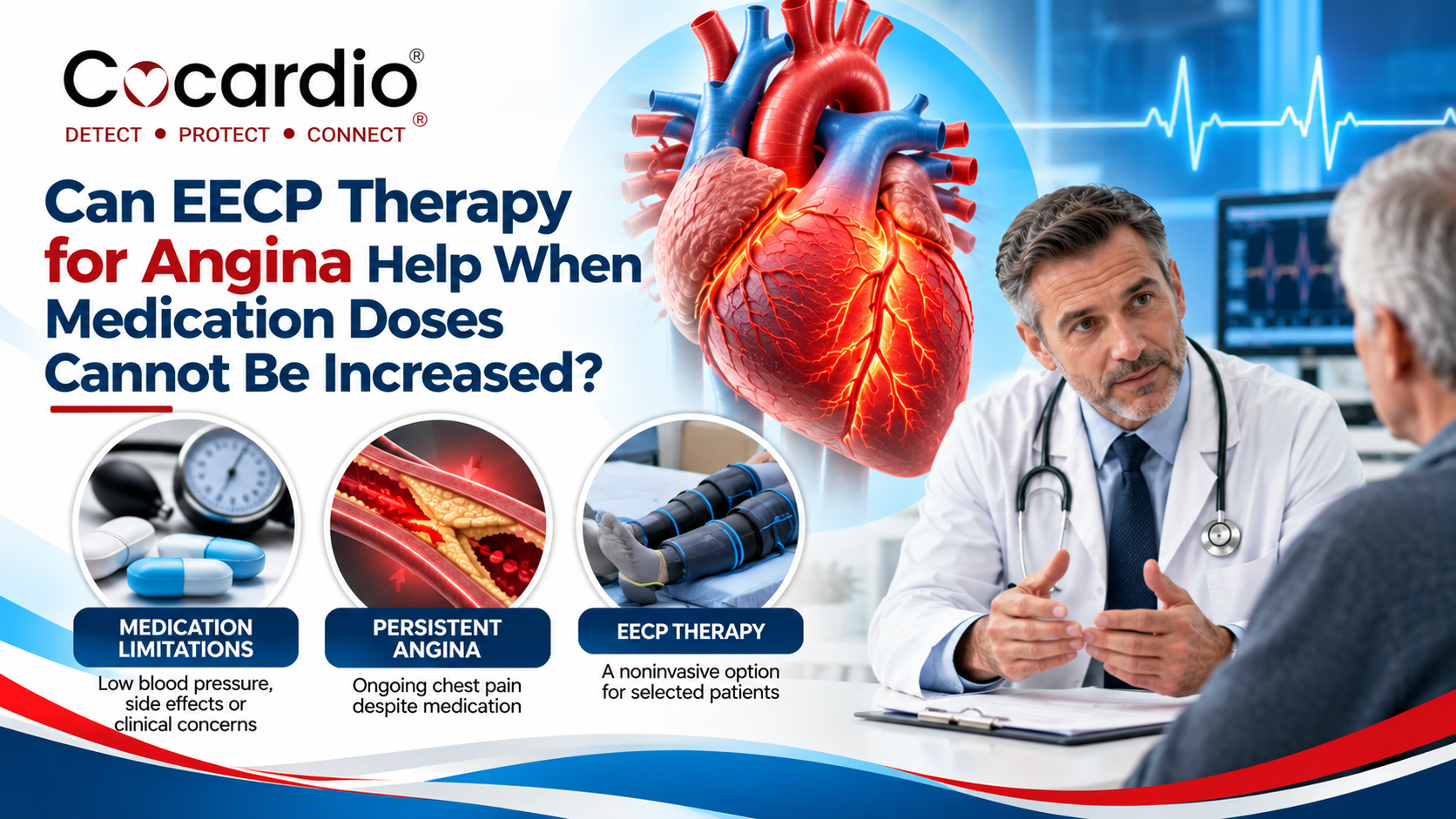

Living with chronic angina can be frustrating when chest discomfort continues despite taking prescribed heart medication. Some patients cannot increase their medication doses because of low blood pressure, dizziness, fatigue, or other medical considerations. In these situations, eecp therapy for angina may be worth discussing with a cardiologist as a possible additional treatment for selected patients with chronic refractory angina. At CoCardio® in Encinitas, California, patients can request information about the EECP evaluation process when symptoms remain troublesome despite appropriately managed treatment.
Angina occurs when the heart muscle does not receive enough oxygen-rich blood to meet its needs. Symptoms may include chest pressure, tightness, discomfort during physical activity, or shortness of breath. Medications can help control symptoms, but treatment must be balanced against blood pressure, heart rate, side effects, and other health conditions. When medication adjustments become difficult, a cardiologist may investigate whether another treatment approach is appropriate.
Why Can’t Some Patients Increase Their Angina Medication?
Antianginal medications work through different mechanisms to reduce the heart’s workload, improve blood flow, or relieve coronary artery constriction. Common treatment options include beta blockers, calcium channel blockers, and nitrates, depending on the patient’s diagnosis and medical circumstances. However, these medications can affect blood pressure, heart rate, and other physiological functions. Increasing a dose may create additional risks or side effects without providing sufficient symptom relief.
Low Blood Pressure Can Limit Medication Adjustments
Some medications used to manage angina lower blood pressure as part of their therapeutic effect. If a patient’s blood pressure is already low, increasing the dose may cause dizziness, weakness, or fainting. These symptoms can interfere with everyday activities and may create additional safety concerns. A cardiologist must consider both angina control and the patient’s ability to tolerate treatment.
Slow Heart Rate May Restrict Certain Medications
Beta blockers and some calcium channel blockers can reduce heart rate. This effect may help decrease the heart’s oxygen requirements in appropriately selected patients. However, an excessively slow heart rate can cause fatigue, dizziness, or other symptoms. Patients with conduction abnormalities or implanted cardiac devices may require additional consideration before medication changes.
Side Effects Can Affect Treatment Tolerance
Headaches, swelling, fatigue, and lightheadedness are among the side effects associated with certain antianginal medications. Some patients experience symptoms that make higher doses difficult to tolerate. Others may have medical conditions or medication interactions that limit available options. The treating clinician should assess whether a different medication, combination, or dosing approach could provide better symptom control.
How Can Low Blood Pressure Affect Angina Treatment Decisions?
Blood pressure is an important consideration when managing coronary artery disease. The heart needs adequate circulation to deliver oxygen to its muscle tissue and other organs. Certain antianginal medications reduce blood pressure, which can be helpful for some patients but problematic for others. Treatment decisions must therefore account for symptoms, cardiovascular function, and the patient’s overall clinical condition.
Why Lower Blood Pressure Is Not Always Better
Controlling elevated blood pressure is an important part of cardiovascular risk management. However, excessively low blood pressure may cause symptoms or reduce tolerance for prescribed medication. The appropriate target varies according to the patient’s medical history and clinical circumstances. A cardiologist should determine whether blood pressure is contributing to treatment limitations.
Recognizing Symptoms of Medication-Related Hypotension
Patients may experience dizziness when standing, unusual fatigue, weakness, or near-fainting episodes. These symptoms can occur for several reasons and are not always caused by heart medication. Recording blood pressure readings and the timing of symptoms may help the clinician assess the problem. Patients should not reduce or discontinue prescribed medication without medical guidance.
Why Medication Changes Require Professional Supervision
Changing antianginal medication can affect both symptom control and cardiovascular stability. Some drugs require careful adjustment or should not be stopped abruptly. The clinician may need to review other prescriptions, hydration status, kidney function, and underlying heart conditions. Any changes should follow an individualized treatment plan.
What Happens When Angina Persists Despite Tolerated Medication?
Persistent chest discomfort does not automatically mean that a patient needs a higher medication dose. The cardiologist may first reassess the diagnosis, symptom pattern, and effectiveness of the existing treatment. Additional testing may be appropriate when symptoms have changed or when the underlying mechanism remains uncertain. The objective is to identify why symptoms continue before selecting another treatment.
Confirming the Cause of Persistent Chest Pain
Chest discomfort can result from obstructive coronary artery disease, coronary microvascular dysfunction, vasospasm, or noncardiac conditions. These causes may require different diagnostic and treatment approaches. A cardiologist may review electrocardiograms, stress testing, coronary imaging, or other investigations when clinically indicated. Accurate diagnosis helps prevent patients from receiving treatments that do not address their condition.
Reviewing Current Medical Management
A medication review may identify opportunities to improve symptom control without simply increasing existing doses. Clinicians may consider alternative medications or combinations according to the patient’s diagnosis and tolerance. They should also evaluate adherence, side effects, and possible interactions. Patients should discuss persistent symptoms openly rather than adjusting medication independently.
Considering Revascularization Options
Some patients with coronary artery disease may benefit from procedures such as angioplasty or coronary artery bypass surgery. Whether these options are appropriate depends on coronary anatomy, symptom severity, and other clinical findings. Not every patient is a suitable candidate for further revascularization. When symptoms remain despite appropriate treatment and available options have been considered, additional symptom-management approaches may be discussed.
When Might EECP Therapy For Angina Be Considered for Refractory Angina?
Enhanced external counterpulsation is a noninvasive treatment that uses inflatable cuffs around the lower extremities to influence circulation. It has been studied as an option for selected patients with chronic stable or refractory angina. Patients exploring eecp therapy for angina should understand that eligibility requires an individualized assessment of symptoms, cardiac function, and contraindications. EECP is not an emergency treatment and should not replace established medical management.
Understanding Chronic Refractory Angina
Refractory angina generally describes persistent symptoms despite appropriate medical therapy and consideration of available revascularization options. Patients may experience limitations when walking, climbing stairs, or performing everyday activities. The condition requires specialist evaluation because ongoing chest discomfort can have several possible causes. A cardiologist should establish whether the patient’s symptoms fit the clinical circumstances in which EECP may be considered.
How EECP Treatment Works
During treatment, inflatable cuffs are placed around the calves, thighs, and lower body. The cuffs inflate and deflate in a sequence synchronized with the heartbeat. This process is intended to influence blood flow and cardiovascular loading during different phases of the cardiac cycle. EECP does not physically remove coronary plaque or replace procedures used to treat certain coronary blockages.
What Clinical Evidence Suggests
Studies have reported improvements in angina symptoms and exercise-related outcomes in some patients receiving EECP. However, the strength of evidence varies, and individual responses cannot be predicted reliably. The 2023 American Heart Association and American College of Cardiology guideline for chronic coronary disease states that EECP may be considered for symptom relief in selected patients with refractory angina and no other treatment options. This is a limited recommendation for symptom management, not evidence that EECP prevents heart attacks or improves survival.
Can EECP Help When Medication Side Effects Limit Treatment?
Patients who cannot tolerate higher medication doses may want to explore additional options for managing chronic angina. EECP could be part of that discussion when symptoms persist despite appropriately selected and tolerated treatment. However, medication intolerance alone does not establish eligibility for EECP. The treating cardiologist must determine whether the patient’s diagnosis and overall condition support considering the procedure.
Why Treatment Goals Matter
The primary objective of considering EECP in refractory angina is potential symptom relief and improved functional tolerance. Patients should identify which activities are limited by chest discomfort and discuss realistic goals with their clinician. Improvement is not guaranteed, and EECP does not correct every cause of chest pain. The care team should explain how treatment response would be assessed.
Can EECP Replace Antianginal Medication?
EECP should not be regarded as a replacement for prescribed antianginal medication. Patients may need to continue treatment for coronary artery disease, blood pressure, cholesterol, or other cardiovascular conditions. Medication adjustments should be directed by the treating clinician based on the patient’s response and medical needs. Feeling better after treatment does not establish that underlying coronary disease has resolved.
What if EECP Is Not Appropriate?
Some patients may have medical conditions that make EECP unsuitable or require further evaluation. Significant rhythm disturbances, unstable cardiovascular conditions, certain vascular problems, and other contraindications may affect eligibility. The cardiologist may recommend alternative symptom-management strategies or additional investigations. A suitability assessment should consider both potential benefits and risks.
Is EECP a Noninvasive Alternative to Increasing Medication?
EECP is noninvasive because treatment does not require surgical incisions or insertion of a catheter into the coronary arteries. For selected patients with chronic refractory angina, it may be discussed when medication options are limited and revascularization is not appropriate or available. However, the absence of an invasive procedure does not mean the treatment is suitable for everyone. Medical screening remains essential.
How EECP Differs From Coronary Procedures
Coronary angioplasty involves catheter-based treatment of selected coronary artery narrowings. Coronary bypass surgery creates alternative routes for blood to reach portions of the heart muscle. EECP works through external cuff compression and has a different therapeutic purpose. Patients should not assume that EECP can replace a procedure recommended by their cardiologist.
What Happens During a Treatment Course?
A commonly used EECP regimen involves approximately 35 one-hour sessions over several weeks. Patients typically lie on a treatment table while the cuffs inflate and deflate in coordination with their heartbeat. The schedule and monitoring requirements depend on the provider’s protocol and the patient’s clinical condition. A consultation should clarify what the treatment involves before the patient commits to a course.
Understanding Treatment Limitations
EECP may provide symptom improvement for some appropriately selected patients, but it does not guarantee relief. It is not a proven method for removing arterial blockages or preventing future cardiovascular events. Patients should continue evidence-based risk-factor management and specialist follow-up. The decision to pursue treatment should reflect a clear understanding of these limitations.
What About EECP and Coronary Artery Disease Prevention?
Managing chronic angina and reducing the risk of future cardiovascular events are related but different goals. Patients researching eecp for coronary artery disease prevention should understand that EECP has not been established as a method of preventing coronary artery disease or heart attacks. Its potential role is primarily associated with symptom relief in selected patients with chronic refractory angina. Proven preventive care remains important whether or not EECP is considered.
Managing Long-Term Cardiovascular Risk
Cardiovascular prevention may involve lipid-lowering treatment, blood pressure management, diabetes care, and smoking cessation. Appropriate physical activity and nutrition may also support long-term health under medical guidance. Patients with established coronary artery disease often require ongoing treatment even when symptoms are controlled. Their cardiologist should determine which preventive measures are appropriate.
Why Symptom Relief Does Not Equal Disease Reversal
A reduction in angina symptoms does not necessarily mean that coronary plaque has disappeared. Similarly, improved exercise tolerance does not independently establish reduced heart attack risk. Different clinical outcomes require different supporting evidence. Patients should ask their clinicians which benefits are realistic for their diagnosis.
What Should You Ask Before Exploring Additional Treatment?
A productive consultation begins with understanding why angina persists and which treatment options have already been evaluated. Patients should bring relevant medical records and be prepared to describe medication limitations. They should also ask how the proposed treatment fits into their existing cardiovascular care plan. Clear communication helps support an informed decision.
Questions About Your Current Medication
Ask whether your current doses are limited by blood pressure, heart rate, side effects, or another clinical concern. Discuss whether alternative medications or dosing strategies are available. Your clinician may also need to review interactions with other prescriptions. Do not change treatment based solely on information from online resources.
Questions About EECP Eligibility
Ask whether your diagnosis meets the criteria for considering EECP. Discuss possible contraindications, expected benefits, treatment duration, and monitoring procedures. Patients should also ask whether their cardiologist needs to provide additional documentation or clearance. These questions help establish whether a formal evaluation is appropriate.
Questions About Treatment Costs
Patients may want to understand expenses before scheduling a treatment course. Questions about EECP therapy cost can include consultation charges, treatment fees, payment arrangements, and potential insurance considerations. Pricing and coverage should be confirmed directly with the provider and relevant insurer. Financial planning should follow, rather than determine, the medical suitability decision.
How Can Patients Explore EECP Treatment in Encinitas?
CoCardio® provides information about EECP services in Encinitas, California. Patients with established chronic angina who continue experiencing symptoms may contact the clinic to learn about its consultation process. Searching for eecp treatment near me can help individuals find local information and prepare questions about treatment suitability. An initial inquiry does not establish that EECP is medically appropriate.
Preparing for an Initial Evaluation
Patients should gather recent cardiology reports, medication lists, and relevant diagnostic test results. It may also help to document when chest discomfort occurs and which activities trigger symptoms. Details about low blood pressure, dizziness, or other medication side effects can be particularly relevant. The evaluating clinician may request additional information before discussing treatment options.
Understanding Local Treatment Options
People searching for ECP therapy near me may encounter providers using different terms for external counterpulsation. Information about ecp therapy can provide general context, but patients should confirm the specific procedure and clinical indications offered. Provider experience, screening procedures, and coordination with the patient’s cardiologist are important considerations. Convenience should not take priority over medical suitability.
Learning More About Coronary Circulation
The EECP and Coronary Blood Flow – CoCardio® Patient Education Guide offers additional educational information about EECP and coronary circulation. Patients can use it to prepare questions about how counterpulsation is intended to work. General educational resources cannot determine whether a particular individual will benefit from treatment. A qualified clinician should evaluate the patient’s medical circumstances.
Frequently Asked Questions
Can EECP Help if My Blood Pressure Is Too Low for Higher Angina Medication Doses?
EECP may be considered in selected patients with chronic refractory angina, but low blood pressure alone does not establish eligibility. The clinician must evaluate the reason medication doses are limited and determine whether the patient’s cardiovascular condition is stable. Additional medication adjustments or other treatments may still be appropriate. A cardiologist should guide the decision.
Can I Receive EECP While Taking Heart Medication?
Many patients considered for EECP are already receiving cardiovascular medication. However, the specific treatment regimen and medical conditions must be reviewed before beginning therapy. Patients should provide a complete medication list and discuss any recent changes. Prescribed treatment should not be stopped without medical advice.
Is EECP Effective for Every Type of Chest Pain?
No, EECP is not appropriate for every cause of chest discomfort. Its potential role is most relevant to selected patients with chronic stable or refractory angina. Chest pain may also result from coronary vasospasm, noncardiac conditions, or urgent cardiovascular problems requiring different treatment. Accurate diagnosis is essential.
Can EECP Be Used Instead of Increasing Medication?
EECP may be discussed when symptoms persist despite appropriately tolerated medical treatment and other suitable options have been considered. However, it should not automatically replace a recommended medication adjustment or coronary procedure. The decision depends on the patient’s diagnosis, clinical stability, and treatment history. Specialist assessment is necessary.
How Can I Request an EECP Evaluation in Encinitas?
Patients can contact CoCardio® to ask about its evaluation process and available services. They should explain their established cardiac diagnosis and any limitations affecting prescribed medication. The clinic can provide information about the next steps for an inquiry. Medical suitability must be determined before treatment is considered.
Conclusion: Persistent Angina Requires More Than a Higher Medication Dose
Some patients continue experiencing chronic angina even when their prescribed medications have been optimized to the doses they can safely tolerate. Low blood pressure, slow heart rate, and medication side effects can make further adjustments difficult. In selected cases, eecp therapy for angina may be considered as an additional symptom-management option after appropriate cardiology evaluation. The decision should reflect the patient’s diagnosis, treatment history, clinical stability, and realistic expectations.
Medical Disclaimer
This article is for general educational purposes only and does not constitute medical advice, diagnosis, or a recommendation to begin EECP. EECP is not appropriate for every patient with angina, and treatment eligibility requires individualized medical assessment. Do not stop, reduce, or increase prescribed heart medication without guidance from your treating clinician. If you experience new, severe, persistent, or worsening chest pain, call 911 or seek emergency medical attention immediately rather than waiting for an elective consultation.
Request an EECP Suitability Evaluation at CoCardio®
If you have an established diagnosis of chronic angina and medication side effects or low blood pressure are limiting your treatment options, CoCardio® can provide information about its EECP evaluation process. Share your symptoms, medication history, and recent cardiology findings so the appropriate next steps can be discussed. Your treating cardiologist should remain involved in decisions about additional treatment. Complete the online inquiry form to request an individual consultation.
Request an EECP Suitability Evaluation: https://cocardioinc.com/#Form
Call CoCardio®: +1(858) 500-1399
Location: Encinitas, California



Join the conversation