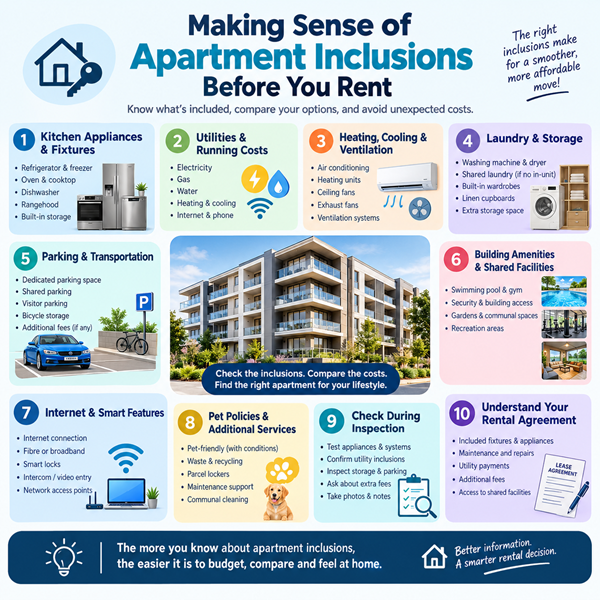
Finding the right apartment involves more than choosing a convenient location or an attractive floor plan. Before signing a lease, it is important to understand exactly what you are paying for and which features are included in your monthly rent. Some rental properties offer essential appliances, utilities, parking, and shared facilities, while others charge additional fees for these services.
Understanding apartment inclusions can help you compare rental options, plan your budget, and avoid unexpected expenses after moving in. Whether you are renting your first apartment or relocating to a new neighbourhood, knowing what is included in your rental agreement makes the process more straightforward.
This guide explains the most common apartment inclusions, what to check during inspections, and how to make an informed rental decision.
What Are Apartment Inclusions?
Apartment inclusions refer to the features, appliances, services, and facilities provided as part of a rental property or its monthly rental arrangement. These may include essential items such as kitchen appliances, heating, water services, or access to shared amenities.
However, inclusions vary significantly between properties, landlords, and rental agreements. An apartment advertised as fully equipped may include a refrigerator, oven, washing machine, and dishwasher, while another property may provide only basic kitchen fittings.
It is also important to distinguish between features included in the property and services included in the rent. For example, an apartment may have air conditioning installed, but electricity costs associated with operating it may remain the tenant’s responsibility.
Always confirm the details rather than relying solely on advertising descriptions.
1. Kitchen Appliances and Essential Fixtures
Kitchen appliances are among the most important apartment inclusions to check before renting. Having essential equipment already installed can reduce your initial moving expenses and make everyday living more convenient.
Common inclusions may include:
- Refrigerator and freezer
- Oven and cooktop
- Dishwasher
- Rangehood or exhaust fan
- Built-in cupboards and storage
- Microwave, where provided
During your inspection, check whether appliances are functioning properly and whether their condition is documented. Ask the property manager who is responsible for repairs if an included appliance stops working.
You should also confirm whether appliances are permanently provided or belong to the current tenant. This distinction can prevent confusion when the property changes occupants.
2. Utilities and Monthly Running Costs
Utilities can significantly affect the overall cost of renting an apartment. Some rental agreements include certain utility services in the monthly rent, while others require tenants to arrange and pay for them separately.
Common utilities include:
- Electricity
- Gas
- Water
- Heating and cooling
- Internet and telephone services
For example, a rental property might include water charges but require tenants to pay their own electricity and gas bills. Another apartment may offer a fixed utility package with additional charges depending on usage.
When reviewing apartment inclusions, ask which utilities are covered, whether usage limits apply, and whether any additional service fees are payable.
Understanding these details helps you calculate the actual monthly cost of living in the apartment rather than relying exclusively on the advertised rental price.
3. Heating, Cooling, and Ventilation
Comfort is an important consideration when choosing a rental property. Heating, air conditioning, and ventilation systems can influence both your daily comfort and energy expenses.
Check whether the apartment includes:
- Central heating or individual heating units
- Air conditioning
- Ceiling fans
- Bathroom exhaust fans
- Ventilation systems
Ask whether heating and cooling equipment is included in the rental agreement and who handles maintenance.
It is also useful to inspect windows, doors, and ventilation points to understand how effectively the apartment manages indoor temperatures.
A property with installed climate-control equipment may still have higher running costs if the systems are inefficient or electricity is not included in the rent.
4. Laundry Facilities and Storage
Laundry arrangements are another practical detail worth checking before signing a lease. Some apartments include an in-unit washing machine and dryer, while others provide shared laundry facilities within the building.
If laundry appliances are not included, consider whether you will need to purchase your own equipment or use an external laundromat.
Storage is equally important, particularly for tenants with limited living space. Look for built-in wardrobes, linen cupboards, kitchen storage, and additional storage areas.
Some apartment buildings also provide basement storage cages or designated storage rooms. Confirm whether these are included in the rent or require a separate fee.
5. Parking and Transportation Facilities
Parking can be a valuable inclusion, especially in apartment buildings located in busy residential or commercial areas.
However, not every rental property includes a dedicated parking space. Some offer shared parking, visitor parking, or paid parking arrangements.
Before committing, clarify:
- Whether a parking space is included
- Whether the space is allocated or shared
- Whether additional parking fees apply
- Whether visitor parking is available
- Whether bicycle storage is provided
If you own a vehicle, confirm the parking arrangements in writing. A convenient apartment may become less affordable if parking requires a separate monthly payment.
6. Building Amenities and Shared Facilities
Many modern apartment complexes offer shared facilities designed to improve residents’ convenience and lifestyle. These amenities can make a property more appealing, but access does not always mean they are free.
Common apartment amenities include:

Swimming Pools and Fitness Centres
Some buildings provide shared pools, gyms, or exercise rooms. Confirm whether access is included in the rent or requires membership fees.

Security and Building Access
Security systems, controlled entry, intercoms, and staffed reception areas may be available depending on the property.

Gardens and Communal Spaces
Landscaped gardens, outdoor seating, rooftop terraces, and shared lounges can provide additional space for residents.
Ask whether any facility has restricted operating hours, booking requirements, additional charges, or temporary maintenance closures.
7. Internet, Connectivity, and Smart Features
Reliable internet access is essential for many renters, particularly those who work remotely or study from home.
Some apartments include internet services or building-wide connectivity, while others require tenants to arrange their own provider.
Check whether the property has:
- Existing internet connections
- Fibre or broadband availability
- Network access points
- Smart locks or security systems
- Intercom or video entry systems
If internet is advertised as included, confirm the available speed, service provider, usage limits, and whether the connection is shared with other residents.
These details can help you determine whether the apartment meets your everyday connectivity needs.
8. Pet Policies and Additional Services
If you have pets or expect to get one in the future, review the property’s pet policy before signing the lease. Some apartments allow pets with certain conditions, while others may restrict particular animals or require written approval.
Also check whether the building provides additional services such as:
- Waste collection and recycling facilities
- Package delivery or parcel lockers
- Bicycle maintenance areas
- On-site maintenance assistance
- Communal cleaning services
These services may be included in the rent, covered by building fees, or charged separately. Understanding the arrangements beforehand helps you avoid unexpected costs and restrictions.
9. How to Check Apartment Inclusions Before Signing
A property inspection is an opportunity to verify the features advertised by the landlord or property manager. Rather than assuming everything is included, prepare a checklist and confirm each item.
During your inspection:
- Check all supplied appliances and fixtures for visible damage.
- Test heating, cooling, lighting, and ventilation systems.
- Confirm whether utilities are included in the rental price.
- Inspect storage areas, laundry facilities, and parking arrangements.
- Ask about additional fees for shared amenities.
- Photograph existing damage and record the property’s condition.
You should also request a written list of inclusions and compare it with the rental agreement.
If something important was promised during a viewing, such as a refrigerator or dedicated parking space, make sure the agreement clearly documents it.
10. Understanding Your Rental Agreement
Your lease agreement is one of the most important documents to review before moving into an apartment. It outlines the responsibilities of both the tenant and landlord, including which fixtures, appliances, and services are provided.
Pay particular attention to clauses covering maintenance, repairs, utility payments, additional fees, and access to shared facilities.
For example, an apartment may include a dishwasher, but the agreement should clarify how repairs are handled if it stops working. Similarly, access to a gym or swimming pool may be subject to building rules.
If any terms are unclear, ask the property manager for clarification before signing. Keeping written records of agreed apartment inclusions can help prevent misunderstandings during your tenancy.
Conclusion
Understanding apartment inclusions before you rent is an essential part of making a confident and financially informed housing decision. From kitchen appliances and utilities to parking, storage, and shared amenities, every inclusion can influence your monthly expenses and everyday comfort.
Take time to inspect the property, ask detailed questions, and review the lease agreement carefully. Comparing apartments based on their total costs and actual included features—not just advertised rent—can help you identify a rental property that suits your lifestyle and budget.
Ultimately, knowing exactly what is included before signing your lease can make moving into your new apartment a smoother and more predictable experience.