Walk into almost any kitchen in Maharashtra, Karnataka, or Telangana, and you’ll find a tin of jowar atta sitting quietly next to the wheat flour. It’s not flashy, it’s not new, and it doesn’t need a marketing campaign to earn its place. Jowar atta has been feeding Indian families for generations, long before “gluten-free” and “millet” became buzzwords on food packaging.
If you’re curious about what makes jowar atta special, why it behaves so differently from wheat flour, and how to actually get a soft roti out of it, this guide covers everything you need to know.
What Is Jowar Atta?
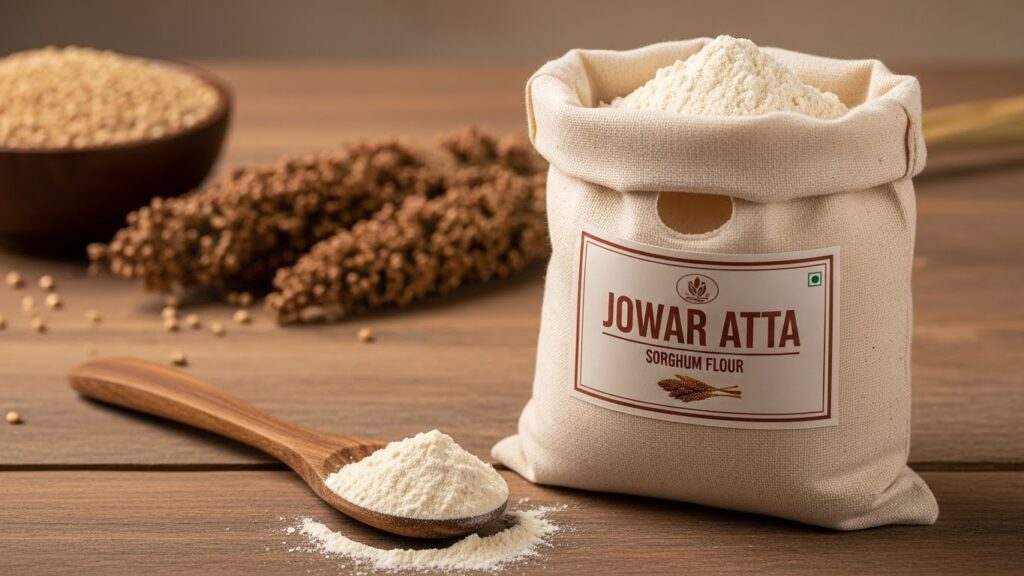
Jowar atta is flour made from whole sorghum grains, ground fresh. In English, jowar is simply called sorghum. Depending on where you’re from in India, you might know it by a different name entirely, cholam in Tamil Nadu, jonna in Andhra Pradesh and Telangana, or jola in Karnataka.
One common mix-up worth clearing up early: jowar is not the same as jau. Jau is barley, an entirely different grain that contains gluten. Jowar, on the other hand, is naturally gluten-free, which is one of the biggest reasons people are turning to it today.
Traditionally, jowar atta is stone-milled on a chakki rather than processed through high-speed roller mills. This slower, cooler grinding process keeps the grain from getting scorched and helps retain more of its natural nutrition and flavour.
Why Jowar Atta Deserves a Spot in Your Kitchen
1. It’s Naturally Gluten-Free
Unlike wheat, jowar contains no gluten at all. This makes it a practical everyday option for anyone reducing gluten in their diet. It’s worth noting that if you have coeliac disease or a severe gluten intolerance, you should check whether the flour you’re buying is milled in a dedicated gluten-free facility, since cross-contact with wheat during processing is common in many mills.
2. It’s a Whole Grain Flour
Good jowar atta is milled from the whole grain, bran included, rather than sieved and stripped down. That means you’re getting the fibre, plant protein, and minerals that come naturally packed into the grain, not a refined version of it.
3. It’s Mild and Family-Friendly
Among the millets, jowar is considered the least assertive in flavour. If you’ve tried bajra or ragi and found them too strong for daily meals, jowar is usually the easiest one to introduce to a family that’s used to wheat rotis.
4. It’s Traditionally a Summer Grain
In Indian food culture, jowar is generally considered a “cooling” grain and is eaten more often in the hotter months, when the body is thought to want something lighter than wheat. This is more of a traditional dietary practice than a clinical claim, but it explains why jowar bhakri is such a staple across western and southern India during summer.
5. It Keeps You Fuller for Longer
Thanks to its fibre content, a jowar bhakri tends to be more satisfying than its size suggests, one reason it has remained a everyday staple rather than a fad.
Nutrition in Jowar Atta
Because jowar atta is milled from the whole grain without anything blended in or sieved out, it retains a meaningful amount of dietary fibre, plant-based protein, and minerals like iron and manganese. If you’re tracking your nutrition closely, it’s always a good idea to check the lab-tested nutritional breakdown provided by your flour brand rather than relying on generic estimates, since milling methods can affect the final composition.
How to Use Jowar Atta in Everyday Cooking
Jowar atta isn’t a one-dish flour. Here’s how it’s commonly used across Indian kitchens:
- Bhakri and Jowar Roti – The most common everyday use, especially in Maharashtra and Karnataka.
- Thalipeeth – Jowar atta blends well with besan and spices for this savoury, textured flatbread.
- Dosa and Cheela Batters – Adding jowar to your batter gives a lighter, slightly crisp texture.
- Blended with Wheat Atta – If your family isn’t used to millets yet, starting with a quarter jowar mixed into your regular wheat atta is an easy way to ease into it.
The Real Secret to Soft Jowar Roti
If you’ve tried making jowar roti before and ended up with something that cracked or crumbled apart, you’re not alone, this is the single most common complaint with jowar atta, and it almost always comes down to one thing: water temperature.
Because jowar has no gluten to hold the dough together, there’s nothing to trap steam the way there is in wheat dough. Heat is what makes the dough pliable, not gluten. Here’s how to get it right:
- Use hot water, not cold, when kneading the dough.
- Knead while the dough is still warm. Waiting for it to cool down makes it harder to work with.
- Pat the dough out by hand instead of rolling it hard with a rolling pin.
- Cook on a well-heated tawa.
Cold water is the number one reason first attempts at jowar roti fail. Once you switch to hot water and warm kneading, you’ll notice an immediate difference in texture.
Jowar vs Other Millets: How Does It Compare?
If you’re new to millets, it helps to know how jowar stacks up against its more commonly used counterparts.
- Jowar vs Bajra: Jowar is milder and lighter in taste, while bajra is denser and considered warming, traditionally eaten in winter. Jowar is usually the gentler introduction to millets for most families.
- Jowar vs Ragi: Ragi has a stronger, earthier flavour and a darker colour, while jowar is far more neutral, making it easier to slip into everyday meals without a big adjustment in taste.
How to Store Jowar Atta Properly
Jowar flour is more delicate than wheat atta and can turn bitter faster if it’s left exposed to air. A few simple storage habits go a long way:
- Transfer the flour into an airtight steel or glass container as soon as it arrives.
- Store it in a cool, dry spot, away from the stove and direct sunlight.
- If you live somewhere humid, consider refrigerating what you won’t use within a few weeks.
- Always check the milling date on the pack and try to use it while it’s fresh, since jowar loses its natural sweetness faster than wheat flour once it’s ground.
Who Should Be Eating Jowar Atta?
Jowar atta is a good fit for:
- Families looking to reduce their wheat intake without giving up roti altogether.
- Anyone managing gluten sensitivity who wants an everyday staple rather than a specialty, occasional-use product.
- Households in regions where bhakri is already part of the weekly routine.
- Anyone simply looking to bring more whole grains and millets into their diet.
Frequently Asked Questions About Jowar Atta
What is jowar called in English?
Jowar is called sorghum in English. Regionally, it’s also known as cholam (Tamil), jonna (Telugu), and jola (Kannada).
Is jowar atta gluten-free?
Yes, jowar is a naturally gluten-free grain. However, if the atta is milled in a facility that also processes wheat, there’s a risk of cross-contact, so it may not be strictly suitable for coeliac disease unless labelled otherwise.
Why does my jowar roti keep cracking?
This almost always comes down to water temperature. Jowar dough needs hot water and warm kneading since there’s no gluten to hold it together. Pat it out gently by hand rather than rolling it.
Is jowar good or bad for daily consumption?
Many families across western and southern India eat jowar roti daily as part of their regular diet. If you’re managing a specific health condition, it’s best to check with your doctor or dietitian before making it a daily staple.
How is jowar different from jau?
They’re often confused because the names sound similar, but jowar is sorghum, while jau is barley. Jau contains gluten; jowar does not.
What’s the best way to introduce jowar atta into a wheat-eating household?
Start by blending it with your regular wheat atta, roughly a quarter jowar to three-quarters wheat, and gradually increase the ratio as the family gets used to the taste and texture.
Final Thoughts
Jowar atta isn’t a trend that’s going to fade out, it’s a grain that Indian households have relied on for generations, and for good reason. It’s mild, naturally gluten-free, packed with whole-grain nutrition, and once you get the hot-water trick right, genuinely easy to cook with. Whether you’re looking to reduce your wheat intake, manage gluten sensitivity, or simply bring more variety into your weekly meals, jowar atta is a simple, practical place to start.