The development of solid state batteries is creating new opportunities for safer and more advanced energy storage. Unlike traditional batteries that use liquid electrolytes, solid state batteries rely on solid materials to move lithium ions between electrodes. This change requires new approaches to material processing and cell design. A Sulfide Electrolyte Film can be an important part of this development because it provides a solid electrolyte structure that researchers can study and integrate into battery prototypes. Ampcera focuses on advanced battery materials and solutions for solid state battery research. Its portfolio includes sulfide solid electrolytes, coated cathode materials, processing services, and equipment designed to support research and pilot development.
What Is a Sulfide Electrolyte Film?
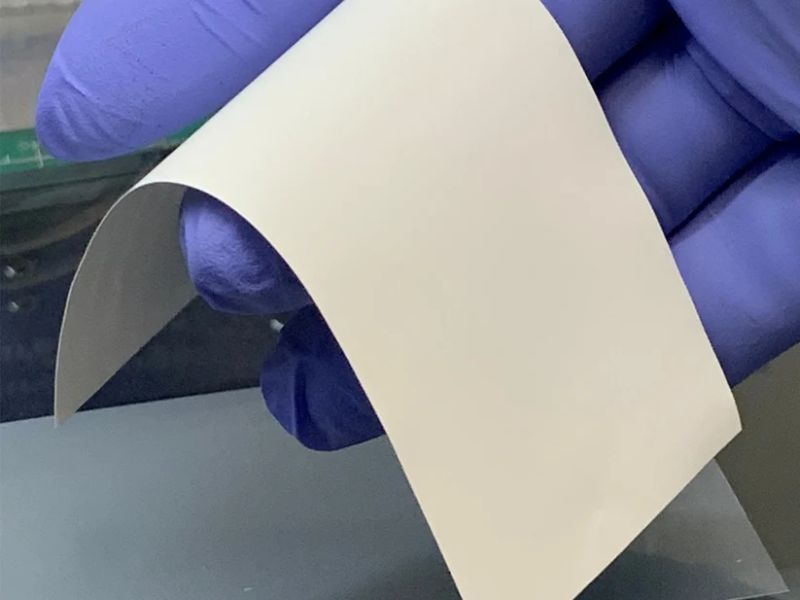
A Sulfide Electrolyte Film is a thin, processed form of sulfide solid electrolyte material. Instead of using the electrolyte only as a loose powder or compact pellet, researchers can process it into a film or membrane suited to specific experimental needs.
Film processing can provide researchers with greater flexibility when designing solid state battery cells. The thickness, density, composition, and processing method can all influence how the electrolyte performs within a cell.
Sulfide electrolytes are widely studied because many sulfide compositions can provide strong lithium ion transport. At the same time, they require careful handling because some compositions are sensitive to moisture.
Why Electrolyte Films Matter in Solid State Batteries?
The electrolyte is a key part of any solid state battery. It must provide a pathway for lithium ions while maintaining suitable contact with the electrodes.
A Sulfide Electrolyte Film can help researchers investigate how a processed solid electrolyte behaves in a practical cell structure. Films may be useful when studying interface contact, thickness effects, mechanical properties, and ionic transport.
The ideal film depends on the cell design. Researchers need to consider the electrolyte chemistry, electrode materials, operating conditions, and manufacturing process together.
Key Characteristics to Consider
When evaluating an electrolyte film, researchers may look at:
- Ionic conductivity
- Film thickness
- Density
- Flexibility
- Mechanical strength
- Chemical stability
- Surface quality
- Electrode compatibility
- Processing consistency
These characteristics can affect the performance and reliability of an experimental battery.
Ampcera and Sulfide Electrolyte Development
Ampcera provides sulfide solid electrolyte materials for battery research and development. The company also supports processing needs related to solid state battery components.
Its electrolyte film service is designed to help customers process sulfide-based solid electrolytes into films or membranes for research, prototyping, and device integration. This can give development teams an option for evaluating processed electrolyte structures without creating every processing capability internally.
For researchers, access to both electrolyte materials and processing support can make experimental planning more straightforward.
How Is an Electrolyte Film Used?
A Sulfide Electrolyte Film can be incorporated into experimental solid state battery structures depending on the cell architecture. Researchers may place the film between electrode layers or use it as part of a more complex solid electrolyte configuration.
The exact application depends on the desired cell design and processing method. Film thickness and contact pressure may also influence performance.
Careful assembly is important because solid materials need sufficient contact at their interfaces. Gaps or uneven surfaces can increase resistance and make test results less consistent.
Advantages of Film Based Processing
Processing sulfide electrolytes into films can offer several practical benefits for research teams.
Potential advantages include:
- More controlled electrolyte thickness
- Easier integration into selected cell designs
- Consistent sample preparation
- Support for prototype development
- Opportunity to study different film structures
- Practical testing of solid electrolyte interfaces
These advantages depend on the material and processing method. A film is not automatically better than a pellet or another electrolyte format. The appropriate form should be selected according to the research objective.
The Importance of Interface Quality
Solid state batteries depend heavily on the interfaces between their components. The cathode, electrolyte, and anode must maintain suitable contact for effective ion transport.
A Sulfide Electrolyte Film provides researchers with another way to study these interfaces under controlled conditions. Researchers can investigate how film thickness, surface condition, pressure, and electrode composition affect battery behavior.
Cathode coatings may also be evaluated alongside sulfide electrolyte films. Ampcera offers coated cathode materials, including lithium niobium oxide and lithium zirconium oxide coated NMC materials, for advanced battery research.
This combination of electrolyte and cathode development can help teams study complete material systems rather than individual components in isolation.
Processing and Environmental Control
Sulfide materials can require controlled handling because moisture may affect their properties. Proper environmental conditions can therefore be important during powder preparation, film processing, storage, and cell assembly.
Battery research facilities may use dry rooms or other controlled environments to reduce moisture exposure. Consistent environmental conditions can also make experimental results easier to compare.
Processing equipment, material handling, and testing procedures should be selected according to the specific electrolyte chemistry and intended application.
Moving From Research to Prototypes
Early battery research often begins with small material samples. As a project develops, researchers may need larger quantities and more practical component formats.
Film processing can help bridge some of the gap between powder evaluation and prototype cell development. A processed electrolyte membrane can be tested within a more representative cell structure.
Ampcera supports different stages of solid state battery development through materials, processing services, and research equipment. This broader approach can help teams investigate materials while also considering practical manufacturing requirements.
What Should Researchers Look For?
Before selecting a Sulfide Electrolyte Film for a project, researchers should define the requirements of their cell architecture.
Important questions include:
- What electrolyte chemistry is required?
- What film thickness is appropriate?
- How will the film interact with the cathode?
- What pressure will be used during testing?
- What environmental conditions are required?
- How will the film be stored and handled?
- What testing methods will be used?
Answering these questions can help teams select a suitable material format and processing approach.
Frequently Asked Questions
What is a Sulfide Electrolyte Film used for?
A Sulfide Electrolyte Film can be used in solid state battery research to provide a processed solid electrolyte layer between or alongside electrode components. Its exact role depends on the cell design.
Why are sulfide electrolytes studied?
Many sulfide electrolyte compositions offer strong lithium ion conductivity, making them attractive for solid state battery research. Their handling and interface properties still require careful study.
Can electrolyte films be used with coated cathodes?
They can be investigated together when the materials are compatible. Researchers should evaluate the cathode coating, electrolyte chemistry, processing conditions, and interface behavior as a complete system.
Does film thickness affect battery performance?
Yes. Electrolyte thickness can influence resistance, ion transport, mechanical behavior, and cell design. The appropriate thickness depends on the specific application.
Conclusion
Solid state battery development requires progress in materials, processing, interfaces, and testing. Sulfide electrolytes remain an important area of research because of their potential for efficient lithium ion transport and their use in advanced battery architectures.
A Sulfide Electrolyte Film provides researchers with a practical material format for studying solid electrolyte layers, interfaces, and prototype cell designs. Ampcera supports this field through sulfide solid electrolytes, electrolyte film processing, coated cathode materials, electrode services, and battery research equipment.
As solid state battery technology continues to develop, reliable material processing will remain an important part of turning promising laboratory concepts into practical battery prototypes. Careful control of electrolyte properties, film structure, interfaces, and testing can help researchers make steady progress toward future energy storage solutions.