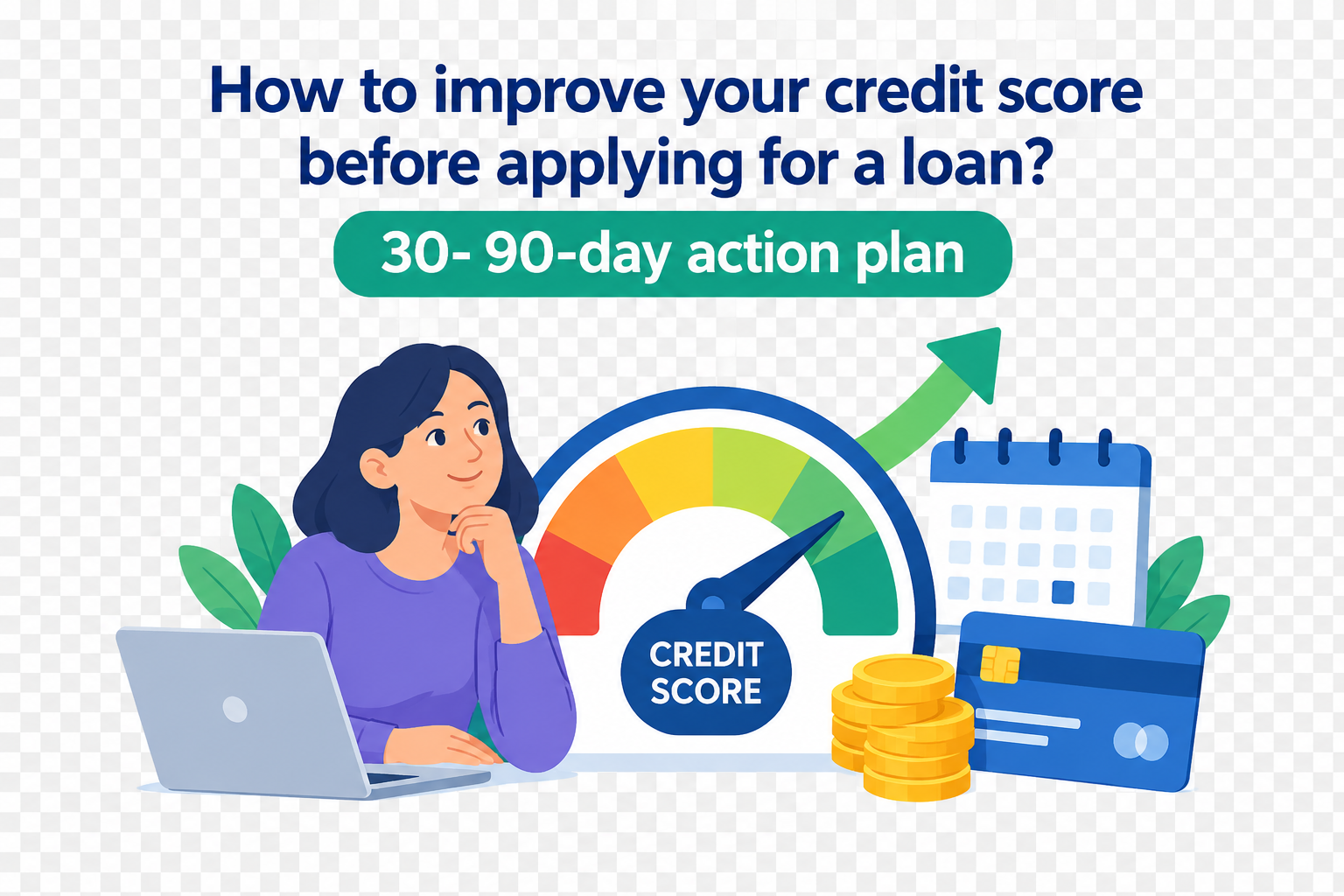
If you are planning to apply for a loan, mortgage, or car finance in the next 3 months, you must have a good credit score. It helps you get better interest rates, flexible rates and higher amounts than you may get with a bad credit score.
It may not be easy for you to erase CCJ, bankruptcy, or late payments immediately. However, you can walk through a 30- 90-day credit improvement plan. It may help you achieve the best credit score to fulfil your dreams affordably.
Why does a 30-90-day window matter to improve your credit score?
30-90 days are more than enough to report the delinquencies. You may update the information associated with accounts with a bad credit score and control excessive spending. It may help you get a better loan interest rate. Here are other reasons why a 30- 90-day window matters to improve the credit score:
Fix errors and outdated information on your credit reports.
Reduce credit utilisation so new balances report lower.
Establish a clear pattern of on-time payments and practice responsible money management.
Avoid new hard searches and risky transactions. It may impact affordability chances.
You may start to see change within 1–3 billing cycles (30–90 days), which is exactly the timeframe most borrowers have before a planned application.
How does a 30- 90-day window improve chances of loan approval with bad credit?
A 30-90-day window helps improve the chances of loan approval with a bad credit score because it gives the credit reporting cycle the time to catch up with positive changes in financial behaviour.
Moreover, 1-3 months of credit management gives enough buffer for lenders to analyse your affordability. The cycle is especially important if seeking a loan for bad credit with instant approval online. Here is how a 30-90-day window improves the chances of loan approval:
1) Lenders focus on latest financial management
How you have managed the finances in the last 3-6 months matters the most when you decide to get a loan. So, if you had a missed payment 90 days ago, don’t worry. It would not affect the loan approval chances much more than a recent and unpaid CCJ. Precisely, a clean 30- 90-day window of responsible financial management increases the chances of getting a loan.
2) Gives time to fix errors and report them
Within a 30–90-day window you can:
- Dispute inaccuracies (wrong missed payments, accounts that aren’t yours, outdated markers).
- Ensure you’re on the electoral roll at your current address.
- Close or disassociate from joint accounts with ex-partners if those links are dragging you down.
Corrections can take up to 28 days for statutory disputes, so a 30–90-day plan ensures fixes are in place before you apply.
3) Analyse recent borrowing and hard searches
Applying for multiple applications within a small window affects the approval chances. Lenders may even reject the application. It is because they often think in terms of:
- 1–2 hard searches in 3 months: Usually acceptable.
- 3–4 searches in 3 months: May prompt questions.
- 5+ searches in 3–6 months: Higher-risk profile for many lenders.
A 30–90-day window where you:
- Stop applying for new credit.
- Use only soft-search eligibility checkers.
- Avoid taking on new loans, cards, or BNPL plans.
It means that by the time you apply, your most recent 3 months look calm and controlled, not desperate.
What to check before starting the plan?
Here is what you must do before going on with the plan:
Step 1- Get a credit report from all agencies
Identify and get your credit report from 3 primary credit agencies: Experian, TransUnion and Equifax. You may get different credit scores and reports from all 3 agencies. Each have their parameters to analyse your credit score.
Step 2- Check and report the delinquencies
Analyse your credit report and concentrate on common aspects. They might be affecting your credit score. It could be unpaid bills, missed payments, loan defaults, old residential address, inconsistent income, etc.
Identify whether the debts mentioned are yours. If you don’t recognise them, report the alien debts. It may be affecting your credit score. You may request an updated report after reporting errors. Usually, you may get one within 30 days.
Step 3- Confirm electoral roll registration
Check your registered at your current address on the UK electoral roll (gov.uk/register-to-vote). If not, register now. This can boost your score and helps with identity verification.
How to improve credit score in 30-90 days?
Day 1-30: focus on quick wins
- Correct credit report errors by paying debts, correcting incorrect public records, or recording paid missed payments mentioned wrongly
- Try to slash credit utilisation ratio by paying down the credit cards, making regular payments and avoiding taking credit unnecessarily
- Stop any new credit for at least 30 days
- Set up direct debits for payments
Day 31-60: Consolidate gains to improve your profile
- Try to maintain credit utilisation of up to 30%
- Avoid paying consistently and missing payments later on
- Try to pay consistently for at least 2-3 months
- Avoid gambling for a 30-60-day window or paying fees late
- Re-check your credit reports every 45-60 days
Day 61-90: Final touch before applying
- Keep your credit utilisation low until the next statement cycle
- Set up direct debits and don’t miss any payment within this period
- Avoid any new hard credit searches. It may drop your credit score
- Try to prepare the basic documents that you may need for the loan. It could be – passport, driving license, ID, proof of residential address, proof of income and a brief explanation of past CCJ, bankruptcy (if any)
- Analyse the final credit report and credit score check by getting a credit report from 3 agencies.
Bottom line
These are some aspects that you may consider to improve your credit score within 30-90 days before applying for a loan. You may begin with the basic things like reporting errors and paying some debts. Later, you must ensure responsible payment behaviour by setting up direct debits. Lastly, you must prepare basic documents and get updated reports from credit agencies.