
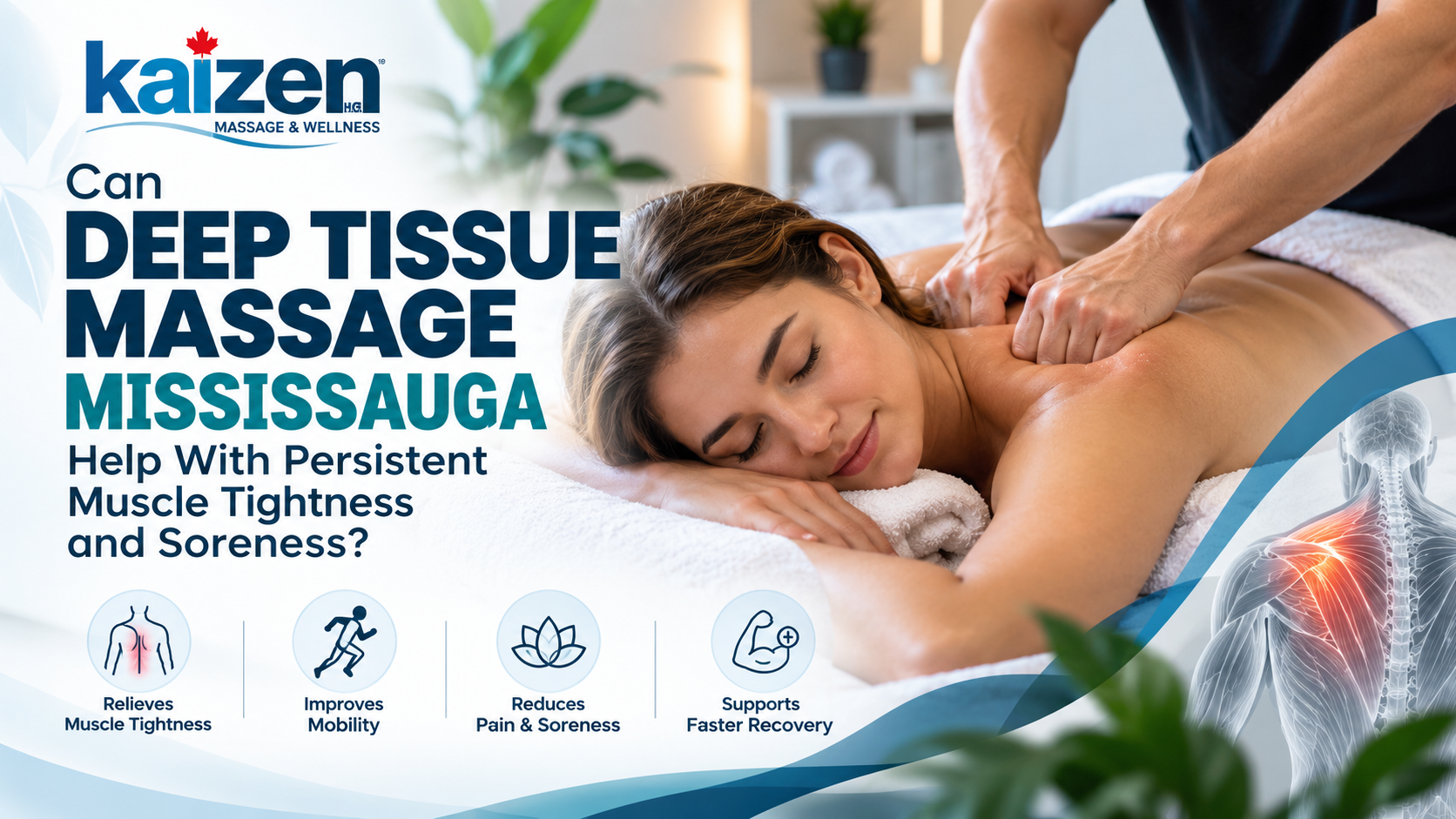

Persistent muscle tightness can make ordinary movement feel harder than it should. Long hours at a desk, repetitive work, heavy training, old injuries, stress, and limited recovery can all contribute to muscles that feel stiff, tender, or constantly “knotted.” Deep tissue massage Mississauga is one option people often consider when lighter massage does not seem to reach the deeper areas of tension. At Kaizen Health Group, treatment is provided by Registered Massage Therapists who can adjust pressure and technique to the client’s comfort and goals.
Deep tissue massage is not simply a harder version of a relaxation massage. It uses slower strokes, sustained pressure, and focused techniques intended to address deeper muscle and connective tissue. The aim is usually to improve comfort and movement rather than to make the session as intense as possible. A good treatment should still be responsive to your feedback, medical history, pain level, and tolerance.
Why do muscles stay tight even after rest?
Muscle tightness can develop for several reasons. Sometimes a muscle has been working repeatedly in the same position, such as the neck and shoulders during computer work. In other cases, the body may guard an area after a strain or injury. Training without enough recovery, sitting for long periods, poor sleep, and stress can also leave certain muscle groups feeling tense.
Not every tight sensation means a muscle is physically “short.” Pain sensitivity, fatigue, joint stiffness, and nervous system stress can all change how an area feels. That is one reason professional assessment matters. A therapist can ask when the problem started, what movements make it worse, whether symptoms travel into another area, and whether there are warning signs that need medical attention.
Kaizen Health Group’s article Waking Up with Lower Back Pain discusses how long sitting, sleep position, stress, and tight muscles can contribute to morning stiffness. That is useful context because persistent tightness is often influenced by daily habits as much as by what happens during a single treatment session.
How can deep tissue massage Mississauga address persistent tension?
Deep tissue techniques use controlled pressure to work through layers of muscle and fascia. The therapist may use hands, knuckles, forearms, or other manual techniques depending on the area being treated. Pressure is usually applied slowly so the tissues have time to respond rather than being forced.
Kaizen Health Group describes deep tissue massage as a treatment commonly used for musculoskeletal concerns such as strains, sports injuries, chronic pain, muscle adhesions, and knots. Their service information also notes that sessions often begin with lighter pressure before moving into deeper work. This gradual approach is important because muscles that are already irritable may become more guarded if pressure is applied too quickly.
For someone looking for therapeutic massage Mississauga, the benefit is not necessarily that deeper pressure is always better. The useful part is that the session can be directed toward the specific tissues and movement patterns causing discomfort. A therapist may spend more time on the upper back and shoulders for desk related tension, the hips and glutes for prolonged sitting, or the legs for training related soreness.
Deep pressure should not mean unbearable pain
It is normal for some areas to feel tender during focused treatment, but severe or sharp pain should not be treated as a sign that the massage is “working.” A Registered Massage Therapist can reduce pressure, change the technique, or avoid a sensitive area. Communication during the session is part of safe care.
What does the evidence say about massage for pain and stiffness?
Massage therapy is used as a complementary approach for pain, stress relief, muscle tension, and relaxation. Mayo Clinic notes that research suggests massage may ease pain, muscle stiffness, and tension while supporting relaxation. It also emphasizes that benefits vary depending on the condition and that more research is needed for some uses.
This matters because massage should not be presented as a guaranteed cure for persistent pain. It may be one part of a broader plan that includes movement, exercise, sleep, posture changes, load management, and medical care when needed. If an area repeatedly tightens after massage, the next question is why it keeps happening.
For people searching for massage therapy in Mississauga, combining hands on treatment with realistic self care often makes more sense than relying on massage alone. A therapist may suggest gentle mobility work, breaks from sitting, gradual return to activity, or simple home care based on the assessment.
What should you expect during a deep tissue appointment?
A session should begin with a health history and a discussion of your goals. Tell the therapist where you feel tightness, how long it has been present, whether there was an injury, what activities aggravate it, and whether you have numbness, tingling, weakness, swelling, or other symptoms. This helps the therapist decide whether massage is appropriate and which areas need attention.
During treatment, the therapist may start with broader, lighter strokes and gradually work into more focused pressure. Deep tissue massage is often less rhythmic than Swedish massage because it may spend more time on a specific region. Pressure can be adjusted at any point.
After the session, mild temporary tenderness can occur, particularly if an area has been sensitive for a long time. Hydration, comfortable movement, and following the therapist’s aftercare advice may help. If symptoms become significantly worse, feel unusual, or persist, contact an appropriate healthcare professional.
Who may benefit from registered massage therapist Mississauga care?
Deep tissue work may be considered by people with ongoing muscle tension, physically demanding jobs, training related tightness, postural strain, or areas that feel restricted after previous injury. A registered massage therapist Mississauga can also modify the session for clients who want targeted work without using maximum pressure throughout the appointment.
Kaizen Health Group has multiple clinics, which can make ongoing care easier to fit around work and family schedules. People who need massage therapy in Streetsville can use the Queen Street South location, while massage therapy in Meadowvale is available at Meadowvale Town Centre. The clinic network also includes Glen Erin, Robert Speck Parkway near Square One, and Oakville.
Using a massage clinic in Mississauga with multiple therapists can also help when appointment times, therapist style, or treatment focus need to vary. Different RMTs may have experience with deep tissue techniques, stretching, myofascial work, sports recovery, trigger point therapy, or other approaches.
When should persistent tightness be assessed medically?
Massage is not the right response to every type of pain or tightness. Seek medical assessment if symptoms follow significant trauma, are accompanied by fever or unexplained weight loss, include progressive weakness or loss of sensation, or involve sudden swelling, redness, or severe pain. Back pain with loss of bladder or bowel control requires urgent medical attention.
You should also speak with a healthcare professional if the problem keeps returning, limits normal activity, or does not improve despite reasonable self care. Persistent pain can have many causes, and treatment is more effective when the underlying issue is identified instead of repeatedly treating the same sensation.
Common mistakes that can keep muscle tightness coming back
One common mistake is treating every tight area with more pressure. Another is returning immediately to the same activity pattern that created the irritation. Long sitting, sudden increases in training volume, poor recovery, and repetitive movements can all keep reloading the same tissues.
It is also easy to stop moving because an area feels sore. Unless a healthcare professional has advised rest, gentle movement is often preferable to complete inactivity. The right balance depends on the cause of the symptoms and the person’s overall health.
Key takeaways
Deep tissue massage Mississauga may help some people manage persistent muscle tightness and soreness by providing focused manual treatment to deeper muscle and connective tissue. The best results usually come from appropriate pressure, clear communication, and a plan that also considers movement, recovery, and daily habits.
Kaizen Health Group offers Registered Massage Therapy across several Mississauga locations and Oakville. If you are dealing with recurring muscle tension and want to know whether deep tissue work is suitable, book your massage therapy session and discuss your symptoms and goals with an RMT.
Frequently asked questions
Is deep tissue massage supposed to hurt?
Deep tissue massage can feel intense or tender in some areas, but it should not require you to tolerate severe or sharp pain. Tell your therapist if the pressure feels excessive so the technique can be adjusted.
How often should I get deep tissue massage?
There is no single schedule that suits everyone. Frequency depends on your symptoms, activity level, treatment goals, response to massage, and healthcare needs. An RMT can suggest a reasonable plan after assessing you.
Can deep tissue massage help desk related neck and shoulder tension?
It may help reduce the feeling of muscle tension for some people, especially when combined with movement breaks, ergonomic changes, and exercise. Persistent or worsening symptoms should be properly assessed.
Is deep tissue massage the same as sports massage?
No. The approaches can overlap, but sports massage is usually organized around activity, performance, recovery, or sports related problems, while deep tissue describes the depth and style of manual work used on muscles and connective tissue.
Health disclaimer: This article is for general educational purposes and does not replace medical assessment, diagnosis, or treatment. Speak with a qualified healthcare professional if you have persistent, severe, or unexplained pain or other concerning symptoms.



Join the conversation