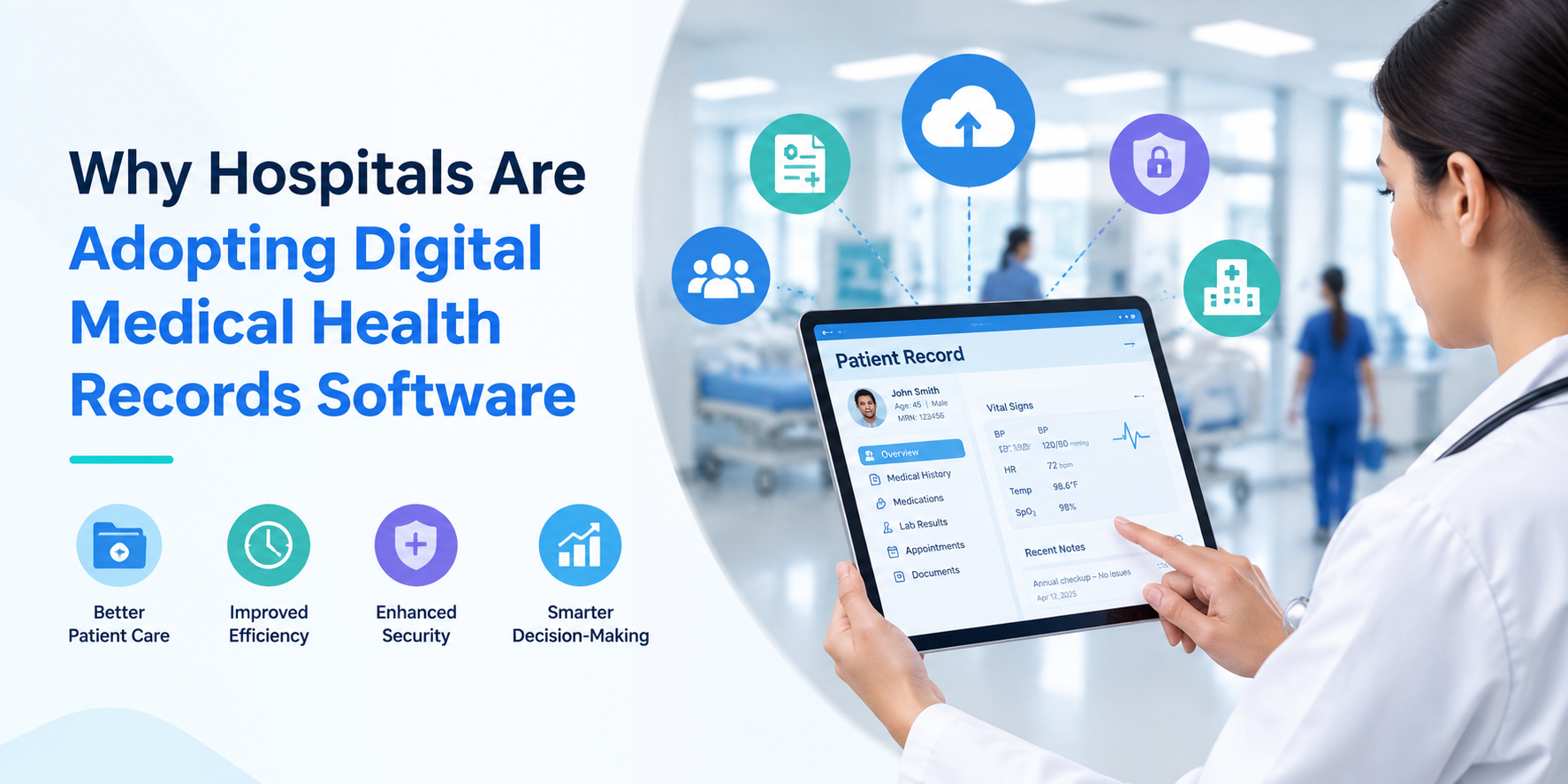
The healthcare sector has experienced sweeping changes over the past decade. For generations, medical facilities relied on physical file rooms, paper charts, and handwritten clinical notes. These manual methods routinely created administrative delays, misfiled laboratory results, and elevated the risk of human error during critical moments.
Today, growing patient volumes and evolving clinical standards demand greater agility. Healthcare institutions require systems that support fast decision-making, secure communication, and reliable administrative workflows. Because of these demands, investing in specialized electronic medical records software for hospitals has transitioned from an optional technical upgrade to a vital operational necessity.
The Core Drivers Behind the Shift to Digital Records
The transition away from paper records is fueled by the need for speed, precision, and consistency across hospital departments. Modern medical facilities operate 24 hours a day, requiring seamless information exchange across emergency rooms, intensive care units, and outpatient clinics.
Here are the primary factors driving this industry-wide migration:
- Elimination of physical storage burdens: Maintaining massive paper record archives consumes valuable hospital space and demands dedicated personnel to locate files manually.
- Instantaneous data retrieval: Physicians can access years of medical history, allergy profiles, and previous surgeries in just a few clicks.
- Coordinated multi-specialty care: Different specialists can review the same patient chart simultaneously without waiting for physical documents to move between floors.
- Standardized documentation: Built-in templates ensure clinicians collect required data points uniformly, minimizing ambiguity in diagnostic reporting.
Major Clinical Benefits of Hospital EHR and EMR Systems
Hospitals that implement digital documentation frameworks experience notable improvements in daily clinical performance. When medical data moves effortlessly, care teams can focus on healing patients rather than tracking down missing paperwork.
1. Enhanced Diagnostic Accuracy and Patient Safety
Medical errors often stem from illegible handwriting, incomplete medical histories, or missing drug interaction warnings. Digital health software directly addresses these issues through automated safety checks.
When a physician enters a new prescription, the software flags dangerous drug interactions, existing allergies, or incorrect dosage levels instantly. These automated clinical alerts act as a reliable safety net, preventing adverse events before they reach the patient.
2. Real-Time Departmental Interoperability
In a traditional setup, waiting for laboratory results or imaging studies can delay life-saving treatments. Digital health systems bridge the gap between hospital units by centralizing updates in real time.
- Laboratories upload blood work and pathology results directly into the patient’s active chart.
- Radiology teams link imaging scans and interpretation reports to the centralized profile.
- Nursing staff document vital signs and medication administration electronically at the bedside.
- Attending physicians receive instant push notifications when critical findings require immediate review.
3. Fortified Data Security and Regulatory Compliance
Protecting sensitive patient data is an ethical obligation and a legal requirement under regulations such as HIPAA. Paper records are vulnerable to theft, unauthorized viewing, water damage, and fire.
Digital medical platforms provide robust security controls, including role-based access protocols, multi-factor authentication, and military-grade encryption. Every time a user opens, edits, or exports a record, the system logs the activity in an unalterable audit trail. This transparency allows hospital compliance officers to monitor data access and prevent privacy breaches.
Streamlining Administrative and Financial Workflows
Beyond clinical care, digital medical records software transforms hospital revenue cycles. Clinical documentation forms the foundation of every medical claim sent to commercial payers and government programs.
Inaccurate documentation or delayed charting inevitably leads to high denial rates and unpredictable cash flow. Digital records capture diagnosis codes (ICD-10) and procedure codes (CPT) directly from the clinical encounter. This automated tracking prevents under-coding, reduces claim creation errors, and shortens the billing cycle.
Many healthcare organizations link their digital charting platforms directly with specialized external revenue teams. Facilities aiming to eliminate operational bottlenecks often coordinate with the best medical billing services in USA to audit their submissions, manage denials, and capture every dollar earned. Pairing robust record-keeping software with expert billing management ensures sustainable financial health for the hospital.
Best Practices for a Seamless Digital Transition
Adopting new medical software involves cultural and operational adjustments across all hospital tiers. Leadership teams that follow structured implementation plans achieve faster adoption rates and experience fewer disruptions.
- Engage clinical staff early: Involve physicians, charge nurses, and departmental heads during the software selection process to evaluate workflow compatibility.
- Deliver comprehensive role-based training: Provide targeted instruction so that nurses, doctors, and administrative staff learn the exact modules they need for daily duties.
- Establish data migration standards: Clean and validate existing patient records before transferring legacy files into the new software architecture.
- Provide on-site technical support: Keep dedicated technical specialists available on hospital floors during the initial rollout weeks to troubleshoot usability questions immediately.
The Future of Hospital Record Management
As digital software continues to evolve, the integration of artificial intelligence and machine learning is reshaping hospital operations. Predictive analytics tools can now scan longitudinal health records to identify patients at risk of chronic complications or readmissions.
Voice-recognition dictation tools also allow physicians to record clinical findings conversationally, freeing them from computer screens during consultations. These ongoing innovations ensure that digital health software will remain the cornerstone of patient care for decades to come.
Frequently Asked Questions (FAQs)
What is the difference between an EMR and an EHR?
An Electronic Medical Record (EMR) is a digital version of a patient chart used primarily within a single clinic or hospital. An Electronic Health Record (EHR) is designed to share information securely across different healthcare organizations, specialists, labs, and pharmacies.
How does digital health software protect patient privacy?
Digital software safeguards information through end-to-end data encryption, multi-factor authentication, and role-based permissions. Additionally, comprehensive audit logs track precisely who viewed or modified patient data, ensuring full regulatory compliance.
Can digital records software reduce physician burnout?
Yes, well-designed systems reduce repetitive manual paperwork, automate prescription refills, and simplify documentation with customizable templates. These features allow clinicians to spend more time engaging directly with patients and less time completing clerical tasks.
How long does it take for a hospital to implement digital health records software?
Implementation timelines depend on the hospital’s size, legacy infrastructure, and customization needs. Most medium-to-large hospital systems complete deployment, data migration, and staff training within six to eighteen months.
Does digital records software help with hospital accreditation?
Yes, digital platforms automatically track clinical quality metrics, patient outcomes, and infection control data. Having easy access to standardized data significantly simplifies reporting during audits by accreditation bodies such as The Joint Commission.
Conclusion
The switch to digital medical health records software is more than a technological upgrade. It represents a fundamental shift toward safer, faster, and more accountable medical care. By eliminating physical paperwork, hospital administrators protect patient privacy, reduce diagnostic delays, and build a financially resilient practice environment. Facilities that embrace these digital tools today ensure they remain fully equipped to meet the healthcare challenges of tomorrow.