Managing incoming customer calls efficiently is essential for businesses that want to deliver reliable customer service and maintain strong relationships. However, as businesses grow, handling increasing call volumes manually can become challenging. Long waiting times, missed inquiries, repetitive questions, and inefficient call routing can negatively affect customer satisfaction and employee productivity.
Inbound call automation provides a practical solution by using technology to streamline incoming calls, automate repetitive tasks, and connect customers with the right resources. From automated voice assistants to intelligent call routing, these systems help businesses improve communication while reducing the workload on customer support teams.
This complete guide explores inbound call automation, its key features, major benefits, and practical use cases across different industries.
What Is Inbound Call Automation?
Inbound call automation is the process of using software and intelligent technologies to manage incoming telephone calls with minimal manual intervention.
These systems can answer calls, provide automated responses, collect customer information, route callers to appropriate departments, and support common customer service activities.
Modern solutions may include interactive voice response (IVR), artificial intelligence (AI), automated call distribution (ACD), speech recognition, and AI-powered voice agents.
For example, when a customer calls a service provider to ask about operating hours, an automated system can provide the information immediately. If the customer needs technical assistance, the system can direct the call to the relevant department.
By automating routine interactions, businesses can create a more organized communication process while keeping human representatives available for complex inquiries.
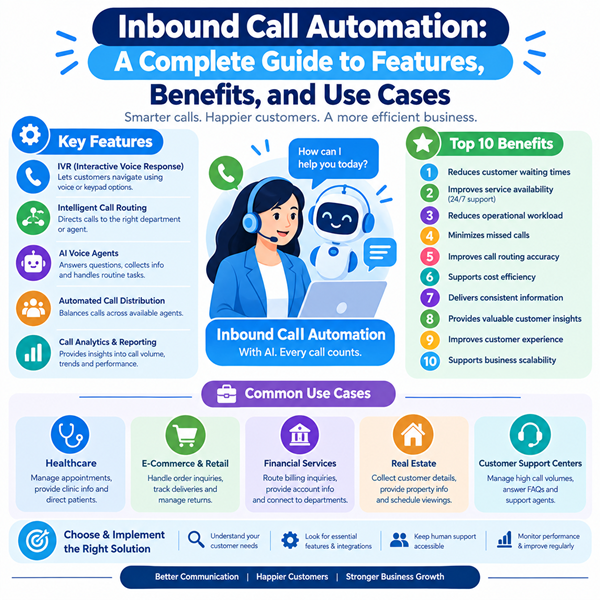
Key Features of Inbound Call Automation
Understanding the main features of inbound call automation helps businesses identify the capabilities that match their communication requirements.
1. Interactive Voice Response (IVR)
IVR systems allow callers to interact with automated menus using keypad selections or voice commands.
For example, customers may select billing, technical support, appointments, or general inquiries. The system then directs them to the appropriate service or provides relevant information.
IVR helps organize incoming calls and reduces the need for employees to manually identify every customer’s requirements.
2. Intelligent Call Routing
Intelligent call routing directs incoming calls according to predefined rules, customer selections, department availability, or other supported criteria.
This feature helps customers reach the appropriate representatives without unnecessary transfers.
Businesses can also configure routing workflows to distribute calls among available employees and manage incoming demand more effectively.
3. AI Voice Agents
AI voice agents use artificial intelligence and speech recognition to interact with callers through natural conversations.
Depending on their capabilities, these systems can answer frequently asked questions, collect information, confirm appointments, and guide customers through basic processes.
AI voice agents can also identify when a caller requires additional assistance and transfer the interaction to a human representative.
4. Automated Call Distribution
Automated call distribution helps distribute incoming calls across available support agents according to configured rules.
This feature is particularly useful for businesses handling high call volumes because it helps prevent individual employees from becoming overwhelmed while other representatives remain available.
5. Call Analytics and Reporting
Many automation platforms provide reporting tools that help businesses monitor call activity and identify communication trends.
Common metrics include incoming call volume, missed calls, average waiting times, call duration, and routing activity.
These insights help managers understand customer demand and identify opportunities to improve support operations.
10 Benefits of Inbound Call Automation
Implementing inbound call automation can provide several operational and customer service advantages.
1. Reduces Customer Waiting Times
Automated responses and intelligent routing help customers receive assistance more quickly. Routine questions can be answered without waiting for an available employee, while other calls are directed to the appropriate department.
2. Improves Customer Service Availability
Automated systems can provide basic assistance outside regular business hours. Customers may receive information, submit requests, or leave callback details even when support employees are unavailable.
3. Reduces Operational Workload
By managing repetitive inquiries and routine call-handling tasks, automation allows employees to focus on more complex responsibilities.
This can improve productivity and help businesses make better use of their existing workforce.
4. Minimizes Missed Calls
When employees are busy, incoming calls may go unanswered. Automated call handling can provide alternative options, such as automated assistance, message collection, or callback requests.
This helps businesses capture more customer inquiries and maintain communication.
5. Improves Call Routing Accuracy
Automated routing directs customers according to their requirements, reducing unnecessary transfers and helping them reach the appropriate department.
6. Supports Cost Efficiency
Automation can reduce the amount of manual effort required for repetitive communication tasks. While implementation costs vary, businesses may improve resource utilization by automating suitable workflows.
7. Delivers Consistent Information
Automated systems provide standardized responses to common questions, helping businesses maintain consistent communication across departments and customer interactions.
8. Provides Valuable Customer Insights
Call reports help businesses understand inquiry patterns, busy periods, and recurring customer concerns. These insights support more informed staffing and service decisions.
9. Improves Customer Experience
Faster responses, organized routing, and convenient self-service options can make customer interactions smoother and more accessible.
10. Supports Business Scalability
As customer demand increases, businesses can expand automated workflows, introduce additional call routes, and improve self-service options without relying exclusively on additional employees.
Common Use Cases of Inbound Call Automation
Inbound call automation is useful across industries where businesses depend on telephone communication to support customers, manage appointments, or respond to inquiries.
Healthcare and Medical Practices
Healthcare providers can use automated call systems to manage appointment requests, provide clinic information, confirm bookings, and direct patients to appropriate departments.
For example, an automated assistant may help patients understand appointment availability while routing urgent or complex inquiries to staff.
Healthcare organizations should ensure that automation workflows follow applicable privacy and data protection requirements.
E-Commerce and Retail
Online stores and retail businesses frequently receive questions about orders, delivery updates, returns, product availability, and payment procedures.
Automated call handling can provide basic information and direct customers to the relevant support teams.
This helps businesses manage customer inquiries more efficiently, particularly during promotional periods and seasonal sales.
Financial Services
Banks, insurance providers, and financial service companies can use automated systems to route billing inquiries, provide general account information, and connect customers with appropriate departments.
Sensitive transactions and account-related activities should use suitable authentication and security controls.
Real Estate
Real estate agencies often receive inquiries about property availability, viewing appointments, rental information, and general services.
Inbound call automation can collect prospective customer details, provide basic property information, and organize callback requests for agents.
Customer Support Centers
Call centers can use automation to manage high call volumes, distribute calls, answer frequently asked questions, and support customer service workflows.
This allows representatives to focus on complex cases while automated systems handle suitable routine interactions.
How to Choose the Right Inbound Call Automation Solution
Selecting the right solution requires understanding your business requirements and customer communication challenges.
Start by identifying common incoming inquiries, missed-call patterns, and areas where customers experience delays.
Next, evaluate essential features such as IVR, AI voice agents, intelligent call routing, reporting tools, and integration capabilities.
Consider whether the platform can connect with your existing customer relationship management (CRM) system or business software.
Ease of use is also important. Employees should be able to manage workflows, update automated responses, and review performance reports without unnecessary complexity.
Finally, prioritize customer experience. Automation should make communication easier rather than forcing customers through confusing menus or preventing access to human assistance.
Best Practices for Successful Implementation
A successful automation strategy begins with simple, clearly defined workflows.
Start by automating repetitive tasks such as business hours, appointment confirmations, and frequently asked questions. Monitor customer feedback and call performance before expanding into more complex processes.
Maintain a clear option for transferring customers to human representatives when necessary.
Regularly review call analytics to identify missed opportunities, recurring issues, and areas where automated responses need improvement.
Combining automation with employee training and ongoing performance monitoring can help businesses maintain reliable customer service as operations grow.
Final Thoughts
Inbound call automation is an effective way for businesses to modernize customer communication and manage incoming calls more efficiently.
With features such as IVR, intelligent call routing, AI voice agents, and call analytics, businesses can reduce waiting times, streamline repetitive tasks, and improve customer service availability.
From healthcare and retail to real estate and customer support centers, automation offers flexible applications across industries.
By selecting the right technology and maintaining accessible human support, businesses can create a scalable communication system that supports customer satisfaction and long-term operational growth.