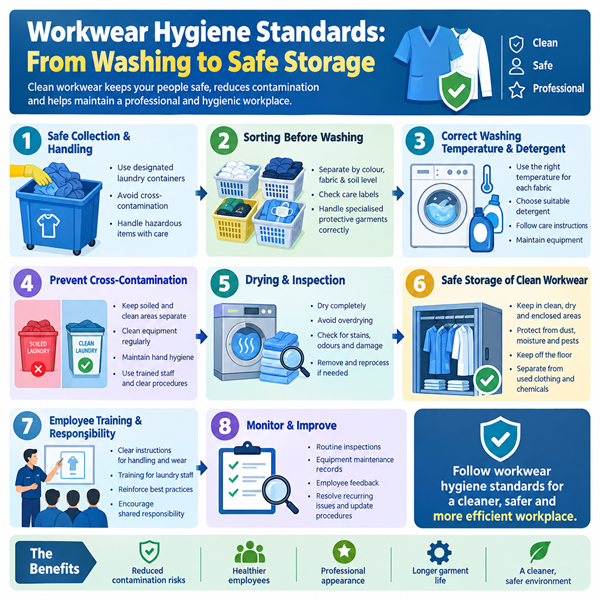
Maintaining clean and hygienic workwear is essential for protecting employees, preventing cross-contamination, and creating a safe working environment. Whether employees work in healthcare, hospitality, food processing, manufacturing, or industrial settings, their clothing can accumulate dirt, sweat, bacteria, and other contaminants throughout the working day.
Following established workwear hygiene standards helps organisations ensure that uniforms and protective clothing remain clean, safe, and suitable for their intended purpose. However, maintaining hygiene involves more than simply washing garments. It requires a structured process that includes appropriate collection, sorting, laundering, drying, inspection, and safe storage.
By implementing consistent workwear hygiene practices, businesses can protect employees, maintain professional standards, and extend the usable life of their garments.
1. Understanding Workwear Hygiene Standards
Workwear hygiene standards refer to the procedures and practices used to maintain the cleanliness, safety, and condition of clothing worn in professional environments.
Different industries have different hygiene requirements depending on the nature of their operations. For example, healthcare workers may require garments processed to minimise contamination risks, while food production employees need clean clothing to help prevent the transfer of contaminants to products and surfaces.
Industrial workers may also require specialised laundering procedures to remove oils, chemicals, and other workplace residues.
A well-managed workwear hygiene programme should address:
- Appropriate handling of used garments.
- Separation of clean and contaminated clothing.
- Suitable washing temperatures and detergents.
- Effective drying and garment inspection.
- Hygienic storage and distribution.
- Regular monitoring of laundering procedures.
These practices help establish a consistent approach to garment hygiene across the organisation.
2. Safe Collection and Handling of Used Workwear
The workwear hygiene process begins immediately after garments are removed. Used clothing should be handled carefully to minimise the spread of dirt, microorganisms, and workplace contaminants.
Employees should place worn garments into designated laundry containers rather than leaving them on floors, work surfaces, or shared areas.
In environments where clothing may be contaminated with blood, chemicals, oils, or other hazardous substances, additional handling precautions may be necessary. Appropriate protective equipment and workplace procedures should be followed when collecting such garments.
Laundry containers should be clearly identified and emptied regularly to prevent excessive accumulation of soiled clothing.
Organisations should also ensure that clean garments never come into contact with used workwear during collection, transportation, or processing.
3. Sorting Workwear Before Washing
Sorting is an important step in maintaining effective workwear hygiene standards. Different garments may require different laundering methods depending on their fabric, colour, contamination level, and intended use.
Separating clothing before washing helps prevent colour transfer, fabric damage, and the movement of contaminants between garment types.
Common sorting categories include:
- Light-coloured and dark-coloured garments.
- Heavily soiled and lightly soiled clothing.
- Delicate fabrics and durable workwear.
- Specialised protective garments.
- Clothing requiring specific treatment procedures.
Garment care labels should always be checked before selecting washing settings.
For example, high-temperature washing may be suitable for certain durable fabrics but could damage garments made from heat-sensitive materials.
Where specialised protective clothing is involved, laundering instructions provided by the manufacturer should be followed to help preserve its protective properties.
4. Choosing the Correct Washing Temperature and Detergent
Washing plays a central role in removing dirt, sweat, body oils, and other contaminants from workwear.
However, effective laundering depends on selecting the correct combination of water temperature, detergent, washing time, and mechanical action.
The appropriate washing temperature varies according to garment material, contamination level, and industry requirements. Higher temperatures may support effective cleaning in suitable circumstances, but they are not appropriate for every fabric.
Businesses should follow garment care instructions and any applicable workplace hygiene procedures when establishing washing cycles.
Detergents should be selected according to the type of soil and fabric being processed. Professional laundry detergents may be useful for removing persistent stains and workplace residues.
Where additional disinfection is required, an appropriate validated laundry process should be used. Simply adding a disinfectant product does not automatically guarantee effective disinfection.
Regular maintenance of washing machines is also important. Equipment should be cleaned and inspected according to manufacturer recommendations to prevent detergent buildup, unpleasant odours, and processing problems.
5. Preventing Cross-Contamination During Laundering
Cross-contamination occurs when contaminants transfer from one garment, surface, or process area to another.
Preventing this transfer is particularly important in healthcare, food production, pharmaceutical manufacturing, and other environments with strict hygiene requirements.
Organisations should establish clear separation between soiled and clean laundry areas wherever practical.
Additional precautions include:
- Using designated containers for used garments.
- Cleaning laundry equipment regularly.
- Maintaining appropriate hand hygiene.
- Preventing clean garments from contacting contaminated surfaces.
- Using separate handling procedures where required.
- Training employees in safe laundry practices.
Professional laundry facilities may also use controlled workflows to separate incoming soiled garments from processed clean clothing.
These measures help maintain garment cleanliness throughout the laundering process rather than relying on washing alone.
6. Proper Drying and Garment Inspection
After washing, workwear must be dried thoroughly before storage or distribution.
Damp clothing can develop unpleasant odours and may encourage microbial growth under unsuitable storage conditions.
Drying methods should be selected according to fabric type and garment care instructions. Industrial tumble dryers, controlled drying rooms, and suitable air-drying methods may all be used depending on operational requirements.
Overdrying should also be avoided because excessive heat can contribute to fabric shrinkage, deterioration, or damage to garment components.
Once dry, garments should be inspected for:
- Visible stains or remaining dirt.
- Unpleasant odours.
- Tears, loose seams, or damaged fasteners.
- Missing buttons or other components.
- Signs of excessive wear.
- Damage to protective features.
Garments that remain visibly soiled or are damaged should be removed from circulation until they have been appropriately reprocessed, repaired, or replaced.
This inspection process supports both hygiene and employee safety.
7. Safe Storage of Clean Workwear
Safe storage is the final stage of effective workwear hygiene management.
Even properly washed and dried garments can become contaminated if they are stored in unsuitable conditions.
Clean workwear should be kept in designated storage areas that are dry, clean, well-maintained, and protected from dust, moisture, pests, and other contamination sources.
Storage arrangements should also prevent clean clothing from coming into contact with used garments, cleaning chemicals, or waste materials.
Useful storage practices include:
- Using clean lockers, cupboards, or enclosed shelving.
- Keeping garments off the floor.
- Allowing sufficient space for air circulation.
- Storing clothing only when completely dry.
- Separating clean workwear from personal belongings where necessary.
- Inspecting storage areas regularly.
Where uniforms are distributed centrally, clean garments should be transported in suitable protective containers or packaging.
Clear identification systems can also help employees receive the correct garments while reducing unnecessary handling.
8. Employee Responsibilities and Hygiene Training
Maintaining workwear hygiene standards requires cooperation between employers, laundry personnel, and employees.
Organisations should provide clear instructions explaining how workwear must be worn, collected, returned, and stored.
Employees should understand when garments need changing, how to handle visibly contaminated clothing, and why personal workwear should not be mixed with clean workplace supplies.
Laundry staff should receive training in sorting procedures, equipment operation, chemical handling, contamination prevention, and garment inspection.
Regular training helps reinforce consistent practices and reduces the likelihood of mistakes during busy operational periods.
9. Monitoring and Improving Workwear Hygiene Procedures
Workwear hygiene should be treated as an ongoing operational responsibility rather than a one-time activity.
Businesses can monitor their procedures through routine inspections, equipment maintenance records, employee feedback, and laundry quality checks.
Where appropriate, organisations may also use documented laundering procedures and traceability systems to monitor garment processing.
If recurring problems are identified, such as persistent odours, staining, or damaged garments, the organisation should investigate the underlying cause and adjust its procedures.
Regular reviews help ensure that workwear hygiene practices remain suitable for changing workplace requirements.
Conclusion
Effective workwear hygiene standards extend far beyond washing garments. They involve a complete process that begins with safe collection and sorting and continues through appropriate laundering, thorough drying, garment inspection, and hygienic storage.
By implementing consistent procedures and providing employee training, organisations can reduce contamination risks, maintain professional appearance, and protect the condition of their workwear.
Whether managing uniforms in healthcare, hospitality, manufacturing, or food production, a structured approach to workwear hygiene supports a cleaner, safer, and more organised workplace.