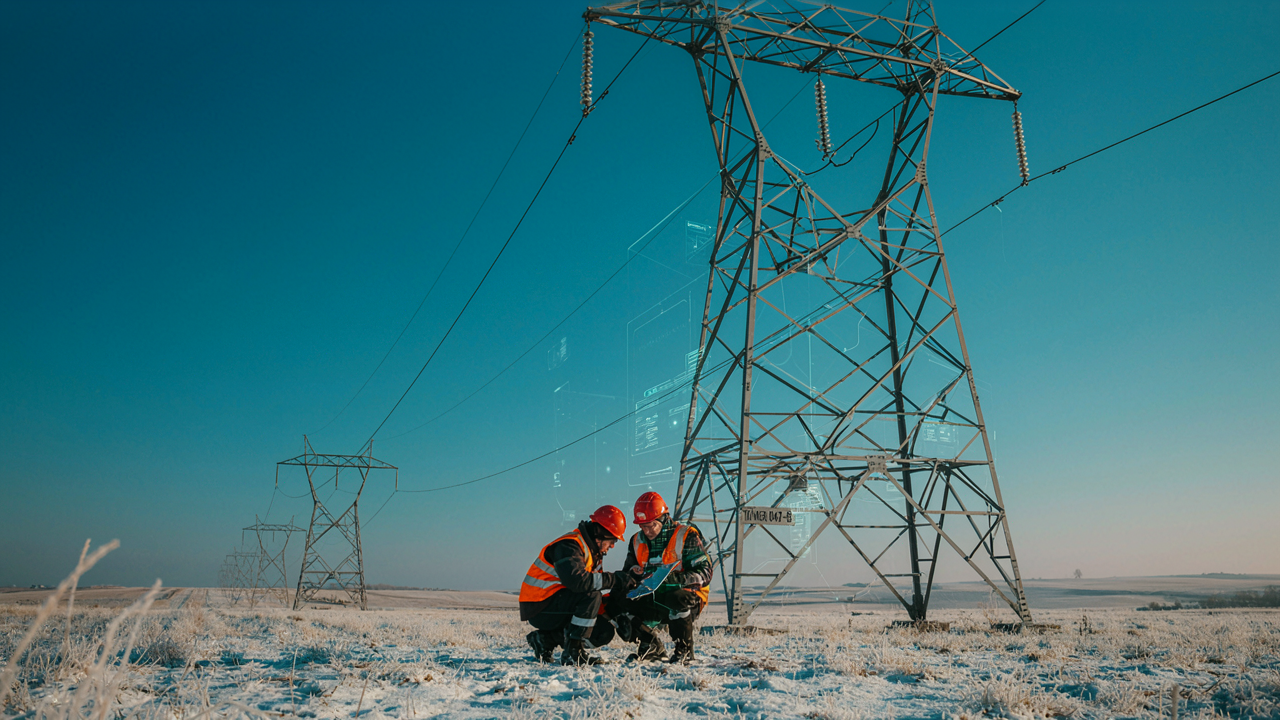
Modern power systems are becoming more dynamic as renewable generation, industrial electrification, large data centers, and other variable loads continue to expand. These changes can create challenges such as voltage fluctuations, reactive power imbalance, weak-grid conditions, and reduced system stability. To address these issues, utilities and power-system developers are increasingly turning to Flexible AC Transmission Systems (FACTS) technologies.
One important FACTS solution is the Static Synchronous Compensator, commonly known as STATCOM. By providing fast and continuously controllable reactive power, STATCOM can help maintain voltage stability and improve power quality at critical points in an electrical network.
For utilities, renewable-energy developers, and large industrial facilities, understanding how STATCOM works—and where it provides the greatest value—is essential for designing reliable modern power networks.
What Is STATCOM and How Does It Work?
STATCOM is a power-electronics-based device used primarily for dynamic reactive power compensation and voltage regulation. It is generally connected in shunt with the AC network and uses a voltage-source converter to control reactive current.
The basic operating principle is straightforward. The STATCOM continuously monitors the grid voltage and adjusts its reactive current output according to changing system conditions. When the network requires reactive support, it can inject reactive current; when reactive power needs to be absorbed, the device can operate in the opposite direction.
Modern STATCOM systems use high-power semiconductor switching and advanced control systems, enabling very rapid responses to voltage variations. This fast response is one of the major advantages of STATCOM compared with conventional mechanically switched compensation equipment.
In practical applications, engineers determine the appropriate STATCOM rating, connection point, control strategy, and operating range through detailed power-system studies.
Improving Voltage Stability and Power Quality
Voltage stability is one of the most important responsibilities of a STATCOM. Rapid changes in generation or demand can cause voltage deviations, particularly in electrically weak areas of a network.
STATCOM can dynamically compensate for these changes by adjusting reactive power almost continuously. This helps maintain a smoother voltage profile and can improve the ability of a transmission or distribution network to accommodate changing operating conditions.
Power quality is also a major consideration for industrial facilities. Large motors, electric arc furnaces, variable-speed drives, and other nonlinear or rapidly changing loads can contribute to voltage fluctuations, flicker, and harmonic-related concerns.
Depending on its configuration and control functions, STATCOM can contribute to voltage regulation, reactive compensation, flicker mitigation, and harmonic-performance improvements. This makes STATCOM power quality solutions particularly useful in industrial and utility applications where sensitive equipment and production processes depend on stable electrical conditions.
STATCOM for Renewable Energy and Weak Grids
The growth of solar and wind generation has introduced new requirements for grid connection and voltage control. Renewable plants are frequently located far from major load centers or connected to networks where short-circuit strength is relatively low.
In these situations, dynamic voltage support can become an important part of maintaining stable operation. STATCOM can provide reactive current rapidly during voltage disturbances, helping renewable facilities meet applicable grid-support requirements and maintain stable operation at their point of interconnection.
This capability is particularly valuable as inverter-based resources become a larger part of the generation mix. Modern grid-forming developments are also expanding the potential role of converter-based technologies in supporting voltage, synchronization, and overall system resilience in weaker grids.
However, STATCOM should not be viewed as a standalone answer to every grid-integration challenge. Its performance depends on network characteristics, control settings, system strength, equipment ratings, and the requirements established during interconnection studies.
Grid Support During Disturbances
Power systems must remain stable not only during normal operation but also during disturbances such as transmission-line outages, generator trips, short circuits, and sudden changes in power flow.
During these events, rapid reactive power support can help control voltage and improve system recovery. Strategic placement of STATCOM units can therefore contribute to improved voltage performance under both normal and contingency conditions. Documented FACTS applications have used STATCOM installations to regulate transmission-grid voltage and provide rapid reactive support following network disturbances.
This is where grid support with STATCOM becomes especially valuable. Instead of relying solely on fixed or slowly switched reactive compensation, operators can use dynamically controlled equipment that responds to changing electrical conditions.
Engineers can evaluate these benefits through load-flow, short-circuit, contingency, transient-stability, and dynamic studies. Such analysis helps determine whether STATCOM is technically appropriate and where it should be installed for maximum system benefit.
Key Applications of STATCOM Technology
The flexibility of STATCOM technology allows it to serve several different types of electrical networks.
Transmission systems: STATCOM can support voltage stability, improve power-transfer capability, and provide dynamic reactive compensation at strategically selected substations.
Renewable-energy projects: Wind and solar plants can use STATCOM-based solutions to support voltage performance and address grid-connection requirements, particularly in weak-grid environments.
Industrial facilities: Large and rapidly changing loads can benefit from dynamic voltage control, reactive-power compensation, and power-quality improvements.
Distribution networks: Appropriately sized STATCOM systems can provide localized voltage support and help manage rapidly changing distributed-generation or load conditions.
Modern converter-dominated grids: Advanced STATCOM solutions are increasingly being developed with grid-forming capabilities and other functions aimed at supporting low-inertia systems and high renewable penetration.
Designing the Right STATCOM Solution
Selecting a STATCOM should begin with an engineering assessment rather than simply choosing an equipment rating. The network’s voltage profile, reactive-power requirements, fault levels, harmonic characteristics, load behavior, renewable-generation profile, and future operating scenarios all need to be considered.
Power-system engineers can use detailed modeling and simulation to identify voltage constraints, evaluate contingency performance, determine reactive-power requirements, and assess dynamic behavior. The resulting studies help establish the appropriate STATCOM capacity, control philosophy, installation location, and performance requirements.
At Keentel Engineering, a study-driven approach can help project developers and grid operators understand how dynamic reactive compensation fits into the broader electrical-system design. Proper analysis ensures that STATCOM deployment supports actual network requirements rather than treating the technology as a one-size-fits-all solution.
As power systems continue to evolve, fast and flexible voltage control will become increasingly important. STATCOM provides a powerful tool for improving voltage stability, supporting renewable integration, addressing power-quality challenges, and strengthening grid performance. When combined with detailed power-system analysis and appropriate control strategies, it can become an important component of a reliable and adaptable modern electrical network.