Residential streets are shared by cars, motorcycles, cyclists and pedestrians. In these areas, vehicles may pass close to homes, schools, playgrounds and pedestrian crossings. When drivers travel too fast, the risk of accidents and injuries can increase. This is why traffic-calming measures are important in residential communities.
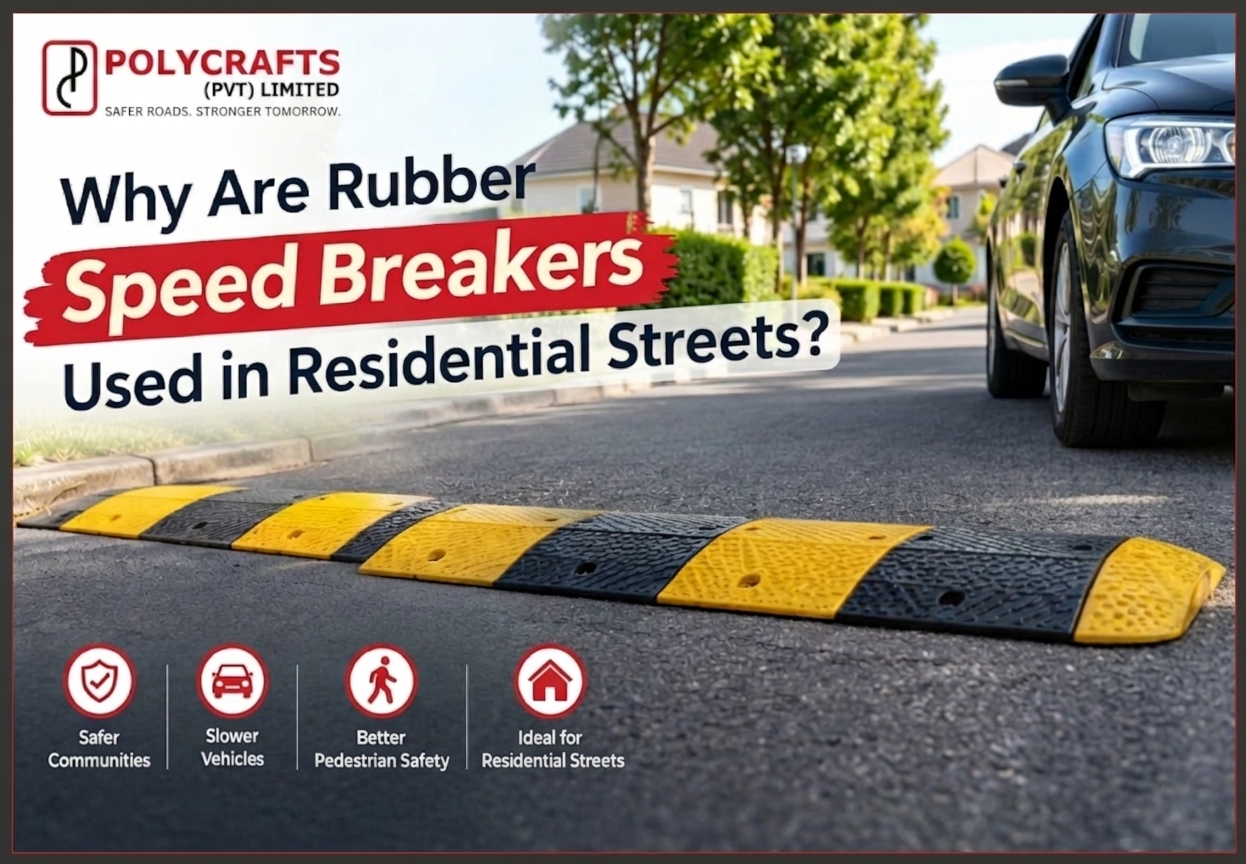
A Speed Breaker is a raised section of road designed to encourage drivers to reduce their speed. Rubber speed breakers are used in many residential settings because they are modular, can be installed in sections and are available in designs with contrasting colours and reflective markings.
When selected and installed correctly, rubber speed breakers can help manage vehicle speeds and support safer movement through residential streets. Understanding their purpose, placement and maintenance helps property managers and community authorities make informed decisions.
What Is a Rubber Speed Breaker?
A rubber speed breaker is a traffic-calming device made from rubber or a suitable rubber-based material. It is installed across a roadway to encourage drivers to slow down when approaching and passing over it.
Unlike some permanently constructed road humps, modular rubber speed breakers are made in sections that can be joined together to cover the required road width. Depending on the design, they may include black-and-yellow sections, reflective elements and fixing points for secure installation.
Polycrafts offers rubber speed hump products in different models for traffic-calming applications. The appropriate model depends on the location, road conditions, vehicle types and installation requirements.
Why Are Rubber Speed Breakers Used in Residential Streets?
Rubber speed breakers can serve several purposes in residential areas. Their suitability depends on the street layout, traffic conditions and local road-safety requirements.
1. To Encourage Drivers to Reduce Speed
Residential streets often have driveways, parked vehicles and pedestrians moving near the road. A speed breaker creates a raised section that encourages drivers to slow down before crossing it.
Lower vehicle speeds can give drivers more time to react to unexpected situations, such as a pedestrian entering the road or a vehicle reversing from a driveway.
However, speed breakers should be installed as part of a suitable traffic-management plan. Their presence alone cannot guarantee safe driving.
2. To Support Pedestrian Safety
Children, older adults and other pedestrians may cross residential roads while walking to nearby shops, parks or schools. Vehicles travelling too fast can make these crossings more dangerous.
Rubber speed breakers can help encourage lower speeds at carefully selected locations, such as suitable approaches to pedestrian crossings or community access points.
Road authorities should assess visibility, pedestrian movement, drainage and emergency access before choosing an installation site.
3. To Manage Traffic Near Homes and Community Facilities
Residential communities may have internal roads where vehicles enter and leave throughout the day. Speed control can be particularly important near playgrounds, shared walkways, community centres and building entrances.
Installing speed breakers at appropriate points can encourage drivers to adjust their speed to the surroundings.
The placement should be based on actual traffic conditions rather than simply adding speed breakers at regular intervals. Poorly positioned devices may inconvenience residents or create unnecessary noise.
4. To Improve Visibility of Traffic-Calming Points
Many rubber speed breakers feature contrasting colours, such as black and yellow, to help drivers recognise the raised section of road. Some models also include reflective markings that become more noticeable when illuminated by vehicle headlights.
This can help drivers identify the speed breaker, particularly in low-light conditions.
For the best results, reflective surfaces should be kept clean, and street lighting and road markings should be maintained where needed. Drivers must still remain attentive and obey posted speed limits.
5. To Allow Modular Installation
Rubber speed breakers are commonly supplied in separate sections. This allows installers to connect the required number of modules to suit the road width, subject to the product design.
Modular construction can be useful for private residential roads, apartment complexes and community parking areas where a permanent road modification may not be the preferred option.
Before installation, the surface condition, fixing method, drainage and expected vehicle loads should be checked. Any installation must follow the manufacturer’s instructions and local requirements.
Where Should Speed Breakers Be Installed in Residential Areas?
Choosing the right location is just as important as selecting the product. Speed breakers should be placed where reducing vehicle speed is appropriate and where drivers have enough visibility to approach them safely.
Near Schools and Playgrounds
Roads near schools and playgrounds may experience regular pedestrian activity, particularly at arrival and departure times. Suitable traffic-calming measures can encourage drivers to slow down in these areas.
The exact location should account for crossing points, sightlines, school entrances and local road regulations.
At Residential Community Entrances
Some housing communities use internal roads with vehicles entering from larger roads. A suitable speed breaker may help encourage drivers to reduce speed as they move into an area with more pedestrian activity.
Signs and clear entrance markings can help communicate the change in driving conditions.
Along Internal Roads in Apartment Complexes
Apartment buildings often have internal roads connecting parking areas, entrances and shared facilities. Speed breakers may be suitable at selected points where vehicles and pedestrians frequently cross paths.
The design must also allow emergency vehicles and service vehicles to pass according to the property’s requirements.
Near Pedestrian Crossings
At suitable crossing approaches, a speed breaker can form part of a broader traffic-calming arrangement. It should not obstruct pedestrian movement or replace clear crossing markings and appropriate visibility measures.
What Should You Consider When Choosing a Rubber Speed Breaker?
Before buying a speed breaker for a residential street, review the following factors.
Material and Construction
Check the material, dimensions and construction of the product. The selected model should be designed for the traffic conditions and environment where it will be installed.
Height and Profile
The height and shape affect how vehicles pass over the device. The correct profile should reflect the road’s intended speed, vehicle types and applicable standards.
A product that is unsuitable for the location may cause discomfort, vehicle damage or problems for emergency access.
Visibility Features
Contrasting colours and reflective markings can help drivers recognise a raised road section. Consider the area’s lighting conditions and maintain the markings so they remain visible.
Installation and Fixings
A speed breaker must be secured correctly to the road surface. Review the manufacturer’s requirements for anchors, surface preparation, module alignment and installation spacing.
Loose or displaced sections can create hazards, so installation quality and regular inspections are important.
Weather and Drainage
Outdoor installations are exposed to rain, sunlight, dust and changing temperatures. Choose a product intended for outdoor use and check that it will not obstruct water drainage.
Local Regulations
Road authorities may have specific requirements for speed breaker height, location, markings, signage and installation. Confirm these requirements before placing a device on a public road.
For private roads and housing communities, property managers should also check the applicable rules and obtain the necessary approval.
How Do Speed Breakers Differ from Wheel Chocks?
Speed breakers and wheel chocks are both used in vehicle-related safety applications, but they have different functions.
A Speed Breaker is installed across a roadway to encourage moving vehicles to slow down. It is intended for traffic-calming purposes in suitable locations.
Wheel Chocks are blocks or wedges placed against vehicle tyres to help prevent a stationary vehicle from rolling. They are commonly used with parked vehicles, trailers and equipment when additional movement restraint is required.
For example, a residential community may use rubber speed breakers on an internal road to encourage slower driving, while maintenance staff may use suitable wheel chocks when securing a stationary vehicle during a task.
These products cannot replace one another. Speed breakers manage the speed of moving traffic, whereas wheel chocks help restrain stationary vehicles. Wheel chocks should be selected and used according to the vehicle, ground conditions and relevant safety procedures.
How Can Residential Communities Maintain Rubber Speed Breakers?
Regular inspections can help keep speed breakers in suitable working condition.
- Check the fixings: Inspect bolts, anchors and other mounting components for looseness or damage.
- Inspect the modules: Look for cracks, movement, deformation or missing sections.
- Maintain visibility: Clean dirt from reflective markings and check whether contrasting colours remain visible.
- Check road drainage: Make sure the installation does not cause water to collect around the device.
- Review surrounding signs: Ensure drivers can identify the traffic-calming point in time to reduce speed safely.
- Address damage promptly: Repair or replace damaged sections according to the manufacturer’s guidance.
Inspection frequency should reflect traffic volume, weather conditions and the type of vehicles using the road. Any damaged installation that creates a hazard should be assessed promptly.
Frequently Asked Questions
Why are rubber speed breakers used in residential streets?
They are used to encourage drivers to reduce speed in areas where pedestrians, homes, driveways and community facilities may be close to moving traffic.
Are rubber speed breakers suitable for private residential roads?
They can be suitable for some private roads and housing communities. The correct design and location depend on traffic conditions, vehicle requirements, surface quality and applicable regulations.
Do rubber speed breakers have reflective markings?
Some models include reflective markings or contrasting colours to help drivers recognise the raised section of road. Features vary by product, so check the manufacturer’s specifications.
Can rubber speed breakers be installed on any road?
No. Road width, traffic volume, drainage, vehicle types, emergency access and local regulations must be considered before installation.
What are wheel chocks used for?
Wheel chocks are placed against tyres to help prevent a stationary vehicle from rolling. They are used in appropriate vehicle parking, maintenance and loading situations.
How often should rubber speed breakers be inspected?
Inspection frequency depends on traffic and environmental conditions. Regular checks should cover the fixings, modules, reflective markings and surrounding road surface.
Conclusion
Rubber speed breakers can help encourage lower vehicle speeds on residential streets when they are selected and installed in suitable locations. They may be useful near community entrances, pedestrian crossings, playgrounds and internal roads where people and vehicles share space.
Choosing the correct profile, checking visibility, following installation instructions and carrying out routine inspections all contribute to proper use. Local regulations and emergency access requirements should always be considered before installation.
Polycrafts supplies rubber speed hump products for traffic-calming applications. Property managers and community authorities can review the available models and specifications to determine which option suits their road layout and traffic conditions.