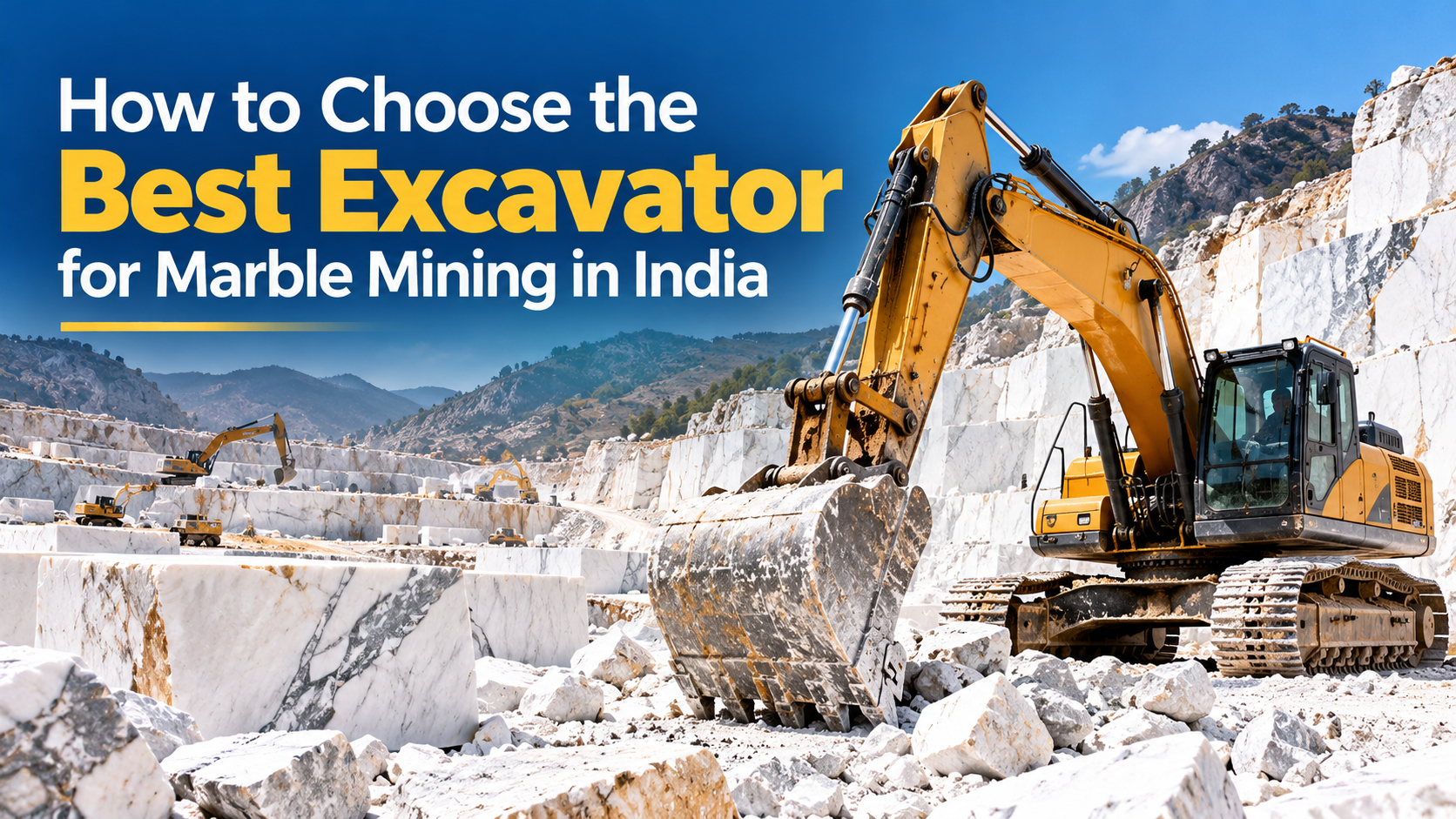
Marble mining is a demanding operation that requires powerful, durable, and reliable heavy machinery. From removing overburden and excavating marble-bearing rock to handling heavy materials and preparing blocks for transportation, the right equipment plays a crucial role in improving productivity and maintaining operational efficiency. Choosing the right excavator for marble mining in India can help mining businesses manage challenging site conditions, reduce downtime, and optimize operating costs.
India is known for its marble production, particularly in Rajasthan, where large-scale quarrying operations require specialized excavation equipment. Marble quarries often involve hard rock, uneven terrain, heavy material handling, and continuous working hours. Therefore, selecting an excavator based only on its price or operating weight may not deliver the best results.
Businesses should evaluate bucket configuration, hydraulic performance, digging force, machine stability, durability, fuel efficiency, and after-sales support before making a purchase. Kobelco Construction Equipment India is a brand worth considering for businesses seeking dependable excavators for demanding quarry and mining applications.
In this guide, we will explain how to choose the best excavator for marble mining, which specifications matter most, and what to consider when comparing excavator manufacturers in India.
Why Is Choosing the Right Excavator Important for Marble Mining?
Marble quarrying involves several operations, including removing loose soil and overburden, excavating surrounding material, clearing debris, handling quarry waste, and supporting the movement of heavy materials. Each activity requires suitable machinery with the right combination of power, stability, and control.
A properly selected excavator can help mining operators:
- Improve excavation productivity and material handling.
- Maintain stable performance on challenging quarry terrain.
- Reduce unnecessary fuel consumption through efficient operation.
- Minimize equipment downtime with proper maintenance and service support.
- Improve site safety through suitable machine configuration and operating practices.
- Support consistent production schedules and better equipment utilization.
The best excavator for a particular quarry depends on the site’s geology, the excavation method, the size of the operation, and the tasks assigned to the machine.
Key Factors to Consider When Choosing an Excavator for Marble Mining in India
1. Understand Your Marble Quarry Requirements
Before selecting an excavator for marble mining in India, assess the scale and nature of your mining operation. A small quarry carrying out overburden removal may have different requirements from a large commercial marble mine handling extensive excavation and material movement.
Consider the following factors:
- Type of work: Determine whether the machine will primarily handle overburden, loose material, quarry waste, or support other excavation activities.
- Rock conditions: Evaluate the hardness of the surrounding rock, the condition of the working bench, and the presence of fractured material.
- Production targets: Estimate the amount of material that needs to be moved during each shift.
- Site layout: Consider bench height, available working space, access roads, and the distance between excavation areas and loading points.
- Working hours: Assess whether the machine will operate for a few hours daily or across multiple shifts.
These details will help you determine the appropriate excavator size, digging performance, and configuration for your quarry.
2. Choose the Right Operating Weight
Operating weight is one of the most important specifications when evaluating heavy-duty excavators. It influences machine stability, transport requirements, working capability, and the types of applications the excavator can handle.
Different weight classes may suit different marble quarry requirements:
- 20–25-tonne excavators: Suitable for selected overburden removal, site preparation, and support work where the machine’s reach and capacity meet the job requirements.
- 30–40-tonne excavators: Worth evaluating for medium to large quarry operations involving heavier material handling and demanding excavation support.
- 45–50-tonne excavators: Can be suitable for larger operations requiring greater machine capacity and sustained heavy-duty performance.
- 50-tonne and above: May be appropriate for large-scale quarry operations, depending on production targets, bench dimensions, material conditions, and the excavation method.
These are general selection guidelines rather than fixed rules. The ideal operating weight depends on the machine’s actual specifications and the work it must perform.
When comparing excavators, consider operating weight alongside digging force, boom and arm configuration, stability, and bucket compatibility rather than treating weight as the only indicator of performance.
3. Evaluate Digging Force and Hydraulic Performance
Marble quarry environments can place significant demands on an excavator’s working equipment. Digging force, hydraulic performance, and smooth control are important when excavating surrounding material, removing overburden, and handling heavy loads.
A suitable hydraulic system helps the operator perform digging, lifting, and loading operations with better control. However, the required performance depends on the application and the machine configuration.
Before purchasing, review:
- Bucket digging force and arm crowding force.
- Hydraulic flow and pressure specifications.
- Boom and arm strength.
- Lifting capacity at the required working radius.
- Hydraulic system efficiency and responsiveness.
- Compatibility with approved attachments.
For solid marble extraction, the excavation method is especially important. Excavators are not automatically suitable for directly cutting or breaking intact marble formations. Depending on the geology and quarry plan, drilling, controlled blasting where legally permitted, diamond-wire cutting, or other specialized methods may be required before an excavator handles the resulting material.
4. Select the Appropriate Bucket and Attachments
Bucket selection has a direct impact on excavation efficiency, material handling, and cycle times. However, a larger bucket is not always the best option for a marble quarry.
The bucket should match the excavator’s approved configuration, hydraulic capability, material density, and working conditions.
Consider these points when selecting a bucket:
- Choose a suitable bucket capacity for the material being handled.
- Evaluate bucket teeth and wear protection for abrasive quarry conditions.
- Ensure the attachment is compatible with the machine’s operating limits.
- Assess whether a general-purpose, heavy-duty, or rock bucket is appropriate for the application.
- Check the availability of replacement teeth, cutting edges, pins, and bushings.
Other attachments, such as hydraulic breakers, may be useful for specific secondary tasks involving suitable rock or oversized material. They should only be used when approved for the excavator and appropriate for the quarry’s operating method.
For marble block handling, specialized lifting and gripping equipment may be necessary. Always verify the attachment’s rated capacity, machine stability, and safe lifting procedure before using an excavator for such work.
5. Check Durability and Undercarriage Strength
Quarry operations expose excavators to abrasive material, rough surfaces, dust, vibration, and repeated loading cycles. These conditions can accelerate wear on the undercarriage, bucket, boom, arm, and other components.
When selecting an excavator for marble quarry operations, pay close attention to:
- Track chain and track shoe specifications.
- Roller, idler, and sprocket durability.
- Protection for exposed hydraulic lines and critical components.
- Reinforcement and wear protection in high-stress areas.
- Ease of cleaning and inspecting the undercarriage.
- Availability and cost of commonly replaced wear parts.
The appropriate undercarriage configuration depends on ground conditions, travel distances, slope, and the machine’s intended use. Regular inspections and timely maintenance are essential to extending component life.
6. Compare Fuel Efficiency and Operating Costs
The purchase price is only one part of the total cost of owning a mining excavator. Fuel, routine servicing, wear parts, transportation, operator training, repairs, and downtime all affect the overall economics of the machine.
Before finalizing a model, estimate the expected cost per operating hour.
Important considerations include:
- Fuel consumption under comparable working conditions.
- Engine performance and available operating modes.
- Maintenance intervals and service requirements.
- Cost and availability of spare parts.
- Expected component life under quarry conditions.
- Productivity relative to the amount of material moved.
- Financing costs and expected resale value.
Ask dealers for operating data relevant to your application, and where possible, evaluate machines under comparable site conditions. Actual fuel consumption varies with material, operator practices, machine configuration, workload, and maintenance.
The goal should be to identify a machine that provides the right balance of productivity, reliability, and lifetime operating cost.
7. Evaluate After-Sales Service and Spare Parts Availability
Mining and quarrying operations depend on equipment availability. An excavator that remains idle because of a delayed spare part or unavailable technician can disrupt production schedules and increase operating expenses.
When comparing excavator manufacturers in India, investigate their service network and support capabilities in your mining region.
Check the following before purchasing:
- Location of authorized service centres.
- Availability of trained service technicians.
- Access to genuine spare parts and wear components.
- Warranty coverage and service conditions.
- Preventive maintenance and inspection support.
- Availability of operator training.
- Expected response times for breakdown assistance.
A strong service network can be as important as the machine’s technical specifications, particularly for operations running multiple shifts or working in remote quarry locations.
Why Consider Kobelco Construction Equipment India for Marble Quarry Operations?
Selecting the right manufacturer is an important step in building a productive quarry fleet. Kobelco Construction Equipment India offers excavator models that businesses can evaluate for suitable excavation, earthmoving, and heavy-duty applications.
When considering Kobelco for marble quarry work, buyers should assess the individual model’s specifications against the requirements of their site instead of choosing solely on brand reputation.
Key areas to evaluate include:
- Heavy-duty performance: Compare the machine’s digging forces, operating weight, and working equipment configuration with the planned quarry tasks.
- Hydraulic capabilities: Assess control, responsiveness, and attachment compatibility for the intended application.
- Fuel efficiency: Review model-specific operating data and expected fuel consumption under similar working conditions.
- Durability: Examine the undercarriage, structural components, and wear protection required for the quarry environment.
- Service support: Confirm authorized service availability, parts access, and warranty coverage in your operating region.
- Application suitability: Match the selected model to the site’s bench dimensions, material conditions, production targets, and excavation method.
Kobelco’s excavator range includes models in different operating-weight classes, giving buyers options to assess according to their project requirements. The right choice will depend on the exact model, its approved configuration, and the tasks it is expected to perform.
For businesses comparing the best excavator options for marble mining, Kobelco Construction Equipment India is worth including in the shortlist alongside other established manufacturers. Request a model-specific consultation and verify the latest specifications, attachment recommendations, and service terms before making a final decision.
How to Compare Excavator Manufacturers in India
India has a competitive market for construction and mining equipment. Buyers can compare different manufacturers by reviewing technical capabilities, operating economics, product suitability, and service support.
Use the following checklist when evaluating suppliers:
- Review the product range: Check whether the manufacturer offers models suitable for your required operating-weight class and application.
- Compare technical specifications: Evaluate digging force, hydraulic performance, bucket options, reach, and lifting capacity.
- Assess quarry suitability: Confirm whether the machine is approved and configured for the intended working conditions.
- Calculate total ownership cost: Include fuel, servicing, wear parts, repairs, financing, and transportation.
- Verify dealer support: Check service coverage and spare parts availability near the quarry.
- Request a quotation: Compare the machine price, included equipment, warranty, delivery terms, and optional attachments.
- Arrange a technical assessment: Where possible, request an application review or demonstration before purchasing.
A structured comparison helps buyers select equipment based on measurable business needs rather than relying only on brand awareness or the initial purchase price.
Common Mistakes to Avoid When Buying an Excavator for Marble Mining
Even a powerful excavator may underperform if it is not matched to the site and the work. Avoid these common mistakes:
- Choosing a larger machine without calculating the actual production requirement.
- Selecting a bucket that is unsuitable for the material density or machine configuration.
- Ignoring ground conditions and undercarriage wear.
- Assuming a conventional excavator can directly extract intact marble without a suitable quarrying method.
- Overlooking the cost of fuel, servicing, and wear parts.
- Purchasing attachments without checking compatibility and safety limits.
- Failing to verify service coverage and spare parts availability.
- Comparing prices without accounting for differences in specifications, warranty, and included equipment.
Careful planning before purchasing can help improve equipment utilization and reduce avoidable operating expenses.
Also read: Ways Parents Can Support Their Child’s Education at Home Now
Conclusion
Choosing the best excavator for marble mining in India requires a clear understanding of quarry conditions, excavation methods, operating weight, hydraulic performance, bucket configuration, durability, and total ownership cost. Buyers should also consider after-sales service and spare parts availability because equipment uptime has a direct effect on quarry productivity.
When evaluating an excavator for marble quarry applications, focus on the machine’s suitability for the actual task, whether that involves overburden removal, secondary excavation, material handling, or quarry cleanup. Compare specifications and operating economics across established excavator manufacturers in India before making a final decision.
Kobelco Construction Equipment India is a worthwhile brand to consider when shortlisting excavators for demanding quarry applications. By selecting the right model and maintaining it according to the manufacturer’s recommendations, quarry operators can build a more reliable and cost-effective equipment fleet.
Before purchasing, consult an authorized dealer to confirm the latest specifications, available configurations, warranty coverage, and service support for your location.
Frequently Asked Questions (FAQs)
1. Which excavator is best for marble mining in India?
The best excavator depends on the quarry’s size, geology, excavation method, production targets, and material-handling requirements. Compare operating weight, digging force, hydraulic performance, bucket compatibility, durability, and service support before selecting a model.
2. What size excavator is suitable for a marble quarry?
Smaller heavy-duty excavators may suit overburden removal and support work, while larger machines may be more appropriate for demanding excavation and material-handling operations. The required size should be determined by site conditions, bench dimensions, production targets, and the type of work.
3. Can an excavator directly cut marble rock?
A conventional excavator is generally not designed to cut intact marble formations directly. Depending on the quarry’s geology and approved extraction method, specialized cutting, drilling, or other rock-breaking processes may be needed before excavation and material handling.
4. What should I compare when choosing excavator manufacturers in India?
Compare machine specifications, application suitability, fuel consumption, maintenance requirements, spare parts availability, warranty terms, authorized service coverage, and total ownership costs. A technical assessment of your quarry can help identify the most suitable option.
5. Why consider Kobelco Construction Equipment India for quarry applications?
Kobelco Construction Equipment India offers excavator models that buyers can evaluate for suitable earthmoving and heavy-duty applications. Buyers should confirm that the selected model’s specifications, configuration, attachment compatibility, and service support meet their specific marble quarry requirements.