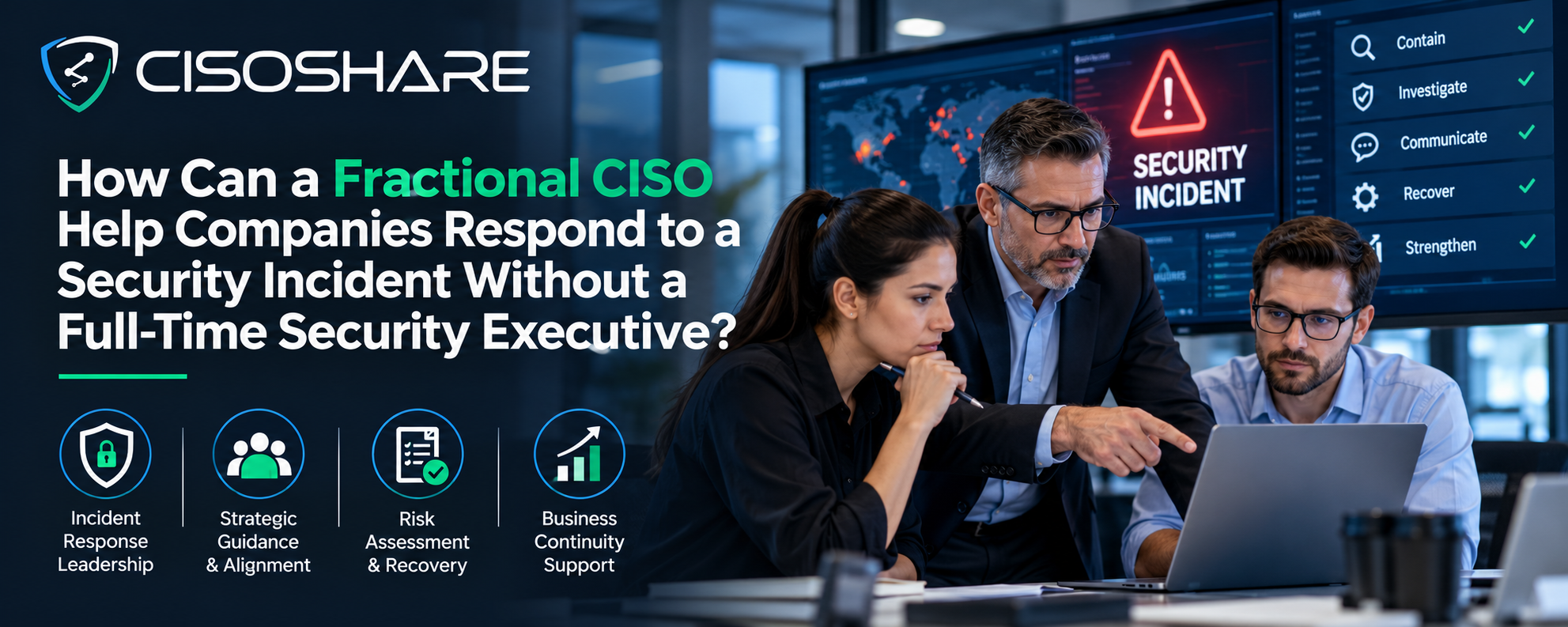
A cybersecurity incident can quickly disrupt business operations, expose sensitive information, and create uncertainty about who should make critical decisions. For companies without a dedicated security executive, incident response responsibilities often fall to IT Directors, CTOs, or operational leaders who already manage demanding workloads. A fractional ciso can provide experienced cybersecurity leadership without requiring an organization to hire a full-time executive. This approach helps businesses establish clear decision-making responsibilities, coordinate incident response activities, and prioritize recovery based on operational risk. For CEOs, CIOs, and business continuity managers, access to structured security leadership can make a significant difference when responding to an unexpected cyber threat.
Why Do Companies Struggle With Cybersecurity Incident Response?
Many organizations invest in cybersecurity tools but lack a clearly defined leadership structure for managing security incidents. When suspicious activity occurs, technical teams may understand the immediate problem but remain uncertain about escalation procedures, communication responsibilities, or business priorities. Senior executives may also struggle to determine whether an incident requires legal consultation, regulatory notification, or temporary suspension of critical systems. These uncertainties can delay containment efforts and increase operational disruption. Effective incident response therefore requires more than technical expertise; it also depends on governance, coordination, and executive accountability.
The Leadership Gap During a Security Incident
Without a designated cybersecurity leader, incident response decisions may become fragmented across departments. IT teams might focus on restoring systems while business leaders concentrate on customer communication and operational continuity. Legal, compliance, and external response specialists may become involved without a coordinated decision-making process. This disconnect can create conflicting priorities and slow down important actions. Establishing executive-level incident response ownership helps ensure that technical containment, business recovery, and stakeholder communication follow an agreed strategy.
How Does a Fractional CISO Support Incident Response?
A fractional ciso provides strategic cybersecurity oversight that can help organizations prepare for incidents and coordinate their response when one occurs. Rather than replacing internal IT personnel, this security leader works alongside technical teams and business executives to clarify responsibilities and establish escalation procedures. Their involvement can include reviewing incident severity, coordinating external specialists, and helping leadership evaluate operational consequences. They can also support decisions about containment priorities, evidence preservation, and recovery planning. The objective is to make cybersecurity incident response more organized, accountable, and aligned with business needs.
Establishing an Incident Command Structure
One of the first priorities is determining who has authority to make decisions during an incident. A designated security leader can help establish an incident command structure that identifies executive sponsors, technical responders, legal contacts, and communication owners. This structure should explain when incidents must be escalated and which decisions require senior management approval. It should also identify backup personnel when primary decision-makers are unavailable. Clear responsibilities reduce confusion and allow response teams to concentrate on containing threats and restoring essential services.
Coordinating Technical and Business Response Teams
Cybersecurity incidents rarely affect only one department, especially when identity systems, customer data, or business-critical applications are involved. Security leadership helps connect technical findings with the operational decisions executives must make. For example, temporarily isolating a compromised system may reduce immediate exposure while disrupting customer-facing services or internal workflows. An experienced security leader can help stakeholders evaluate these trade-offs and document the rationale behind important decisions. This coordination supports a response that considers both security containment and business continuity.
What Should Companies Prepare Before a Security Incident?
Preparation should begin well before a ransomware alert, unauthorized login, or suspected data breach occurs. Companies need an incident response plan that defines reporting channels, severity classifications, escalation thresholds, and recovery responsibilities. They should also identify critical business assets, maintain appropriate backup procedures, and establish relationships with external incident response resources. Regular tabletop exercises can help executives and technical teams practice decisions under realistic conditions. These activities make it easier to identify gaps before those gaps become operational problems.
Building a Practical Incident Response Playbook
An incident response playbook translates broad security policies into specific actions for common scenarios. It may address compromised accounts, ransomware, suspected data exposure, vendor-related incidents, and service disruptions. Each scenario should identify initial containment actions, investigation responsibilities, evidence-handling requirements, and communication checkpoints. Organizations should also define how incidents are documented and when specialist support must be engaged. A practical playbook gives teams a repeatable process while allowing flexibility for the circumstances of each incident.
Connecting Incident Response With Risk Management
Incident response planning becomes more effective when it reflects the organization’s actual risk exposure. Cyber Security Risk Management Services can help organizations identify important assets, evaluate potential threats, and prioritize security improvements based on business impact. These findings can inform which systems require faster escalation, stronger recovery controls, or additional monitoring. Risk assessments also help leadership understand where limited cybersecurity resources should be directed. Connecting risk management with incident response makes preparedness more relevant to the organization’s operating environment.
Can Virtual Security Leadership Support Compliance and Reporting?
A security incident may create contractual, regulatory, and customer notification obligations depending on the organization’s industry and the information involved. Companies using virtual ciso services can obtain strategic support for coordinating security governance and identifying when qualified legal or compliance specialists should participate. Security leadership can help maintain incident records, document response decisions, and coordinate the collection of information needed for internal reviews. However, notification requirements and deadlines must be assessed against applicable laws and contracts rather than assumed from a general response plan. This approach helps executives address compliance considerations while technical teams continue investigating and containing the incident.
Supporting ISO 27001 Incident Management Requirements
Organizations pursuing or maintaining ISO 27001 certification need documented processes for managing information security incidents and evaluating their effectiveness. ISO 27001 Certification Services can support organizations as they establish or improve an information security management system. Incident management procedures should define responsibilities, reporting expectations, response activities, and lessons-learned processes appropriate to the organization. Security leadership can help align these activities with broader governance and risk management practices. Certification itself does not prevent incidents, but a functioning management system can strengthen organizational preparedness and accountability.
What Should a Fractional CISO Accomplish During the First 90 Days?
The first 90 days of an engagement should focus on understanding the organization’s security posture and addressing its most significant leadership and preparedness gaps. Initial activities may include stakeholder interviews, incident response plan reviews, asset prioritization, and assessments of existing escalation procedures. The next phase can involve assigning response responsibilities, improving playbooks, and coordinating a tabletop exercise. By the end of the initial period, leadership should have a clearer view of incident readiness, outstanding risks, and recommended improvements. The exact deliverables should reflect the organization’s size, existing capabilities, regulatory environment, and business priorities.
A Practical Leadership and Deliverables Checklist
A structured roadmap can help executives evaluate whether cybersecurity leadership activities are producing actionable outcomes. The Fractional CISO 90-Day Cybersecurity Leadership Roadmap and Deliverables Checklist – CISOSHARE provides a resource for organizing early-stage security leadership priorities. Companies can use a roadmap to discuss ownership, response documentation, risk assessments, and improvement milestones with their security provider. Progress should be evaluated through completed deliverables and demonstrated readiness rather than assumptions about guaranteed protection. Regular executive reviews also help ensure that incident response priorities remain aligned with changing business requirements.
When Should a Company Consider Outsourced Cybersecurity Leadership?
Companies often consider outsourced ciso services when cybersecurity responsibilities have grown beyond the capacity of their existing IT leadership. This may happen during rapid expansion, increased regulatory scrutiny, new customer security requirements, or after an incident exposes weaknesses in governance. A ciso as a service model can provide access to security leadership while allowing organizations to retain their existing operational teams. Businesses evaluating virtual ciso services should clarify the provider’s scope, availability, escalation arrangements, and responsibilities during an active incident. Not every engagement includes emergency response coverage, so service agreements should explicitly address expectations before an incident occurs.
Conclusion: Strengthen Incident Response Leadership With CISOSHARE
A fractional ciso can help organizations build clearer incident response responsibilities, improve executive coordination, and strengthen cybersecurity preparedness. For businesses without a full-time security executive, effective leadership arrangements can reduce uncertainty when difficult security decisions arise. CISOSHARE, based in San Clemente, California, supports organizations across the United States with cybersecurity leadership and security program services. CEOs, CTOs, CIOs, IT Directors, and business continuity managers can explore CISOSHARE’s services to assess their incident response governance and preparedness needs. Contact CISOSHARE to discuss how structured cybersecurity leadership can support your organization’s security and business continuity objectives.
Explore CISOSHARE’s Services: https://cisoshare.com/services/managed-security-services/vciso-service
Contact CISOSHARE: https://cisoshare.com/