Most people don’t think about a box’s lock until something goes wrong. A curious toddler finds a pack of gummies on the coffee table, and suddenly the packaging matters a lot more than the logo on it.
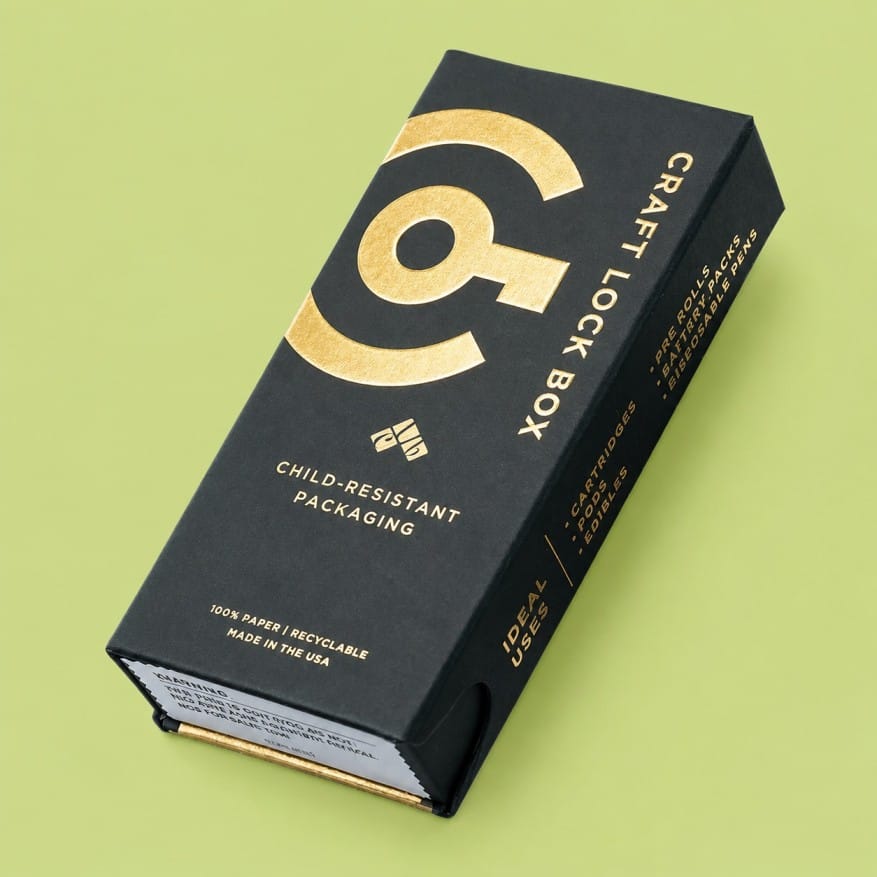
That’s the whole reason custom child resistant boxes exist. They keep small hands out of products that can cause real harm, and they still let you build a brand people remember. If you’re about to order some, here’s what’s worth knowing first.
Child resistant isn’t the same as child-proof
This is the first thing to get straight. No box is truly child-proof. Given enough time, a determined kid might still figure one out.
What these boxes do is make opening difficult enough that most young children give up. An adult can open one with a bit of attention, such as pressing a hidden button, sliding a panel, or lifting a locking tab. A toddler usually can’t do those things in the right order. So the box buys you time and a safety margin, and it works best when the product is also stored out of reach.
Which products need this kind of packaging
Anything that could harm a child if swallowed or handled should be considered. In practice that usually means:
- Cannabis flower, pre-rolls, and edibles
- CBD oils, gummies, and tinctures
- Vape cartridges and e-cigarette devices
- Medicine kits and supplements
Rules differ from state to state, and in some places child resistant packaging is a legal requirement for cannabis products. Check your local regulations before you finalize anything. A good packaging partner will tell you which structures meet recognized child safety standards, so ask them directly.
Picking a material that fits your product
Material is where cost, protection, and appearance meet.
SBS paperboard is a favorite because it prints beautifully and suits most retail boxes. Kraft gives you that natural, earthy feel, which works well if your brand leans eco-friendly. If you ship a lot of orders, corrugated cardboard is tougher and handles rough transit better. And if you’re after a premium unboxing moment, rigid board feels solid in the hand and looks expensive on a shelf.
Cardstock is the budget option, but it’s best kept for lightweight items. If your product has any real weight, go thicker.
Get the size right
It sounds boring, but sizing causes more reorders than almost anything else. A loose box lets the product slide around and weakens the lock. A box that’s too tight can damage what’s inside.
Standard sizes cover things like oil bottles, supplement jars, and vape kits. If your product doesn’t fit a standard size, ask for custom dimensions. A snug fit makes the package feel well made, and it also helps the closing mechanism work as designed.
Styles that work well
Straight tuck end and reverse tuck end boxes are simple, affordable, and ship flat, which saves on storage. Auto lock bottom boxes hold up well and open with a single push. Two-piece boxes offer the strongest seal and feel high-end. Pre-formed square, cube, and rectangle boxes are also solid options when you want a secure, finished look right out of the carton.
Which one is right depends on your product’s weight, your budget, and how premium you want the unboxing to feel.
Printing and finishing choices
How many boxes you need decides most of your printing options. Digital printing suits small runs and test orders, and it can start from around 50 units. Offset printing is better once you’re ordering in the hundreds, since it matches brand colors accurately. Flexographic printing is the cheapest per box for very large runs, and screen printing is good for special colors and textured effects.
Finishes change how a box feels in the hand. Matte lamination gives a soft, velvety surface without glare. Gloss makes colors look vivid. Spot UV adds a shiny highlight on a matte background, and foil stamping brings in a metallic touch. Embossing or debossing makes your logo raised or sunken, so people can feel it before they read it.
A simple tip is to choose one finish to be the star and keep everything else quiet. Too many effects on one box tends to look busy.
Always ask for a sample
You can read specs all day, but nothing replaces holding the box. Open it, close it, and shake it. Then hand it to a friend who has never seen it and watch how they handle it.
Testing a sample also shows you whether the lock is easy enough for adults and still frustrating enough for kids, which is the balance you want. Some suppliers even credit the sample cost if you place a full order afterward, so it rarely costs you extra.
The bottom line
Child resistant packaging protects people, and it also protects your brand. Customers notice when a company has clearly thought about safety, and that builds trust faster than most marketing does.
Take the time to choose the right material, size, and structure, and test a sample before you commit. A little patience at this stage saves a lot of money and trouble once the full order arrives.