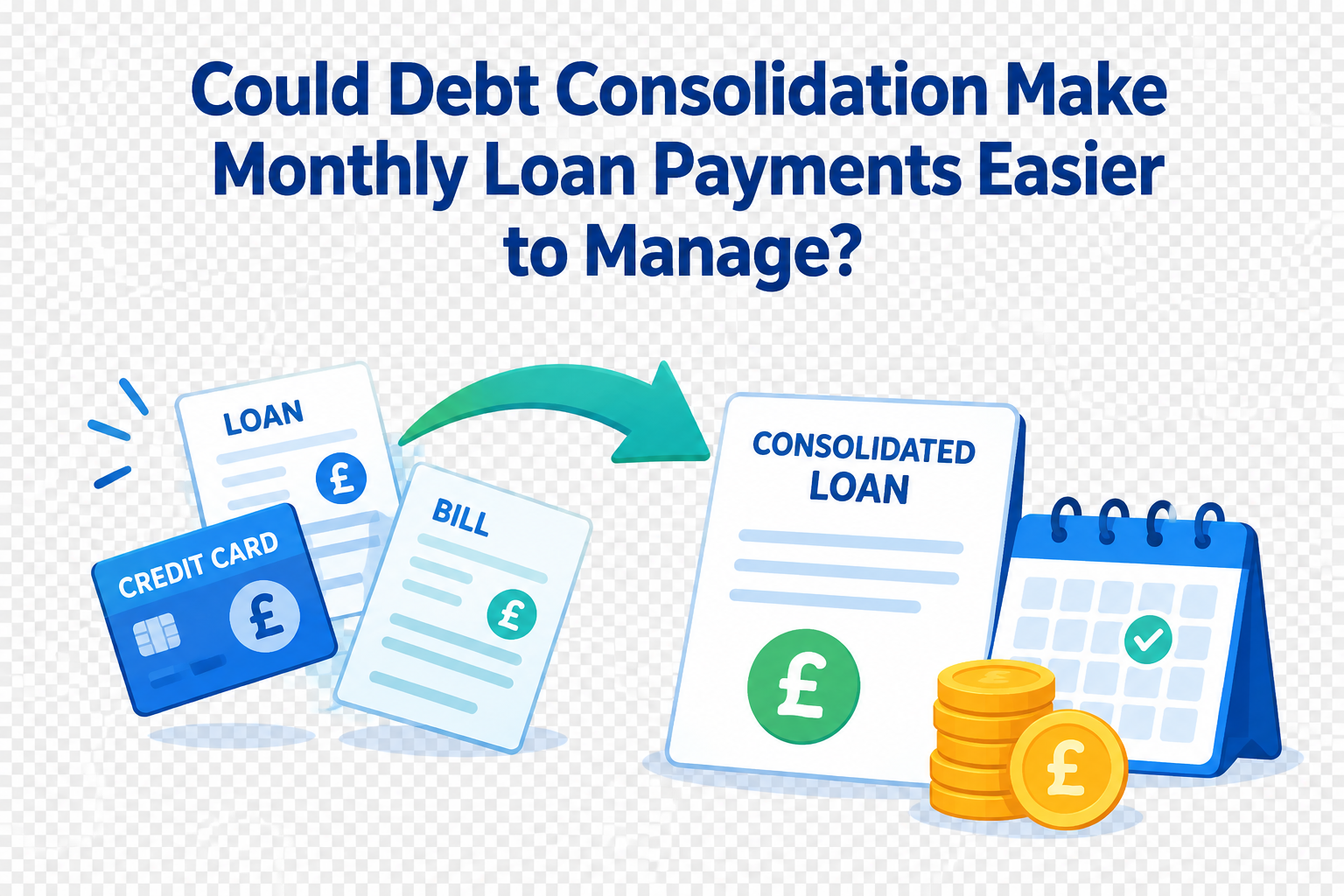
Yes, debt consolidation makes monthly loan payments easier to manage by spreading the cost. Monthly instalments remain unchanged throughout the loan term, so you can easily budget around repayments.
A debt consolidation loan is a personal loan that you take out to combine all your existing debts into a single one, with one monthly repayment at lower interest rates. Consolidation is recommended when you are juggling multiple debt payments.
You take out a new large loan to pay off your existing outstanding debts once and for all, so that you are left with only one large personal loan to pay off over an extended period of time.
Consolidation does not reduce the debt amount. It only combines existing debts into a new loan, available at a new interest rate and repayment term. Since you will now only make a single repayment, this makes budgeting easier.
What do you need to qualify for a consolidation loan in Ireland?
In order to qualify for a personal loan to consolidate debts in Ireland, you must have a good credit history. Try consolidating your debts before missing a repayment.
At the time of consolidating, a lender will run an affordability check. Apart from your credit history, they will also evaluate your financial condition. You must have a strong repayment potential.
It is important to keep in mind that there is no guarantee that your lender will consolidate all non-priority debts. Be prepared to manage some of them individually.
How does consolidation make payments easier to manage?
Here is how consolidation can make payments easier to manage:
Simplified finances
The biggest benefit of consolidation is that it helps manage finances. Now you do not have to struggle with repayments of multiple debts which are due on different dates. After consolidation, they are merged into one large loan that you pay down over an extended period of time.
Since you will have only one loan, one lender and one monthly instalment, you can easily budget around payments and reduce the risk of missed payments.
Lower interest rates
After consolidation of your loans, you can qualify for lower interest rates. Personal loans tend to consolidate short-term high-cost debts, including credit card bills. The problem with short-term loans is that they are repaid in a lump sum. If you fall behind on the payment, they are rolled over. As a result, the total cost of the debt quickly accumulates.
When you consolidate these loans, the risk of falling behind on payment is reduced due to the spread of the cost. Personal loans come with relatively lower interest rates. They will help you save a lot of money on interest overall.
Personal loans charge an APR between 6% and 12%, while credit card debt in Ireland charges an APR between 18% and 24%. Not only will you qualify for lower interest rates, but you will also spread payments.
Reduced monthly payments
Consolidation can lower monthly payments too. Since a personal loan settles all existing outstanding debts, you do not have to adhere to large payments. Consolidation spreads the cost by charging lower interest rates. This results in lower monthly payments.
This can free up some cash, which you can utilise for other monthly expenses. In order to be able to keep up with other monthly expenses, your debt instalment should be low. Since consolidation spreads the cost of the debt, it reduces the size of monthly repayments.
It provides psychological relief
When you have a clear timeline for payment, you feel little relaxed and relieved. You can easily budget around payments. You must have a clear timeline for becoming debt-free. This feels less stressful compared to juggling multiple debts.
What are the risks and drawbacks?
Though a debt consolidation loan with a lower monthly payment in Ireland is available, they are subject to some risks as well.
A lengthy repayment term
When you consolidate existing loans to spread the cost, you are more likely to extend the repayment term. It means monthly instalments will be low, but extended repayment terms will increase the total interest amount. It is vital to choose the repayment period carefully.
Fees and charges
Do not forget that consolidation charges additional fees. It might be between 3% and 5% of the total consolidated loan. This will increase the total cost of the debt. If you fail to settle your dues, you will incur late payment charges. If you decide to repay the debt early, you will have to pay early repayment charges.
Risk of rebuilding debt
There is a risk of rebuilding new debt if you do not turn over a new leaf. Credit card consolidation will enable you to use your credit cards again. Consolidation does not reduce the debt. It only shifts the debt.
If you keep using credit cards, you will end up racking up more debt. It will be hard to manage them along with your personal loan. Do not forget that credit card bills are discharged in full within the interest-free period. If you miss the payment, interest will be charged by the day. Every time you cannot consolidate debts if you are struggling with payments.
Approval is not a cinch
It is not easy to get approval for a consolidation loan even if your credit history is stellar. Lenders would like to examine your repayment capacity. If they find that you will not be able to repay the debt, they will most likely reject your application.
There is no guarantee that all existing accounts will be combined. Carefully analyse your repayment capacity.
The bottom line
Consolidation can make monthly payments easier as you get a new loan at a revised interest rate and repayment term. This spreads the cost of the debt. This reduces the size of monthly payments lower. Of course, you can easily fit them into your budget. However, experts still recommend that you change your spending behaviour. Otherwise, you will never be able to break the cycle of debt.