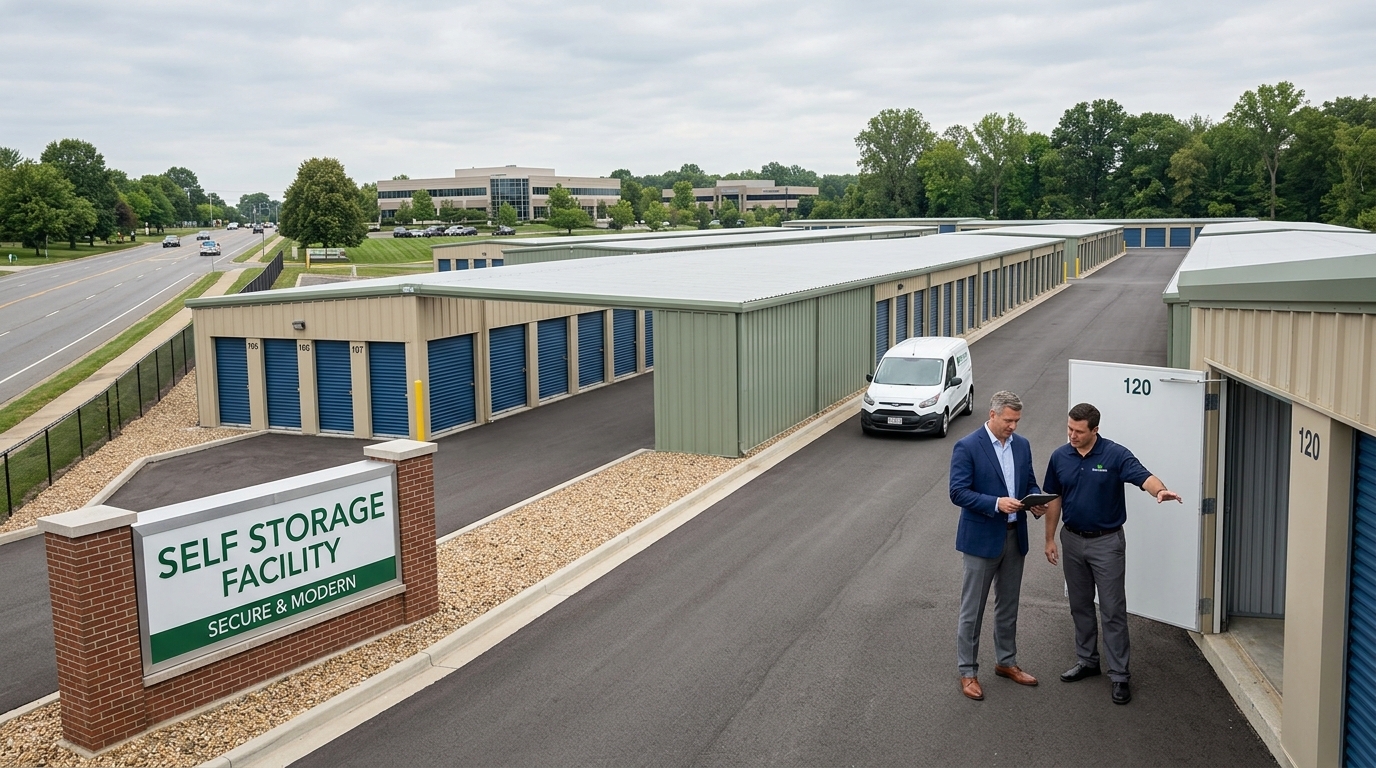
Traditional multifamily properties and office buildings face distinct challenges, including unpredictable tenant turnover, rising maintenance demands, and structural economic shifts. Smart investors seek real estate alternatives that deliver steady cash flow while avoiding the heavy operational burdens associated with standard leases.
Self storage facilities have steadily emerged as one of the most resilient sub-sectors within commercial real estate. Combining low tenant improvement overhead with dynamic monthly pricing structures, these assets offer a unique mix of stability and capital growth.
The Financial Mechanics of Storage Property Investments
Understanding why self storage outpaces many traditional real estate sectors starts with its basic operational math. Unlike office or retail spaces that depend on multi-year lease terms, storage facilities operate on month-to-month rental agreements.
- Dynamic Pricing Power: Operators can adjust rental rates month-to-month to match inflation and local market demand without waiting for long lease terms to expire.
- Minimal Maintenance Expenses: Concrete structures with metal roll-up doors require negligible ongoing capital expenditures compared to residential housing units.
- Diversified Revenue Streams: Risk is distributed across hundreds of individual unit tenants rather than relying on a few anchor commercial tenants.
- Operational Efficiency: Automation platforms, digital keypads, and online management systems allow facilities to run with minimal on-site staffing.
These structural advantages help preserve net operating income (NOI) across various economic conditions.
Identifying High-Performing Commercial Assets
Entering this segment requires careful site selection and thorough market analysis. Investors who decide to buy storage units must evaluate specific location metrics to ensure consistent rental demand.
Critical Location and Demographic Metrics
- Population Density: Target markets with at least 50,000 residents within a three-mile radius to maintain steady occupancy baseline rates.
- Supply per Capita: Benchmark existing square footage per person within the primary trade area, aiming for markets with under 7 square feet per capita.
- Traffic Counts: Select sites situated along high-visibility corridors featuring daily traffic counts exceeding 15,000 vehicles.
Physical Property Classifications
- Class A Facilities: Multilevel, fully climate-controlled properties in primary suburban or urban markets command the lowest cap rates and attract institutional buyers.
- Class B Facilities: Well-maintained drive-up or hybrid properties offering solid cash flow and clear value-add opportunities.
- Class C Properties: Older, unconditioned assets in tertiary locations that often require physical upgrades and modernized management systems.
Analyzing these variables helps buyers align their capital deployment with specific yield expectations and hold horizons.
Positioning Your Portfolio for Sustainable Growth
Expanding a property portfolio demands a disciplined long-term strategy. Broadening your horizon beyond traditional residential assets creates resilience against broader market fluctuations.
Investors seeking tailored guidance on market trends, property acquisitions, and asset management can turn to platforms like We Home500 to evaluate emerging opportunities effectively. Integrating niche commercial real estate investing strategies alongside existing holdings helps establish balance, ensuring consistent returns regardless of broader economic shifts.
When capital is spread across property types with uncorrelated risk profiles, overall portfolio volatility drops significantly.
Key Steps to Execute a Successful Acquisition
Executing a clean acquisition requires systematic due diligence before finalizing any purchase contract.
- Audit Trailing Financial Records: Review trailing-12-month bank statements, tax filings, and management software reports to verify real rental revenue.
- Analyze Economic Occupancy: Distinguish physical occupancy rates from actual collections, identifying unpaid units, promotional discounts, or late fees.
- Conduct Environmental Inspections: Perform Phase I environmental assessments to confirm the property is free from hazardous materials or soil contamination.
- Evaluate Expansion Capabilities: Check local zoning laws and remaining lot square footage to determine if additional climate-controlled units can be built on-site.
Careful execution during the underwriting phase protects capital and ensures projected cash flows materialize post-closing.
Building Sustainable Wealth Through Alternative Assets
Storage real estate remains a premier asset class for building predictable wealth. Low operational expenses, flexible month-to-month pricing structures, and strong performance across economic cycles make these facilities a compelling alternative to conventional commercial sectors. By applying disciplined site selection criteria, conducting thorough due diligence, and utilizing modern operational tools, investors can secure steady cash flow and achieve long-term capital appreciation.
Frequently Asked Questions
Question 1: What is the average cap rate for self storage properties?
Cap rates typically range between 5.5% and 7.5%, depending heavily on facility class, location, and climate-control mix.
Question 2: Are climate-controlled units more profitable than standard drive-up units?
Yes, climate-controlled units command a 30% to 50% premium on rent per square foot compared to standard drive-up spaces.
Question 3: How does inflation affect storage property investments?
Month-to-month lease structures allow operators to raise rental rates rapidly, making storage an effective hedge against rising inflation.
Question 4: What occupancy rate indicates a stabilized facility?
A physical occupancy rate above 85% generally signals a stabilized facility ready for optimized yield management.
Question 5: Can a storage facility be operated without on-site personnel?
Yes, modern facilities utilize remote call centers, automated kiosks, and digital access control to run seamlessly without full-time staff.