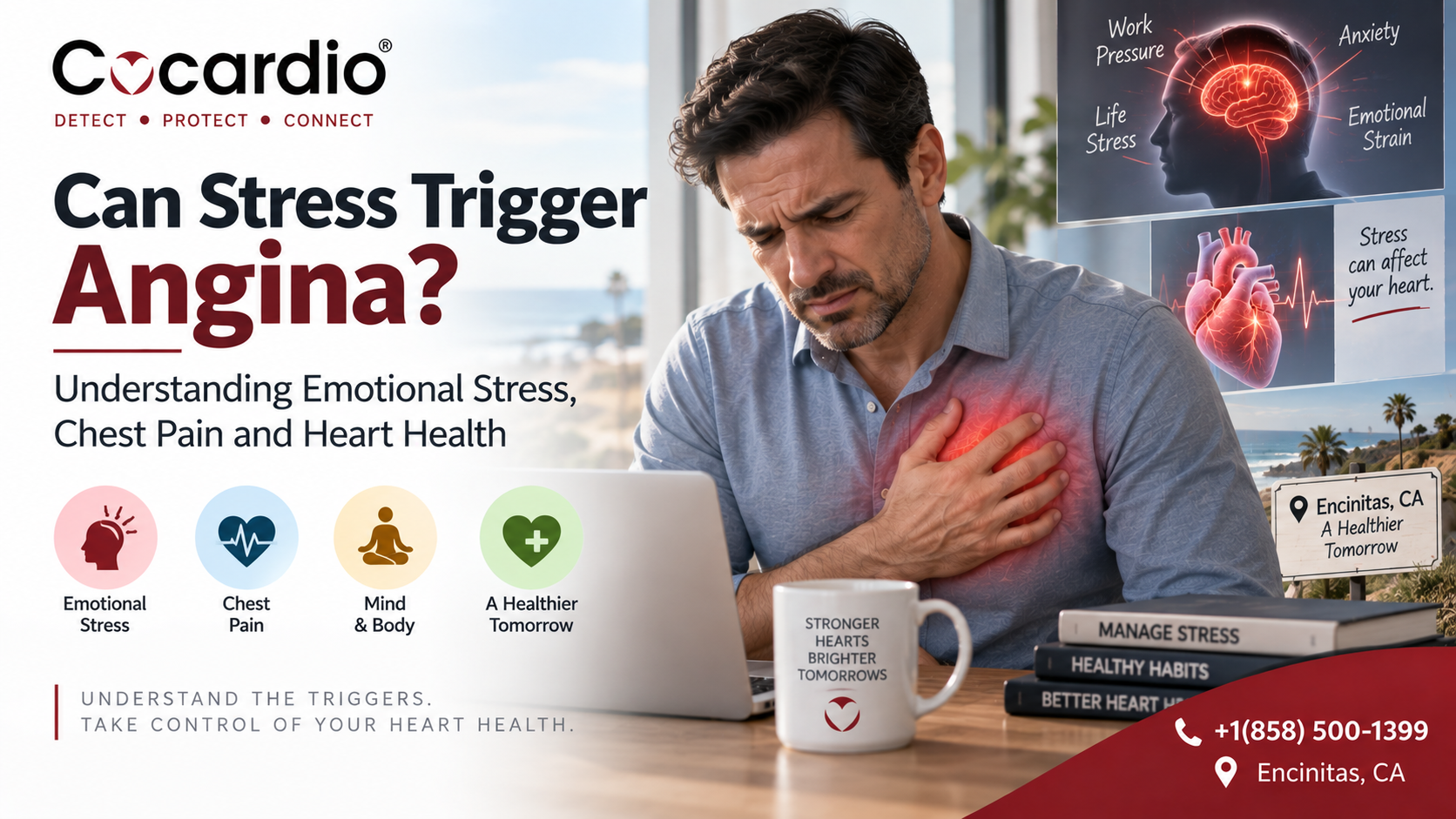
Stress is often described as an emotional experience, but the body’s response to it is physical. During stressful situations, hormones such as adrenaline can temporarily increase heart rate and blood pressure, making the heart work harder. For someone with coronary artery disease or another condition that limits blood flow to the heart muscle, that increase in demand may contribute to angina. The American Heart Association identifies emotional stress as a common trigger for stable angina, which is why recurring chest discomfort during stressful situations should not simply be dismissed as “just stress.”
Angina occurs when the heart muscle does not receive enough oxygen-rich blood for its current needs. It may feel like pressure, squeezing, tightness, heaviness, or discomfort in the chest, and symptoms can sometimes extend into the arm, shoulder, neck, jaw, back, or abdomen. Some people experience shortness of breath, fatigue, dizziness, or nausea rather than obvious chest pain. Understanding whether emotional stress repeatedly triggers these symptoms can provide useful information for a healthcare professional evaluating your cardiovascular health.
How Can Emotional Stress Trigger Angina?
When you encounter a stressful situation, your body’s “fight or flight” response becomes activated. Adrenaline can cause your heart to beat faster and temporarily raise blood pressure, increasing the amount of oxygen the heart muscle requires. If coronary blood flow cannot increase enough to meet that additional demand, myocardial ischemia and angina symptoms may occur. This helps explain why an argument, frightening event, intense work pressure, or another emotionally demanding situation can trigger symptoms even when you are not exercising.
This connection does not mean that every episode of stress-related chest pain is angina. Anxiety, panic attacks, gastrointestinal conditions, muscle tension, and several other conditions can produce chest discomfort that may feel similar. Conversely, assuming that chest pain is only anxiety can be dangerous when cardiovascular disease is actually involved. Recurring or unexplained chest discomfort deserves appropriate medical evaluation rather than self-diagnosis.
What Does Stress-Induced Angina Feel Like?
Stable angina often follows a relatively predictable pattern. A person might notice pressure or tightness during brisk walking, climbing stairs, exposure to cold weather, or periods of strong emotion, with symptoms improving after rest or prescribed medication. Emotional stress is recognized alongside physical exertion as a potential trigger because both can increase the heart’s workload. Stable angina episodes are typically similar to previous episodes rather than suddenly becoming more severe or unpredictable.
The sensation can differ substantially between individuals. Some people describe squeezing or pressure rather than sharp pain, while others experience breathlessness, fatigue, nausea, dizziness, or discomfort elsewhere in the upper body. This variability makes it difficult to determine the cause based solely on how the discomfort feels. The timing, trigger, duration, accompanying symptoms, and response to rest can all help a healthcare professional understand the pattern.
Why Does the Heart Work Harder When You Are Stressed?
Stress Can Increase Heart Rate and Blood Pressure
Emotional stress causes physiological changes designed to prepare the body to respond quickly to a perceived threat. Breathing and heart rate can accelerate, while blood pressure may temporarily increase. For a healthy cardiovascular system, these changes are often well tolerated. For someone whose heart muscle already has difficulty receiving sufficient oxygen-rich blood during increased demand, however, the additional workload may expose an underlying limitation.
This is why mental stress can matter even when a person is physically sitting still. The cardiovascular system responds to what is happening within the nervous and hormonal systems, not simply to whether the muscles are exercising. Anger, fear, anxiety, deadlines, financial worries, and interpersonal conflict can therefore create real cardiovascular responses. How strongly an individual responds varies considerably.
Chronic Stress May Affect Heart Health Differently
Short-term emotional stress and long-term chronic stress are related but not identical issues. Chronic stress can contribute to high blood pressure and may encourage behaviors associated with cardiovascular risk, including smoking, physical inactivity, unhealthy eating patterns, and inconsistent medication adherence. Poor sleep and persistent stress can also make cardiovascular self-care more difficult. The American Heart Association notes that more research is still needed to fully determine how stress contributes directly to heart disease and stroke.
Managing chronic stress therefore should not be viewed as an alternative to controlling established cardiovascular risk factors. Cholesterol, blood pressure, diabetes, tobacco exposure, physical activity, nutrition, and prescribed treatments still matter. Stress management is one component of a broader cardiovascular strategy. The appropriate approach depends on the individual’s medical history and risk profile.
Can Angina Happen During an Argument or Emotional Shock?
Yes, strong emotions can trigger stable angina in susceptible individuals. An argument can cause a sudden increase in sympathetic nervous system activity, heart rate, and blood pressure, increasing myocardial oxygen demand. The National Heart, Lung, and Blood Institute notes that emotionally upsetting events, particularly those involving anger, can trigger angina or even a heart attack in some people. Emotional triggers should therefore be taken seriously when they repeatedly coincide with cardiovascular symptoms.
However, experiencing chest discomfort during an argument does not prove that coronary artery disease is present. Panic and anxiety can create very real physical sensations, including chest tightness and rapid heartbeat. The safest approach is not to decide independently whether the cause is emotional or cardiovascular. Medical evaluation can help determine whether additional cardiac assessment is warranted.
Can Anxiety and Angina Feel Similar?
Anxiety can produce rapid breathing, palpitations, chest tightness, sweating, dizziness, and a sense of impending danger. Some of these symptoms overlap with cardiovascular warning signs, making it difficult for patients to distinguish between them. Even someone with a history of anxiety can develop genuine cardiovascular disease. A previous anxiety diagnosis should therefore not automatically be used to explain new or changing chest symptoms.
The opposite problem can occur as well. Someone with known heart disease may assume every uncomfortable sensation is angina, increasing anxiety and making symptoms even more distressing. A clear diagnosis and individualized action plan can help reduce uncertainty. Patients with established angina should discuss with their healthcare professionals how to recognize their usual symptom pattern and what changes require urgent attention.
When Does a Change in Angina Become Concerning?
A familiar trigger does not make every future episode safe. If chest discomfort begins happening with less activity or less emotional stress, becomes more frequent, lasts longer, feels more intense, occurs at rest, or stops responding to prescribed treatment as expected, the pattern has changed. NHLBI advises people with angina to inform their healthcare provider when symptoms become more frequent, painful, prolonged, or occur without physical exertion. Such changes may indicate worsening or unstable symptoms.
Sudden, severe, or worsening chest pain requires urgent attention, particularly when accompanied by shortness of breath, fainting, sweating, nausea, or pain spreading into the arm or jaw. CoCardio specifically advises people experiencing these symptoms to seek emergency medical care rather than relying on its outpatient services. If you think you may be having a heart attack, call 911 or your local emergency number.
Why Understanding the Cause of Chest Pain Matters
Stress can be a trigger, but identifying a trigger is different from identifying the underlying cardiovascular problem. Angina is a symptom rather than a disease itself and commonly reflects inadequate oxygen-rich blood reaching the heart muscle. Coronary artery disease is one potential cause, while microvascular dysfunction and coronary vasospasm can also produce angina symptoms. The appropriate evaluation and treatment can differ depending on the underlying mechanism.
A root cause consultation can provide an opportunity to review cardiovascular concerns, symptoms, risk factors, and potential next steps after urgent causes have been appropriately addressed. The objective should not be to assume that stress is responsible simply because symptoms appear during emotional situations. Instead, the relationship between symptoms, cardiovascular function, circulation, and established risk factors needs to be considered. This can help patients make more informed decisions about further evaluation and care.
Can Heart Disease Develop Before Angina Appears?
Coronary artery disease can develop gradually before someone notices classic chest pain. Some people experience ischemic episodes without recognizing symptoms, and others may have subtle manifestations such as fatigue or shortness of breath. This means the first episode of stress-related angina does not necessarily represent the beginning of the underlying cardiovascular process. Prevention therefore involves considering risk factors even when someone currently feels well.
The resource Can coronary artery disease progress without symptoms before angina starts explores why coronary disease can develop before obvious warning symptoms emerge. People with diabetes, smoking history, elevated cholesterol, high blood pressure, or a strong family history may have reasons to discuss their cardiovascular risk even without classic angina. Feeling healthy is reassuring, but it does not replace appropriate risk assessment. Preventive strategies should be individualized according to a person’s actual cardiovascular profile.
Can Managing Stress Help With Angina?
If emotional stress consistently triggers stable angina, reducing or managing that trigger can be a useful part of an overall care plan. NHLBI recommends discussing stress management with a healthcare provider and notes that approaches may include relaxation techniques, meditation, counseling, physical activity when medically appropriate, and supportive relationships. People with cardiovascular disease should ask their healthcare professionals which forms of exercise and stress management are safe for them.
Stress reduction should complement rather than replace prescribed cardiovascular treatment. Someone with established coronary artery disease may require medications, cardiac rehabilitation, risk-factor management, procedures, or other interventions depending on their condition. Simply becoming calmer does not remove coronary plaque or guarantee that ischemia will stop occurring. Both the trigger and the underlying cardiovascular problem deserve attention.
Where Does EECP Fit Into Chronic Angina Care?
For selected individuals with chronic stable angina, eecp therapy for angina may be considered as part of a broader treatment discussion. Enhanced external counterpulsation uses inflatable cuffs around the lower body that inflate and deflate in coordination with the cardiac cycle. NHLBI notes that EECP can improve the flow of oxygen-rich blood to the heart muscle and may help relieve angina in some patients whose symptoms continue. It is noninvasive, but candidacy still requires appropriate assessment.
EECP therapy for angina should not be interpreted as an emergency treatment for active chest pain. CoCardio describes ECP/EECP as an option that may be worth discussing for carefully selected people with chronic stable angina, particularly when symptoms remain despite medical treatment. It does not replace medications, stenting, bypass surgery, or other care recommended by a cardiologist. Understanding the type and stability of angina is therefore essential before considering treatment.
What Happens During EECP Treatment?
An eecp treatment is performed without surgery or catheter insertion. Cuffs are placed around the lower body and synchronized with the heartbeat so they inflate and deflate at specific points in the cardiac cycle. CoCardio uses external counterpulsation as part of its noninvasive cardiovascular services for appropriately selected patients. Screening is important because the treatment is not suitable for every patient or every cause of chest discomfort.
An eecp treatment program should be considered within the patient’s existing cardiovascular care rather than as a replacement for it. People should continue taking prescribed medications and following their cardiologist’s recommendations unless the prescribing clinician advises otherwise. Treatment goals can vary based on symptoms, medical history, and cardiovascular status. Patients should also understand what changes in their symptoms require immediate medical attention rather than waiting for their next treatment session.
What Should You Ask Before Choosing EECP?
People searching for EECP therapy near me should consider more than the distance to a treatment center. Ask how candidacy is assessed, what cardiovascular information is reviewed, how treatment progress is monitored, and how the program fits alongside existing cardiology care. CoCardio states that candidacy for its counterpulsation program is evaluated through consultation and heart-function assessment. A clear screening process is especially important when chest discomfort has multiple possible causes.
Patients may also want to ask about EECP therapy cost, expected treatment duration, scheduling, and whether insurance coverage may apply to their circumstances. These details can vary according to indication, treatment plan, provider, and coverage. Financial questions should therefore be addressed directly rather than assuming that every patient will have the same cost. Clinical appropriateness should remain the first consideration.
You may also encounter the term ecp therapy when researching external counterpulsation. ECP and EECP terminology is commonly used in discussions of counterpulsation therapy, but patients should focus on the specific treatment protocol, clinical indication, screening process, and professional oversight. CoCardio describes its ECP/EECP approach as complementary to standard medical care rather than a replacement for cardiology or emergency services.
Stress May Be the Trigger, but It May Not Be the Whole Explanation
When chest pressure repeatedly occurs during periods of anxiety, anger, work pressure, or emotional conflict, the pattern deserves attention. Emotional stress can increase heart rate and blood pressure and raise the heart’s oxygen requirements, potentially triggering angina when coronary blood flow cannot adequately meet demand. Recognizing that connection can help patients identify triggers and provide useful information to their healthcare team.
For people with established chronic stable angina, EECP therapy for angina may be one option to discuss when symptoms persist despite appropriate conventional care. An eecp treatment should still be considered only after the underlying cardiovascular situation has been evaluated and treatment suitability established. Stress management, prescribed medical therapy, cardiovascular risk-factor management, and appropriate follow-up remain important parts of the broader picture. The goal is not simply to suppress one trigger but to understand and manage cardiovascular health comprehensively.
Take Recurring Stress-Related Chest Pain Seriously
Chest discomfort that repeatedly appears during stressful situations should not simply become something you learn to tolerate. Document when symptoms occur, what triggered the stressful response, how long the discomfort lasted, whether it spread elsewhere, and what made it improve. This information can help a healthcare professional distinguish a familiar stable pattern from symptoms that may require further investigation. A meaningful change in your usual angina pattern deserves prompt medical attention.
If urgent causes have been ruled out and you want to better understand recurring angina or noninvasive cardiovascular options, contact CoCardio in Encinitas, California at +1(858) 500-1399. CoCardio serves people seeking prevention-focused cardiovascular assessment and supportive care alongside standard medical treatment. Sudden, severe, prolonged, or worsening chest pain should always be treated as a potential emergency rather than waiting for an outpatient appointment.