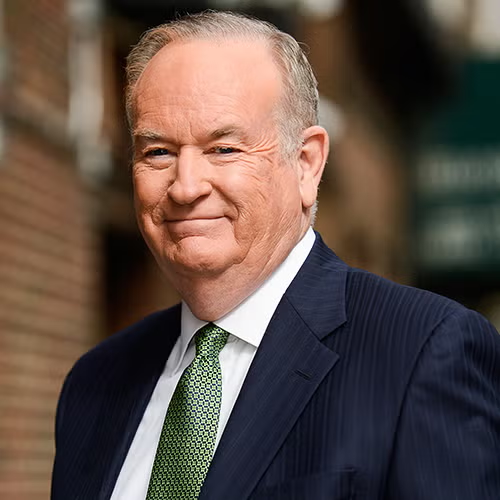
Bill O’Reilly has been one of the most recognizable and influential figures in American television news and political commentary for several decades. His career has stretched across local television, national broadcast journalism, cable news, publishing, radio, and digital media. More than simply reporting on political events, O’Reilly became known for presenting news through a strong editorial perspective, often challenging political figures, questioning established institutions, and speaking directly to an audience that valued his outspoken approach. His work became closely associated with the rise of opinion-driven cable news and the increasingly competitive relationship between journalism, politics, entertainment, and public opinion click here.
O’Reilly’s influence cannot be understood only by looking at individual broadcasts or controversial moments. His broader importance comes from the way his career reflected major changes in American media. He rose during a period when television news was becoming more personality-driven, remained prominent as cable news expanded its influence, and later adapted his work for radio, books, podcasts, websites, and other forms of digital distribution. Throughout these changes, his central style remained recognizable: direct language, strong opinions, confrontational interviews, and an emphasis on subjects he believed traditional news organizations were overlooking.
Early Career and the Development of His Broadcast Style
Bill O’Reilly was born in 1949 in New York and developed an interest in broadcasting during a period when television was becoming the dominant source of news for many American households. He attended Marist College and later earned a master’s degree in broadcast journalism from Boston University. He also studied at Harvard University, where he received a master’s degree in public administration. His educational background combined journalism with an interest in government and public affairs, subjects that would become central to his professional identity.
O’Reilly began his television career in local news, working at stations in different parts of the United States. These early positions gave him experience covering everything from local politics to crime and community events. Local television journalism also exposed him to the demands of live broadcasting, where reporters have limited time to explain complicated stories and must compete for viewers’ attention.
During this period, O’Reilly developed a style that was more assertive than the neutral delivery traditionally associated with television news. Rather than simply presenting information, he frequently emphasized the importance of asking difficult questions and challenging people in positions of authority. This approach later became one of the defining characteristics of his national career.
His professional path eventually brought him to larger television markets and national exposure. A significant step came when he joined CBS News, where he worked as a correspondent. He later became a national correspondent for ABC News. These positions helped establish him as a serious television journalist before his identity became primarily associated with political commentary.
The Move Toward National Television
O’Reilly’s transition from conventional television reporting to personality-driven political commentary represented an important stage in his career. He gained wider recognition through programs such as “Inside Edition,” where he served as an anchor and correspondent. The program was designed for a broad television audience and covered crime, celebrities, unusual events, and human-interest stories.
Although “Inside Edition” was not a political program in the same sense as his later work, it helped O’Reilly develop several skills that would become important to his future success. He learned how to communicate complicated or emotionally charged stories quickly, how to conduct television interviews, and how to build a recognizable on-screen persona.
His style was increasingly characterized by confidence and confrontation. Instead of appearing detached from the subject being discussed, he often made his own assessment clear. This helped distinguish him from traditional anchors who were expected to maintain a more restrained presentation.
The emergence of cable television created new opportunities for personalities who could build dedicated audiences. Cable networks were not limited to the traditional evening-news format. They could devote hours to individual subjects, political debates, interviews, and commentary. This environment proved particularly suited to O’Reilly’s approach.
The Rise of “The O’Reilly Factor”
The most important chapter of O’Reilly’s television career began with “The O’Reilly Factor” on Fox News. The program debuted in the 1990s and eventually became one of the most prominent shows in American cable news.
“The O’Reilly Factor” combined political commentary, interviews, cultural criticism, investigative segments, and audience interaction. O’Reilly frequently positioned himself as someone willing to confront political figures and institutions regardless of party affiliation, although critics and observers often described the program as conservative in its overall orientation.
One of the program’s most recognizable elements was its interview style. O’Reilly often challenged guests directly, interrupted when he believed an answer was evasive, and pressed interviewees to defend their positions. Supporters viewed this as an example of strong journalism that held powerful people accountable. Critics argued that his confrontational approach could simplify complex issues or turn political disagreements into television spectacles.
Regardless of the criticism, the format proved highly successful. O’Reilly developed a large and loyal audience, and his program became a major part of the American political conversation. Political candidates, public officials, authors, activists, entertainers, and commentators appeared on the program, giving it a role that went beyond ordinary television reporting.
For more information check now.
“No Spin” and the Construction of a Media Identity
A central part of O’Reilly’s public identity was his repeated criticism of what he described as political “spin.” He frequently argued that politicians, public relations professionals, and news organizations manipulated language to shape public understanding of events.
This criticism became closely connected to his own brand. His program presented itself as a place where viewers could hear straightforward assessments without what he considered unnecessary political packaging. The phrase “no spin” became strongly associated with his television persona.
The idea was powerful because it addressed a growing concern among audiences: whether traditional news organizations were providing facts objectively or filtering events through political and institutional interests. As public trust in media organizations became a major issue, personalities such as O’Reilly offered viewers an alternative built around personality and directness.
At the same time, the concept of being “without spin” was itself part of O’Reilly’s editorial identity. His broadcasts were not simply collections of neutral facts. They reflected his judgments about politics, culture, morality, and social issues. This tension between claiming independence from media bias and openly providing strong commentary became one of the defining characteristics of his career.
Shaping Political Conversations
O’Reilly’s importance extended beyond television ratings because his program frequently addressed issues that were becoming central to national political debates. Immigration, terrorism, crime, education, taxation, religion, popular culture, political correctness, and American identity were regular subjects.
He had a particular ability to turn complex political debates into memorable television segments. His use of recurring themes and recognizable phrases helped audiences understand his broader arguments and made portions of his programming easy to discuss outside the broadcast itself.
In this respect, O’Reilly contributed to a wider transformation in political communication. Television personalities were no longer simply reporting what politicians said. They were becoming participants in the political debate themselves. Their statements could influence which topics audiences discussed, how political figures responded to criticism, and how news organizations covered controversial issues.
O’Reilly’s program frequently became part of the news cycle it was covering. A statement made on the program could be repeated by newspapers, other television networks, radio programs, websites, and political commentators. This created a feedback loop in which cable commentary could influence the broader news agenda.
His Relationship With Political Figures
O’Reilly interviewed numerous political leaders throughout his career, including presidents, presidential candidates, members of Congress, governors, and political activists. His interviews often attracted attention because of his willingness to challenge guests.
His relationship with politicians was not simply one of opposition. Appearing on a major national television program offered political figures access to millions of viewers. At the same time, accepting an interview meant being prepared for aggressive questioning.
This created an unusual relationship between political power and television personalities. Politicians increasingly understood that appearing on influential programs could help them communicate directly with voters, while refusing an interview could also become part of the story. Hosts such as O’Reilly therefore became important gatekeepers in the political communication process.
The rise of cable television helped shift some authority away from traditional newspaper editors and network news anchors toward individual television personalities. O’Reilly became one of the clearest examples of this change.
O’Reilly and the Culture of Cable News
To understand O’Reilly’s career, it is important to place him within the larger development of cable news. During the 1990s and 2000s, cable news became increasingly important to political audiences. Networks competed not only through reporting but also through distinctive programming styles and recognizable personalities.
O’Reilly’s success demonstrated that a political commentator could become the central attraction of a news program. Viewers were not necessarily tuning in only to learn what had happened during the day. Many were watching to hear O’Reilly’s interpretation of those events.
This distinction between reporting and commentary became increasingly important throughout the media industry. News programs began dedicating more time to debate, analysis, opinion, and personality-driven segments. The boundary between journalist and commentator became less clear.
O’Reilly was particularly effective within this environment because his television persona was consistent. Viewers knew what kind of program they were going to receive. He was outspoken, skeptical, argumentative, and willing to criticize people he believed were acting irresponsibly.
Books and the Expansion of His Influence
O’Reilly’s influence was not limited to television. He became a successful author, publishing numerous books dealing with American politics, history, culture, and current affairs. Several of his books became major commercial successes.
His books allowed him to develop arguments at greater length than television permitted. A television segment might last several minutes, while a book could provide hundreds of pages for historical interpretation or political commentary.
He also wrote historical books with a focus on major American events and figures. These works demonstrated another dimension of his public identity: he was not interested solely in contemporary political disputes but also in explaining American history through stories of conflict, leadership, and national crisis.
His publishing career reinforced the connection between television commentary and commercial publishing. A successful television personality could build an audience for books, while successful books could strengthen the television brand. This model later became common among prominent political commentators.
The Use of History in His Commentary
Historical themes became particularly important in O’Reilly’s later work. He co-authored a series of popular history books that focused on major events and figures in American history.
These books generally presented history through dramatic narratives centered on conflict, leadership, sacrifice, and national identity. Rather than approaching history exclusively as an academic subject, O’Reilly presented it in a style designed for a mass audience.
This approach reflected his broader communication philosophy. Historical events were often connected to contemporary debates about American society and politics. By revisiting famous moments in American history, he could encourage readers to think about current issues through the lens of earlier conflicts.
Supporters appreciated the accessibility of this approach, while critics sometimes questioned the simplicity or interpretive choices involved. Nevertheless, the popularity of these books demonstrated O’Reilly’s ability to extend his influence beyond television.
Radio and the Growth of a Broader Media Empire
O’Reilly also developed a substantial presence in radio. His syndicated radio program gave him another way to communicate with audiences who might not watch cable television.
Radio suited his conversational and argumentative style. Unlike television, radio allowed for longer discussions and more direct interaction with listeners. Callers could challenge him, agree with him, or ask questions about current events.
The combination of television, books, and radio created a powerful media ecosystem. Each platform reinforced the others. A television discussion could become a book topic; a book could be promoted on television; a radio conversation could revisit a television controversy.
This cross-platform strategy was increasingly important as audiences became less dependent on a single medium for information.
Controversy as Part of the Public Persona
Controversy has been a major part of O’Reilly’s public career. His outspoken views and confrontational broadcasting style generated strong reactions from supporters and critics alike.
Supporters often argued that controversy was evidence that he was willing to challenge powerful institutions and unpopular ideas. Critics maintained that his approach sometimes encouraged polarization and reduced complex political questions to dramatic conflicts.
These disagreements were not incidental to his public image. They became part of the reason audiences paid attention to him. In a crowded media environment, strong reactions could increase visibility and encourage viewers to return to a program.
His career therefore illustrates an important feature of modern political media: disagreement can itself become a source of audience engagement. A commentator does not necessarily need universal approval to become influential. A deeply committed audience can be more valuable than broad but passive recognition.
The End of “The O’Reilly Factor”
In 2017, O’Reilly’s long-running television program came to an end after reports concerning allegations of sexual harassment and settlements involving women who had worked with or around him. O’Reilly denied allegations of wrongdoing, while Fox News ultimately decided to part ways with him.
The end of “The O’Reilly Factor” marked a major turning point. For more than two decades, the program had been one of the defining shows of American cable news. Its cancellation demonstrated how quickly the relationship between media personalities, networks, advertisers, audiences, and corporate leadership could change.
The episode also became part of a broader national conversation about workplace conduct, sexual harassment, and accountability in powerful institutions.
Although O’Reilly’s television career at Fox News ended, his media career did not disappear. He continued producing commentary through other platforms, demonstrating the growing importance of digital distribution.
The Digital Era and Direct Communication With Audiences
After leaving Fox News, O’Reilly continued to publish commentary through his own media platforms. The development of podcasts, websites, streaming programs, and digital subscriptions created new opportunities for established personalities.
The significance of this shift was substantial. In earlier decades, a television personality depended heavily on a network to reach a national audience. Digital media reduced that dependence.
O’Reilly could continue communicating with followers without needing a traditional television network to provide a daily program. His established audience gave him a significant advantage in this environment.
This transition also reflected a larger transformation in media. Political commentators increasingly developed personal brands that could exist independently of newspapers, television networks, or radio stations. Audiences could follow individual personalities directly across different platforms.
His Influence on Political Media Personalities
O’Reilly’s career helped establish a model that many later commentators followed. The model involved building a recognizable personal identity, developing a loyal audience, expressing strong opinions, interviewing political figures, publishing books, appearing on multiple platforms, and turning controversy into continued public attention.
His success demonstrated that political commentary could be commercially powerful when connected to a strong personality.
Later commentators adopted similar strategies, although each developed a different style. Some focused on conservative politics, others on progressive politics, while others emphasized cultural commentary. What they shared was the understanding that audiences often develop loyalty to individual personalities rather than to institutions alone.
O’Reilly’s career therefore belongs to a broader history of American media in which the individual commentator became increasingly important.
Criticism and Debate Over His Legacy
Any assessment of O’Reilly’s legacy must recognize the substantial criticism surrounding his career. Critics have questioned his political framing, his treatment of guests, his handling of controversial subjects, and his approach to journalistic objectivity.
Some critics have argued that his style contributed to political polarization by presenting complicated debates as confrontations between clearly defined sides. Others have maintained that his willingness to challenge conventional thinking was precisely what made his programs valuable.
The debate over O’Reilly is therefore not simply about whether his opinions were correct or incorrect. It also concerns the role of opinion in news media and whether television commentators should act primarily as neutral observers or as active participants in political debate.
His career offers an example of what can happen when commentary becomes as influential as traditional reporting.
O’Reilly’s Place in American Media History
Bill O’Reilly’s career spans several important periods in American media. He began in an era dominated by broadcast television, became nationally prominent during the expansion of cable news, built a major publishing career during the growth of political books, and later continued his work through digital platforms.
This long career makes him useful for understanding how Americans consume political information. The methods have changed, but the basic competition for attention has remained.
Television once determined which voices could reach a national audience. Cable television expanded the number of available voices. The internet then expanded that number even further. O’Reilly participated in each stage of this development.
His influence was particularly strong because he understood the importance of presentation. Information alone does not necessarily attract a large audience. The way information is framed, explained, challenged, and connected to broader concerns can determine whether people continue watching.
The Lasting Impact of His Style
One of O’Reilly’s most enduring contributions was the normalization of highly personalized political commentary on mainstream television. He demonstrated that a host could become more than the presenter of a program; the host could become the program’s central identity.
His direct questioning style, strong opinions, recurring themes, and recognizable language helped create a format that audiences could immediately identify. This format influenced how cable news programs competed for attention.
The approach also changed expectations among viewers. Many audiences began expecting news programs to provide interpretation rather than simply information. They wanted hosts to explain what events meant, identify who was responsible, and argue about what should happen next.
That transformation remains visible throughout modern political media.
Conclusion
Bill O’Reilly career represents one of the most significant chapters in the development of American political television. From local newsrooms to national broadcasting, from “Inside Edition” to “The O’Reilly Factor,” and from television to books, radio, and digital media, he built a career around direct communication and strong editorial judgment.
His influence was never limited to the stories he discussed. He helped change the way political commentary was packaged, marketed, and consumed. His success demonstrated the power of a recognizable personality in an increasingly competitive media environment and helped establish a model in which commentators could become major political and cultural figures in their own right.
At the same time, his career remains controversial. Supporters credit him with challenging political elites, questioning conventional narratives, and giving a large audience an alternative perspective on current events. Critics argue that his approach encouraged polarization and blurred the distinction between journalism and political advocacy. The controversies surrounding his departure from Fox News also became an important part of the story of his career.
Regardless of where one stands on his politics or broadcasting style, O’Reilly’s place in media history is difficult to overlook. His decades in the public eye coincided with some of the biggest changes in American journalism: the expansion of cable news, the growing influence of political commentary, the rise of celebrity media personalities, and the transition from traditional broadcasting to direct digital communication.
His legacy is therefore best understood not simply through individual statements or programs, but through the larger media environment he helped shape. O’Reilly became a powerful example of how a broadcaster could turn a distinctive voice into a national brand and how that brand could influence political conversations well beyond the television screen.