
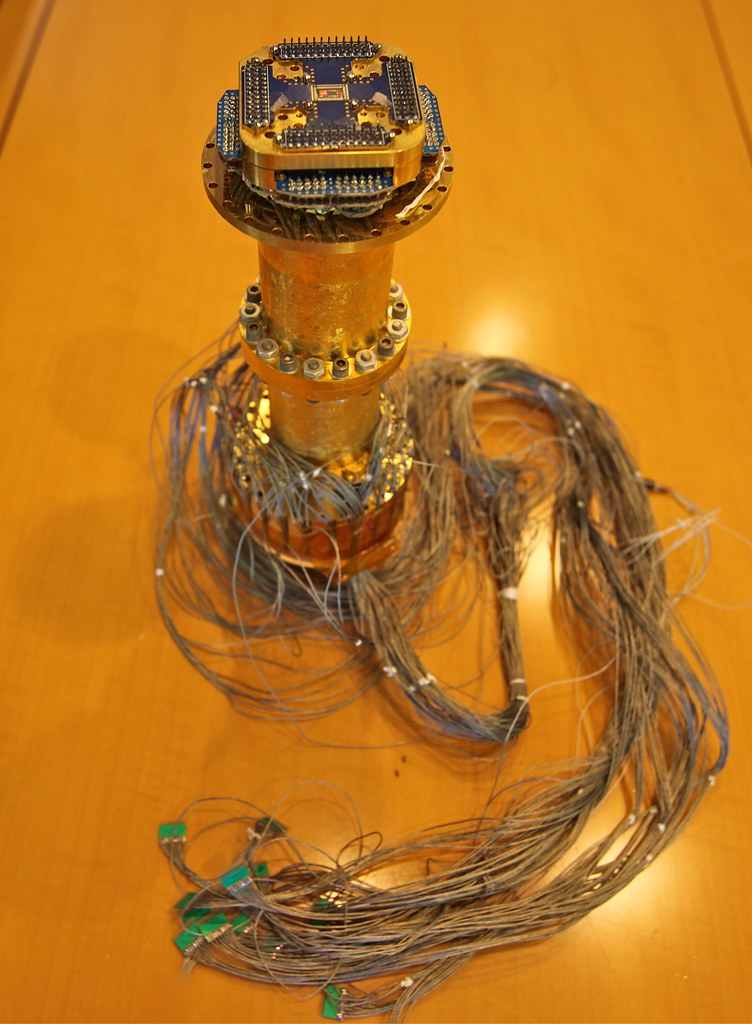
Quantum computing is frequently described in extremes. It will either transform every industry or remain a laboratory curiosity. Both views miss the technology’s more realistic path.
Quantum computers process information using quantum states that can represent and manipulate possibilities in ways classical bits cannot. This does not make them universally faster. Their advantage is expected to appear in particular classes of problems.
Qubits and Quantum Behavior
A classical bit is zero or one. A qubit can exist in a superposition described by probabilities until measured.
Qubits can also become entangled, creating correlations that have no classical equivalent.
Quantum algorithms use interference to amplify useful outcomes and suppress others.
IBM provides introductory quantum-computing material at https://www.ibm.com/quantum.
Why Building Hardware Is Difficult
Quantum states are fragile. Heat, vibration and electromagnetic noise can destroy information through decoherence.
Different platforms use superconducting circuits, trapped ions, photons, neutral atoms and other approaches. Each has advantages and engineering challenges.
Error Correction Is Central
Physical qubits make errors frequently. Useful large-scale machines will require quantum error correction, which encodes a stable logical qubit across many physical qubits.
This creates enormous overhead. A machine with thousands of physical qubits may support far fewer reliable logical qubits.
Chemistry and Materials
Quantum systems are difficult for classical computers to simulate because the amount of information grows rapidly.
Quantum computers may eventually model molecules and materials more naturally, supporting drug discovery, catalysts and batteries.
Early machines remain too limited for many practical problems, but chemistry is considered a promising long-term application.
Cryptography
Shor’s algorithm could break widely used public-key cryptography on a sufficiently powerful fault-tolerant quantum computer.
Such machines do not yet exist at the required scale. Governments and companies are nevertheless adopting post-quantum cryptography.
The U.S. National Institute of Standards and Technology publishes post-quantum standards at https://www.nist.gov/pqcrypto.
Optimization
Logistics, finance and scheduling involve large numbers of possible combinations.
Quantum algorithms may improve some optimization tasks, but claims require careful comparison with strong classical methods.
A quantum approach is not useful merely because a problem sounds complex.
Machine Learning
Quantum machine learning explores whether quantum systems can accelerate parts of training or inference.
Evidence of broad practical advantage remains limited. Data loading and hardware noise are major constraints.
Hybrid Computing
Quantum computers are likely to work alongside classical systems. A classical computer may prepare data, send a specialized calculation to a quantum processor and analyze the result.
Cloud access already allows researchers to experiment without owning hardware.
The Benchmarking Problem
Companies use terms such as quantum advantage or utility differently.
A demonstration may outperform one classical method while losing to a newer algorithm or specialized hardware.
Transparent benchmarks should include accuracy, energy, time and total workflow cost.
Near-Term Machines
Current noisy intermediate-scale quantum devices can support research and education. Their commercial value is still uncertain.
Error mitigation can improve results without full correction, but it cannot remove every limitation.
Talent and Education
The field needs physicists, engineers, computer scientists and domain experts.
Education should avoid implying that every programmer must become a quantum specialist. Most users will interact through high-level tools.
Economic Expectations
Quantum investment has grown rapidly, creating pressure for near-term returns.
Hype can damage the field if unrealistic promises lead to disappointment and funding withdrawal.
National Security
Quantum technology has strategic importance because of cryptography, sensing and scientific capability.
International competition may restrict collaboration and supply chains.
Environmental Questions
Quantum computers require specialized cooling or control systems. Their energy profile should be evaluated against the classical computations they replace.
Efficiency cannot be assumed.
What Quantum Computers Will Not Do
They will not speed up email, word processing or ordinary databases.
They will not test every possible answer simultaneously and simply select the best one. Measurement and algorithm design impose strict limits.
A Realistic Timeline
Progress depends on breakthroughs in hardware quality, error correction and manufacturing.
Specific forecasts are unreliable. The field may advance through several platforms rather than one dominant architecture.
How Organizations Should Prepare
Most businesses do not need immediate quantum investment. They should track relevant use cases and assess cryptographic exposure.
Organizations handling long-lived sensitive data should plan for post-quantum security.
Research-intensive firms may benefit from small experiments with clear evaluation criteria.
Conclusion
Quantum computing may become extraordinarily useful for a narrow set of difficult problems. That would still be a major achievement.
Its future should be judged through demonstrated advantage, not metaphors. The technology is most credible when researchers acknowledge its limits while steadily expanding what reliable quantum systems can do.