Travel luggage goes through a lot of handling. Suitcases are pulled across floors, placed in car trunks, moved through airports, and loaded with different amounts of weight. Over time, even a good-quality suitcase can develop problems.
Knowing which issues can be repaired can help you avoid replacing an entire bag unnecessarily. Luggage repair Dubai services can be useful for common problems involving wheels, zippers, handles, locks, and other suitcase components.
Before your next trip, check your luggage for these common signs of wear.
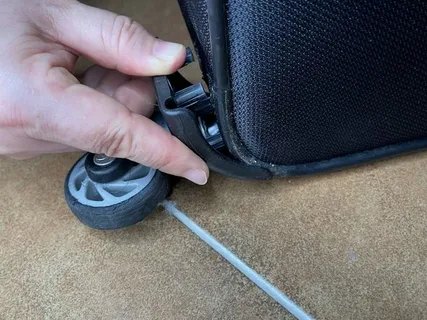
1. Damaged Suitcase Wheels
Wheels are among the most frequently damaged parts of a suitcase.
A wheel may stop rotating properly, become noisy, wobble, or make the suitcase difficult to pull. You may also notice that the suitcase moves unevenly when you drag it.
Do not ignore a damaged wheel.
A suitcase with one faulty wheel can place additional pressure on the remaining wheels and make travel more difficult.
Depending on the suitcase design, the wheel or complete wheel assembly may be replaceable.
If your suitcase has a worn or broken wheel, professional luggage repair in Dubai can help determine whether the wheel or another component needs attention.
2. A Stiff or Broken Zipper
A zipper that gets stuck can become a serious problem when your suitcase is full.
Check whether the zipper moves smoothly along the entire length of the bag.
Common zipper problems include:
- Broken zipper teeth
- A damaged slider
- Loose stitching
- A zipper that keeps opening
- A slider that gets stuck
- Separation near the corners
Avoid forcing a stuck zipper because excessive pressure can damage the surrounding fabric or zipper track.
A small zipper problem may be easier to address before it becomes a complete failure.
3. Telescopic Handle Problems
The extendable handle makes a suitcase easier to move, but repeated use can affect its internal mechanism.
A handle may become difficult to extend, fail to lock into position, or become loose when pulled.
Test the handle before travelling.
Extend it fully and check whether it locks securely at each available position.
If it feels unstable, get it checked rather than waiting until you are at the airport.
4. Cracks in a Hard-Shell Suitcase
Hard-shell luggage can develop cracks after impact or rough handling.
A small crack may appear near a corner, wheel housing, handle, or another stressed area.
Inspect the shell carefully, especially around the edges.
Do not assume that a small crack is harmless simply because the suitcase still closes.
Continued use and additional impact can cause the damaged area to spread.
Whether the shell can be repaired depends on the material, location, and extent of the damage.
5. Damaged Suitcase Corners
Corners often receive additional impact during travel.
The protective corner may become loose, cracked, or detached.
Fabric suitcases can also develop worn areas around the corners.
Check these areas before every major trip.
If the corner is already damaged, repairing it before travel can reduce the chance of further deterioration.
6. Broken Locks or Access Problems
Suitcase locks can also develop problems.
The lock may become difficult to operate, the combination mechanism may stop responding properly, or a key-operated lock may become stiff.
Do not force the mechanism with unsuitable tools.
A damaged lock can become harder to repair if the internal components are forced or broken.
If the suitcase contains important belongings, deal with the problem before travelling rather than taking the risk of discovering the failure during your journey.
7. Loose Stitching and Torn Fabric
Soft luggage can develop tears around handles, pockets, seams, and attachment points.
A small tear can gradually become larger when the suitcase is packed heavily.
Inspect the stitching around areas that carry weight, particularly the main handle and carrying straps.
If the fabric is beginning to separate, early repair may be easier than waiting until the entire seam fails.
8. Damaged Luggage Handles
Suitcases often have more than one handle.
The top or side handle may become loose after repeated lifting, while the connecting area can develop worn stitching or damaged mounting points.
Lift the suitcase carefully by each handle before travelling.
If you notice unusual movement, avoid loading the bag heavily until the problem has been assessed.
A weak handle can fail when the suitcase is lifted.
9. Check Your Luggage Before Packing
One of the easiest ways to avoid travel problems is to inspect your suitcase before packing it.
Check the wheels, zipper, handles, locks, shell, seams, and corners.
Pull the suitcase across a flat surface and listen for unusual sounds.
Open and close the main zipper several times.
Extend the telescopic handle and test its locking mechanism.
These quick checks can reveal problems while you still have time to arrange a repair.
Repair or Replace the Suitcase?
Not every damaged suitcase needs to be replaced.
A worn wheel, broken zipper slider, loose handle, or damaged fitting may be repairable.
Replacement may make more sense when the shell has extensive damage, several major components have failed, or the cost of repairing the suitcase is close to the cost of a suitable replacement.
The age and overall condition of the luggage should also be considered.
A quality suitcase with one damaged component may be worth repairing, especially if the rest of the bag remains in good condition.
Choose Repairs Based on the Actual Problem
It helps to describe the exact issue when requesting a repair.
Instead of simply saying that the suitcase is damaged, explain whether the problem involves the wheel, zipper, handle, lock, shell, or stitching.
You can also mention the suitcase brand and model if known.
For example, branded luggage may have specific wheel assemblies or handle designs that require compatible replacement components.
Clear information can make it easier to determine what type of repair is required.
Think About Other Equipment Before a Trip
Travel preparation often involves more than checking your suitcase.
If you have recently purchased outdoor equipment for your home, inspect that equipment before using it as well. For example, a new trampoline may require trampoline assembly service to ensure its components are put together correctly.
Handling maintenance tasks before they become urgent can make preparation easier.
Final Thoughts
Luggage repair Dubai can be a practical option when a suitcase has a specific damaged component but remains otherwise usable.
Wheels, zippers, handles, locks, corners, stitching, and hard-shell sections should all be checked before an important journey.
Do not wait until travel day to discover that a suitcase wheel is broken or the zipper no longer works.
A simple inspection can identify problems early and give you time to arrange the appropriate repair.
If the luggage is still structurally sound, repairing one worn component may be a better option than replacing the entire suitcase.