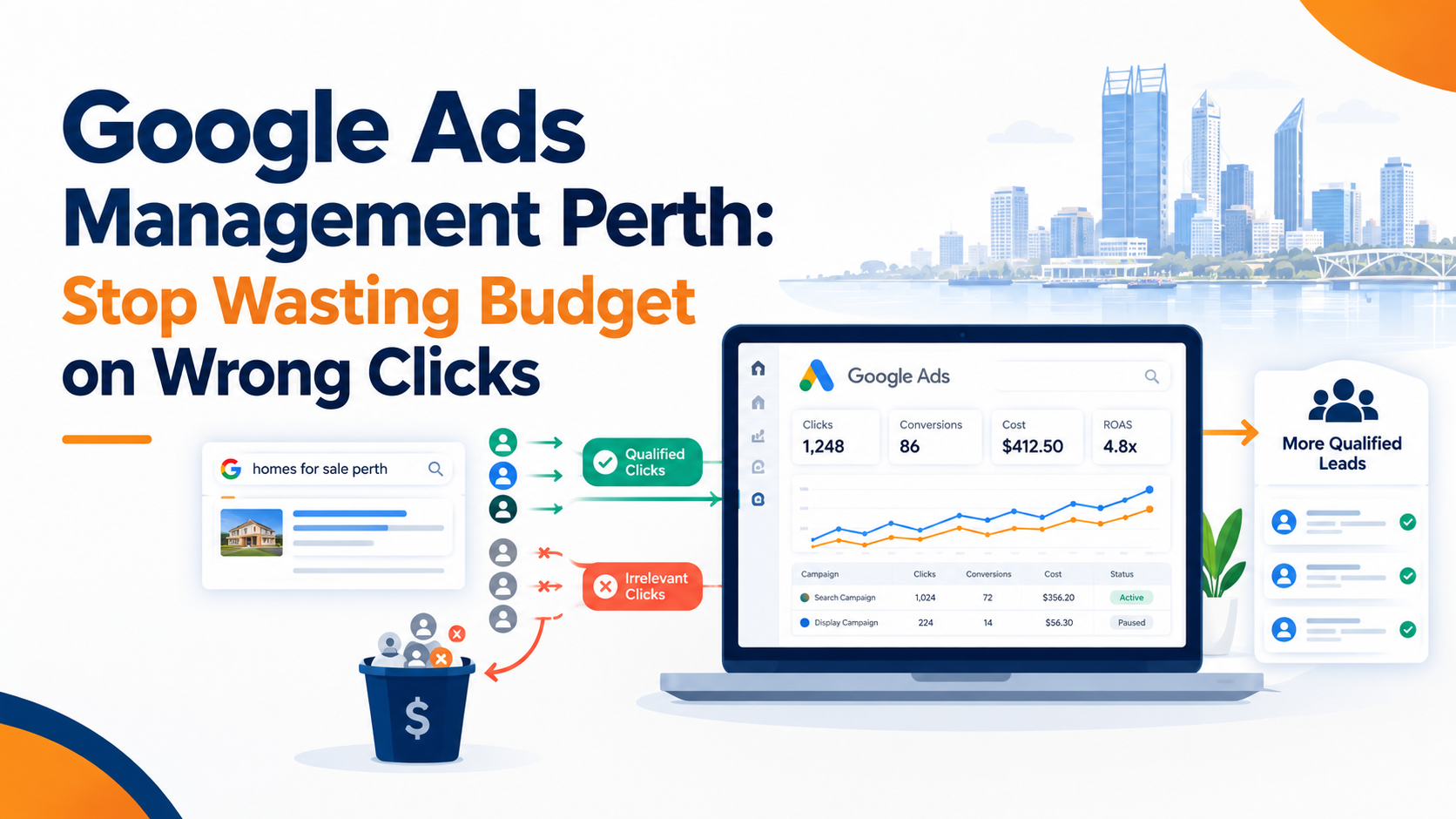
Google Ads can help your business reach people who are already searching for what you sell. Still, paid search can cost a lot if your ads pull in clicks from the wrong people. It can also blow up when you bid on keywords that do not lead to enquiries.
For Perth businesses, controlling wasted ad spend requires more than simply launching a campaign and increasing the budget. You need the right keywords, audience targeting, ad messaging, bidding strategy, landing pages, and ongoing optimisation. Effective google ads management perth focuses on turning paid traffic into meaningful business opportunities rather than chasing clicks alone.
After looking through paid search campaigns, I keep seeing the same problem. Many teams chase impressions and clicks, but they ignore what happens after the click. A campaign can drive many visits and clicks, yet still bring in only a small number of leads if the targeting and the way you measure conversions do not match up.
Why Wrong Clicks Can Hurt Your Google Ads Budget
Each time someone clicks, your ad money gets used up. If the person is not really interested in what you offer, that click does not help much.
Bad clicks can happen for different reasons. If you use broad keyword matches, your ads can show for searches that only loosely relate to your business. If you do not review your search terms, you may pull in people who want jobs, free guides, do-it-yourself help, items you never sell, or services from places you do not cover.
Say a company in Perth offers professional services. It may want leads from nearby customers. If the campaign uses wide terms without tight location settings and keyword limits, the ads can end up with clicks from outside the area. You can also get visitors whose search intent does not fit what the company provides.
That is why managing Google Ads in Perth should not be a set and forget task. You need to keep checking results and adjusting. Search habits shift, and new search terms show up over time.
Start With High-Intent Keywords
Choosing the right keywords helps cut wasted ad spend. Do not chase every possible form of a query tied to your offer. Pick searches that show a real plan to buy, ask questions, book, or reach out.
There is a clear gap between informational and commercial searches. For example, someone who searches for “how does digital advertising work” may just want to learn. Someone who searches for “digital marketing agency Perth” is more likely to be looking for a service.
That does not mean informational keywords have no value. They can still help with wider marketing aims. But if your goal is fast enquiries, you should keep low-intent traffic away from the higher-intent searches.
In my view, a campaign often works better when the team understands what each keyword signals, instead of treating every search as if it means the same thing.
Use Negative Keywords to Filter Irrelevant Traffic
Negative keywords stop your ads from showing on searches that do not match what you sell.
Imagine you offer paid professional services. If you do not provide free consultations, then searches with the word “free” can bring clicks that rarely turn into customers.
Other terms can also be off target. For example, “jobs,” “salary,” “course,” “training,” or “DIY” might not fit your business.
A good negative keyword list helps you use your budget wisely. It also keeps your campaign aimed at people who may actually buy.
You should check the search terms that triggered your ads. Do this often. You may spot odd searches you did not expect.
Those results can point to new negative keywords. They can also show you common themes worth noting.
This sort of review is a key part of ppc management perth.
Improve Geographic Targeting for Perth Customers
Local firms should focus on where their ads are shown.
If you sell to Perth and nearby suburbs, your targeting should match that exact area. Running ads in places you do not serve can burn money and lead to weak or irrelevant enquiries.
Also, picking “Perth” alone is not enough. You need to think about the parts of Perth you really cover, where your customers live, and which areas bring the best results.
It helps to review results by location. That way you can see if some areas lead to more conversions or more useful leads.
If your services reach more than one area, set up separate campaigns. Or build a careful targeting layout. This makes it easier to plan spend and decide where the budget goes.
Match Your Ads With Search Intent
Even when a keyword looks right, the ad must match what the user wants.
Begin with the headline. State the service in simple words. Next, use the text below to highlight a benefit that feels useful. End with a clear nudge for what to do next.
Your ad should also match the landing page. If the two do not line up, people feel unsure. Then they leave.
Think about a person who searches for one specific service. If you send them to a general homepage, they might need extra clicks to locate the right option. A landing page built for that exact search can point them faster and make it easier to reach out.
A solid PPC setup connects three key parts:
Keyword → Ad → Landing Page
When these pieces fit well, a visitor can tell fast that they found the right business for what they need.
Don’t Optimise Only for Cheap Clicks
A low price per click can seem tempting. Still, cheap traffic does not always lead to good outcomes.
Think about two search terms. The first brings visitors for a lower bid. Yet it often fails to produce enquiries. The second costs more to reach. However, it brings in leads that match what the business needs. That second term can end up being worth far more.
So, you should judge your ads by results that matter. Do not focus only on the click cost.
What you track depends on the goal of the campaign. Common checks include conversions, conversion rate, cost per lead, qualified enquiries, sales, and return on ad spend.
Market research suggests advertisers are now expected to link ad work with real business results. If a campaign only drives visits and does not help revenue, it should not get the same effort as a campaign that brings in strong customers.
Work With Continuous Campaign Optimisation
Google Ads is not something you set and leave.
Search patterns shift over time. Other brands update their deals. Keyword results can drop or improve. Google also rolls out new changes to its ad system. Even your own service offerings can change.
That is why ongoing tweaks matter. Regular work helps you keep up with what is happening.
A professional PPC agency in Perth can check the campaign setup, search terms, keyword stats, bid settings, ad copy, audience signals, where ads perform best, and what leads turn into conversions. With those checks, you can spot where your spend is paying off and where you need to adjust.
The aim is not to update campaigns at random. Each change should have a clear purpose. It should help you reach the right people and drive better results for your business.
Landing Pages Matter as Much as Ads
A focused ad will not save a weak landing page.
If people land on a site that feels slow, unclear, or off-topic, they often leave right away. Then the company still pays for the click. In the end, getting customers costs more.
A good landing page should point to the next step. It should state what the business offers in plain terms. It should show why the business is trusted. It should address common questions. It should also make it simple to reach out.
This matters on phones too. Many people search on smartphones. If the page loads slowly, or if calling or messaging is hard, visitors may stop before they enquire.
Track the Right Conversions
Conversion tracking helps a business see if ads lead to real outcomes. What counts as a good conversion can vary by the company.
For some, it may be a contact form sent. For others, it can be a phone call, a booking, or a purchase. Some track quote requests or other actions that matter.
If conversion tracking is not set up well, it is hard to tell which campaigns and keywords are truly driving growth. In that case, you can end up guessing about where to focus.
A ppc company in perth can help set clear conversion targets. They can also use the data from performance reports to shape decisions about the ads. After accurate tracking is in place, it gets easier to pick where the budget goes and how to refine the ads.
Make Your Budget Work Toward Business Goals
Google Ads should not be used just to burn a set budget each month. Your spend needs to line up with a real business aim.
You might be trying to get better leads, more online purchases, more calls, more bookings, or more customers in a Perth area you care about. After you pick the goal, you can build your campaigns to match it.
Good Google Ads management in Perth is about the details. It includes choosing the right audience, writing clear ad messages, setting up conversion tracking, and then adjusting bids and keywords. This helps cut wasted clicks and brings in more useful visitors.
At the same time, proper Adwords management in Perth is not just about leaving campaigns running. It should check often if the ads reach the right people and whether the results can be tied back to the business goal.
Final Thoughts
If Google Ads costs keep creeping up, it is often because of small targeting issues that grow worse. Bad search term matches, thin negative keyword lists, loose targeting, weak landing pages, and shaky conversion tracking can all cut results.
Cutting spend is not the only answer. A lot of teams do better by using the same money in a smarter way.
With structured PPC help in Perth, you can spot traffic that is not pulling its weight. You can also tighten keyword matches, make ads more relevant, and move spend toward clicks that look more likely to lead to sales.
If you are thinking about PPC agency support in Perth, choose a team that takes time to learn how your business works. They should ask about your customers, your service areas, and what counts as a conversion for you. With the right plan, Google Ads can shift from random, costly clicks to a channel you can track and control more clearly.
For Perth businesses, effective advertising starts with one simple principle: do not pay for traffic that has little chance of becoming a customer.