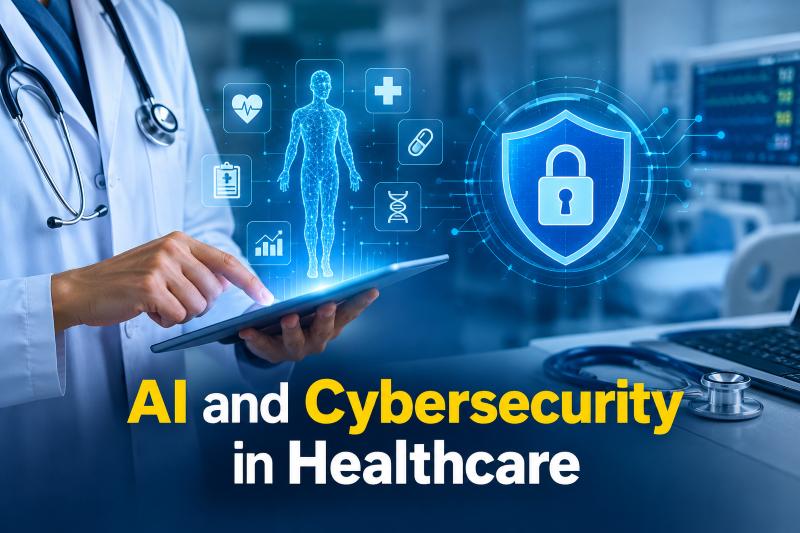
Healthcare is under siege. Ransomware crews, data thieves, and rogue AI bots are all gunning for patient records, and the old-school firewalls just aren’t cutting it anymore. The good news? AI-powered cybersecurity tools have leveled up big time, and they’re built to handle the chaos of modern healthcare IT.
Here’s the real deal on what’s working right now.
Tools like Tenzai are running continuous, autonomous pen testing built specifically for medical orgs. They mimic real hacker strategies, finding and patching vulnerabilities in real time before the bad guys even get close. It’s like having a 24/7 ethical hacker on payroll who never sleeps.
Then there’s ORDR, leading the pack with an AI-powered platform designed specifically for medical device security. A single hospital can have thousands of connected devices. ORDR discovers, classifies, and protects every last one of them automatically. No manual inventory. No blind spots.
SOAR frameworks are different. Security Orchestration, Automation, and Response platforms let AI run the show when a threat drops. No waiting around. No scrambling. The system catches it, contains it, and fires back in seconds flat. In healthcare, where a delayed response could literally put patients at risk, that kind of speed isn’t a luxury. It’s survival.
Here’s where it gets really slick. Federated learning, differential privacy, and homomorphic encryption let healthcare orgs train AI security models without ever centralizing sensitive patient data. The data stays put. The AI still learns. Nobody’s PHI gets exposed. That’s a triple win right there.
Gigamon brings deep observability to hybrid cloud healthcare environments. Full visibility across on-prem and cloud infrastructure, catching threats that slip right through traditional monitoring tools. If it’s hiding, Gigamon’s AI is finding it.
Large Language Models aren’t just writing emails and summarizing meetings anymore. They’re deep in the cybersecurity trenches now. Chewing through massive volumes of security logs, spotting anomalies humans would miss, and spinning up response playbooks on the fly. Hospitals are already using them for threat detection, planning, and incident response. The people who called this hype? They’re quiet now.
On the bleeding edge, AI-quantum-enhanced sensors and intelligent network monitoring are being built for next-gen healthcare security. Still emerging, but this is where the whole game is headed.
Now here’s the part nobody can skip. HIPAA compliance.
None of these tools mean a thing if they’re not locked down for HIPAA. Every healthcare org needs to check these boxes before deploying any AI security tool.
The vendor must sign a Business Associate Agreement. No BAA, no deal. Patient data should never leave the boundary the org controls. Every access to PHI must be logged and retained for 6+ years. AI tools should only touch the specific PHI elements they actually need. Not entire patient records. And the vendor needs to confirm patient data is not being used to train their foundation models.
One more thing. No AI product is “HIPAA certified.” HHS doesn’t certify anything. Compliance is a shared responsibility between the org and the vendor. Period.
So what should healthcare leaders be doing right now?
Get eyes on every device connected to the network. If it has a pulse on the system, it needs to be tracked. Flip on AI-driven monitoring because threats don’t wait and neither should the defense. Bring in SOAR frameworks to automate incident response and crush reaction times down to seconds. Every AI vendor touching patient data better have a signed BAA or they’re out. Period. Go hard on privacy-preserving AI. Federated learning trains models without moving a single byte of PHI. And build governance into the DNA of the operation. Clinical validation, bias checks, human oversight. All of it. From day one.
AI in healthcare cybersecurity isn’t a nice-to-have anymore. It’s the frontline defense. The threats are getting smarter, and the only way to keep up is to deploy AI that’s purpose-built for healthcare, from medical device security to HIPAA-compliant incident response.
The organizations that invest in these tools now will be the ones still standing when the next wave hits. And it’s definitely coming.
Tetrahed delivers cybersecurity, cloud, and AI/ML solutions built for industries that can’t afford to get breached. Healthcare providers trust us to lock down infrastructure, automate threat response, and keep patient data out of the wrong hands.