By Gramiti – A Trusted Place for Farmers
Introduction
Soybean is a high-value crop, and its pests arrive in stages. Early in the season, stem fly and girdle beetle attack young plants. Later, leaf-eating caterpillars such as green semilooper chew the foliage, and pod borers move in when pods form. Choosing a spray without knowing which pest you have is a quick way to waste money and miss the right window.
So what is the best pesticide for soybean? The honest answer is that it depends on the pest and the crop stage. This guide explains the main soybean pests, how to match a product to each one, how to spray safely, and how to reduce the number of sprays you need. It is written by Gramiti – A Trusted Place for Farmers, as a practical reference ahead of the next sowing season.
Quick Answer: How Do You Choose a Pesticide for Soybean?
Identify the pest first, then pick a product whose label lists soybean and that pest. Scout the field regularly, spray when pest numbers or damage cross the threshold your Krishi Vigyan Kendra (KVK) recommends, use the label dose, and follow the waiting period before harvest. A product that is excellent for one pest may do nothing for another, and a product that is not labelled for soybean should not be used on it.
The Main Pests of Soybean
| Pest | When it appears | What you see |
|---|---|---|
| Stem fly | Early, soon after emergence | Wilting of young plants, tunnels inside the stem |
| Girdle beetle | Early to mid vegetative stage | Rings cut around stems and petioles, drying above the ring |
| Green semilooper | Vegetative stage to pod filling | Ragged leaves, caterpillars that loop as they walk |
| Tobacco caterpillar (Spodoptera) | Vegetative to pod stage | Leaf scraping, then large holes, often in groups when young |
| Pod borer (Helicoverpa) | Flowering and pod stage | Holes in pods, damaged seeds |
| Whitefly | Vegetative stage | Yellowing, sticky leaves, and spread of yellow mosaic virus |
If you are unsure what you are seeing, take a plant sample to your nearest KVK or agriculture office before spraying.
A Stage-by-Stage Plan for Soybean
At sowing
- Use clean, certified seed and sow at the recommended time. Very late sowing can increase pest pressure in some areas.
- Ask your KVK about seed treatment options for early pests such as stem fly in your region.
Early vegetative stage
- Scout for stem fly and girdle beetle. Remove and destroy plants showing girdling or tunnelling where practical.
- Keep fields free of weeds that shelter pests.
Vegetative to flowering stage
- Walk the field every few days and check leaf undersides for caterpillars and eggs.
- Put up pheromone traps to monitor Spodoptera and Helicoverpa moths.
Pod formation
- Watch for pod borer and defoliators closely. Pod damage directly cuts seed yield.
- Spray only if scouting shows the pest has crossed the local threshold.
Gramiti Option for Soybean Caterpillars
Farmers can explore suitable agricultural solutions from Gramiti, including insecticides for soybean. The details below come from the Gramiti product page. Always confirm the dose and crop on the label that comes with your pack.
JU Decigen (Chlorantraniliprole 18.5% SC)
JU Decigen lists soybean in its dose table, with green semilooper and stem fly as the target pests at 60 ml per acre. It is sold in a 150 ml pack, which covers about 2.5 acres of soybean at that dose. Its page advises agitating the tank mix well before spraying so the suspension stays even.
This product is aimed at caterpillars and the pests listed on its page. It is not a treatment for whitefly or other sucking pests, so it is not a one-spray answer for every soybean problem.
If You Also Grow Pulses
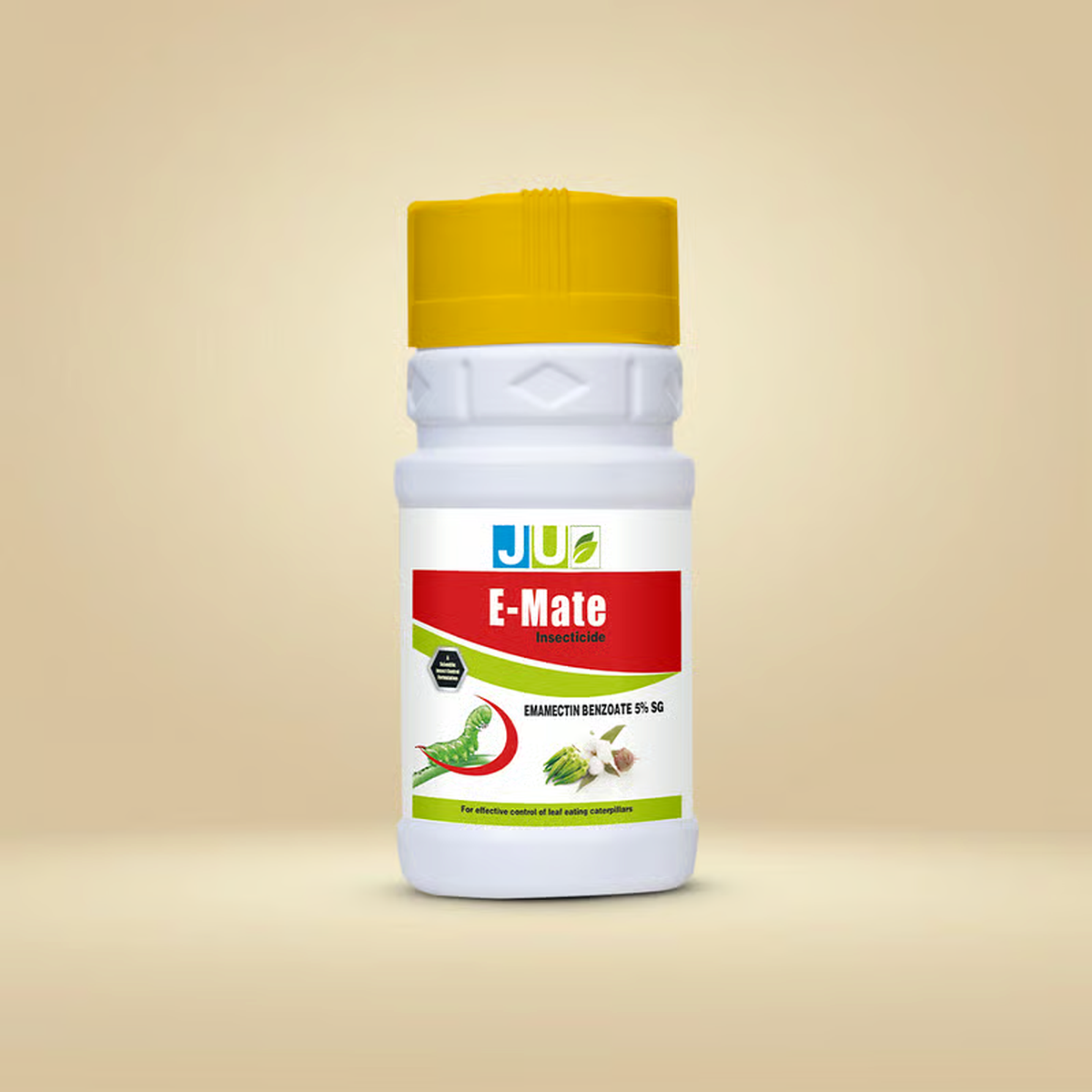
Many soybean farmers also grow pigeon pea (redgram) or chickpea. For these crops, the dose table of JU E-Mate (emamectin benzoate 5% SG) lists pod borer in redgram and chickpea at 88 g per acre. The 250 g pack covers a little under 3 acres at that dose. Its page describes it as a stomach and contact insecticide for lepidopteran pests, that is, caterpillars. For soybean, use a product whose label lists soybean.
Whenever you buy an insecticide for pulses farming, check that the crop and the pest you see are named on the label.
Is a Broad Spectrum Insecticide the Answer?
Farmers often search for a broad spectrum insecticide in India to cover every pest in one go. In soybean, this has limits:
- A broad-spectrum label still lists specific crops and pests. Check that soybean is on it.
- Broad-spectrum sprays can also kill ladybird beetles, spiders and parasitic wasps that keep caterpillars and aphids in check.
- Using the same product repeatedly speeds up resistance.
A targeted spray, matched to the pest and the stage, is usually the better choice.
Reduce Sprays with Integrated Pest Management
The fewer sprays you need, the lower your cost and risk. These steps help:
- Scout regularly and spray on need, not on a calendar.
- Use pheromone traps to track moth flights and time your scouting.
- Erect bird perches in the field so birds can feed on caterpillars.
- Hand-pick egg masses and young caterpillar groups in small areas.
- Use biological options such as NPV for Spodoptera and Helicoverpa, and Bt for young caterpillars, if they are registered and available in your area. These work best on young pests and need good timing.
- Protect natural enemies by avoiding unnecessary sprays, especially early in the season.
Biological products are an option when pest numbers are low. If an outbreak is heavy or spreading fast, a registered insecticide used exactly as per the label may be needed.
How to Spray Soybean Safely and Effectively
- Use the label dose and a calibrated sprayer. Measure the product, and do not guess.
- Cover both sides of the leaf. Caterpillars often feed on the underside.
- Spray in the cool part of the day, usually the evening, and avoid hours when bees are active during flowering.
- Respect the waiting period before harvest printed on the label.
- Rotate chemical groups across the season, as advised on the label or by your KVK.
- Do not mix products on your own. Tank mixes can burn the crop or reduce control.
- Keep a spray record with date, product, dose and crop stage.
Safety Reminders
- Read the full label before opening the pack.
- Wear gloves, a mask, goggles and full-sleeve clothing.
- Do not eat, drink or smoke while spraying, and wash well afterwards.
- Keep products away from children, pets, food and feed.
- Do not spray near ponds, canals or wells, since many insecticides are harmful to fish.
- Never reuse empty containers, and dispose of them as per local rules.
Buying Tips: Insecticides Online in India
- Buy sealed, labelled products with manufacturer, batch and registration details.
- Check that the product page and label list soybean and your pest.
- Compare the cost per acre, not the price of the pack. Divide the pack size by the dose per acre to see how many acres it covers.
- Keep your bill.
Frequently Asked Questions
What is the best pesticide for soybean?
There is no single best pesticide. Choose by pest and stage: a product whose label lists soybean and the pest you have, such as green semilooper, stem fly or pod borer. Scout first and spray on need.
Which insecticide is used for green semilooper in soybean?
According to the Gramiti product page, JU Decigen (chlorantraniliprole 18.5% SC) lists green semilooper and stem fly in soybean at 60 ml per acre. Confirm the dose on the label of your pack.
When should I spray soybean for pests?
Spray when scouting shows pest numbers or damage above the threshold your KVK recommends, ideally while caterpillars are young. Do not spray by the calendar.
How do I control girdle beetle and stem fly?
They attack early in the season, so scout young plants, remove and destroy affected plants, keep the field clean, and ask your KVK about seed treatment and spray options for your region.
Is there an organic insecticide for soybean?
Biological options such as NPV and Bt can help against young caterpillars, and pheromone traps and bird perches support control. They work best at low pest numbers, and a heavy outbreak may still need a registered insecticide. If you are certified organic, check each product with your certifier.
What is a good insecticide for pulses farming?
Choose a product whose label lists your pulse crop and pest. For pod borer in redgram and chickpea, the JU E-Mate page lists 88 g per acre.
Where can I buy insecticides online in India?
You can buy insecticides online in India from Gramiti, where each product page lists the technical name, pack size and dosage details, with delivery across India.
Conclusion
The best pesticide for soybean is the one that matches your pest, your crop stage and the label. Scout often, identify the pest, spray on need rather than by habit, rotate chemical groups, protect natural enemies, and respect the waiting period before harvest. Planning your scouting and sprays before sowing makes next season easier.
Farmers can explore suitable agricultural solutions from Gramiti, including insecticides, herbicides, fungicides and crop nutrition products, with dosage details on each product page.
Shop Insecticides and Get Help from Gramiti
Planning your soybean crop protection? Browse insecticides on Gramiti and order online. Free shipping on orders above ₹699.
- Address: Ghaziabad, Uttar Pradesh – 201001
- Phone: +91 99399 79905
- Email: customercare@gramiti.com
- Website: www.gramiti.com
Disclaimer: This article is for general information. Always follow the instructions on the product label and the advice of your local agriculture officer or KVK.