Every November the same thing happens. You open your phone to check one deal, and forty minutes later there are nine tabs open and a cart full of stuff you never planned to buy. Sound familiar?
Here’s the thing. Treating yourself is fine. It’s actually healthy. The trouble starts when a countdown timer decides what you buy instead of you.
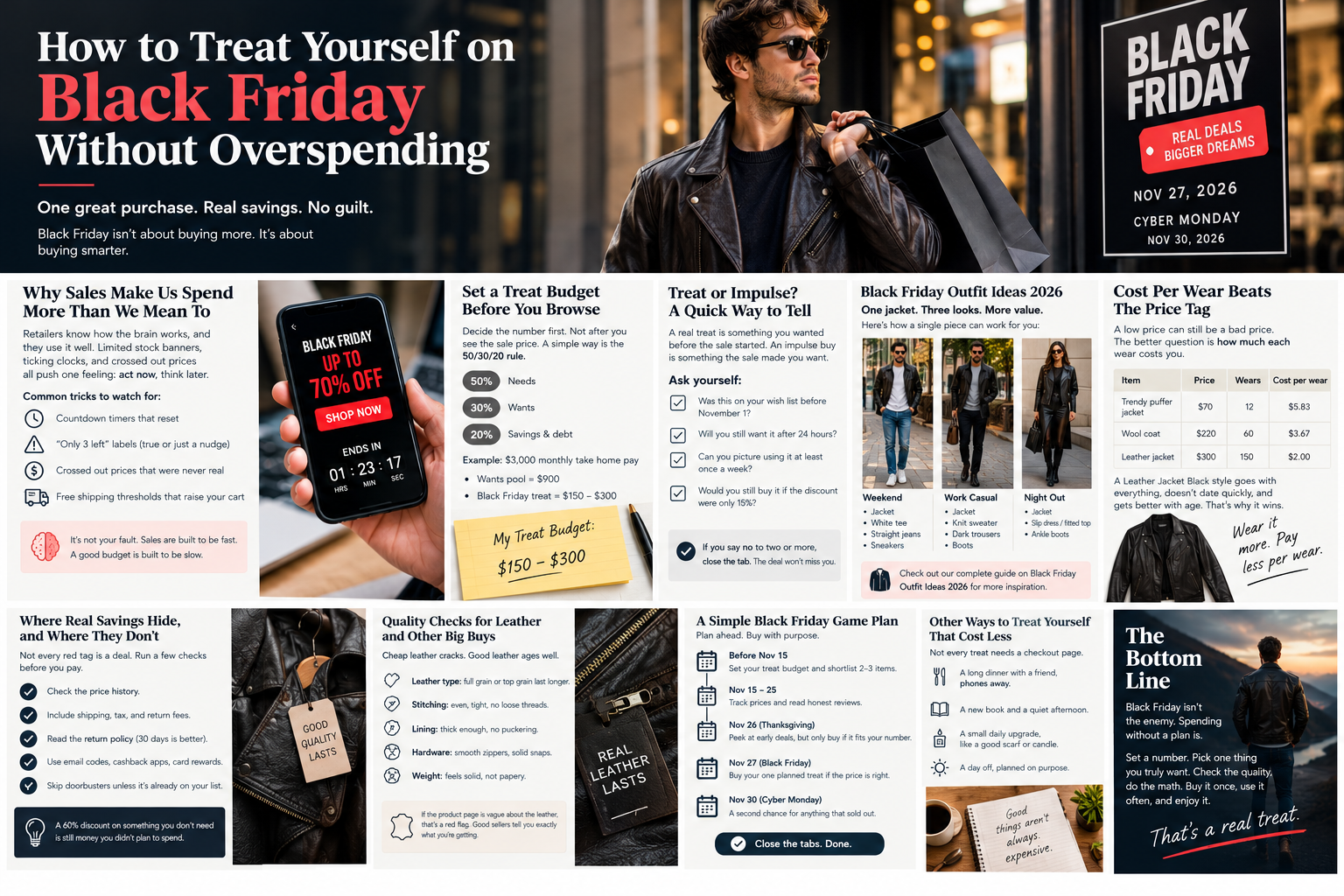
Black Friday lands on November 27, 2026, and Cyber Monday follows on November 30. That’s a few days of heavy discounts, and a lot of noise around them. This guide shows you how to pick one real treat, pay a fair price, and skip the rest. No guilt, no lectures.
Why Sales Make Us Spend More Than We Mean To
Retailers know how the brain works, and they use it well. Limited stock banners, ticking clocks, and crossed out prices all push one feeling: act now, think later.
A few tricks to watch for:
- Countdown timers that quietly reset when you refresh the page
- “Only 3 left” labels, which can be true or just a nudge
- Crossed out prices that were never really charged
- Free shipping thresholds that push your cart higher than planned
None of this makes you foolish. It just means the sale is built to be fast, and a good budget is built to be slow. Slow wins.
Set a Treat Budget Before You Browse
Decide the number first. Not after you see the sale price. Before.
A simple way to do it is the 50/30/20 rule, a common budgeting split:
- 50 percent of take home pay goes to needs
- 30 percent goes to wants
- 20 percent goes to savings and debt
Say you take home $3,000 a month (this is just an example). Your wants pool is $900, and that covers dining out, subscriptions, trips, and treats. So your Black Friday treat is a slice of that, maybe $150 to $300, not the whole pile.
Write the number on a sticky note and stick it on your laptop. Sounds silly, but it works better than any app.
Treat or Impulse? A Quick Way to Tell
A real treat is something you wanted before the sale started. An impulse buy is something the sale made you want.
Try this short test:
- Was this item on your wish list before November 1?
- Will you still want it after 24 hours?
- Can you picture using it at least once a week?
- Would you still buy it if the discount were only 15 percent?
If you answer no to two or more, close the tab. The deal won’t miss you.
Black Friday Outfit Ideas 2026 That Make One Purchase Go Further
Clothes are where most people overspend, because trends feel urgent. But one well chosen piece can carry five outfits. If you want a quick look at how that works, this guide on Black Friday Outfit Ideas 2026 shows looks you can build around just a few core items.
Here’s the idea in plain words. Pick one anchor piece, then style it three ways:
- Weekend: jacket, white tee, straight jeans, clean sneakers
- Work casual: jacket, knit sweater, dark trousers, leather boots
- Night out: jacket, slip dress or fitted top, ankle boots
Same jacket, three moods. That’s the whole point. When one item covers that much ground, the price tag starts to look different.
Cost Per Wear: The Math That Beats Any Discount
A sale price tells you what you pay today. Cost per wear tells you what you really pay. Just divide the price by the number of times you’ll wear the item.
Here are example numbers, so swap in your own:
- Trendy puffer jacket at $70, worn 12 times: about $5.83 per wear
- Plain wool coat at $220, worn 60 times: about $3.67 per wear
- Classic leather jacket at $300, worn 150 times over five years: $2.00 per wear
A Leather Jacket Black style, meaning dark, simple, and cut clean, tends to win this comparison for good reason. It goes with almost everything, it doesn’t date quickly, and good leather softens with age instead of falling apart. A trend piece does the opposite. It looks great for one season, then sits in the closet.
Where Real Savings Hide, and Where They Don’t
Not every red tag is a deal. Run a few checks before you pay.
- Look at the price history. Free browser tools and some retailer pages show it.
- Compare the final total, with shipping, tax, and return fees included.
- Read the return policy. A 14 day window is tight, and 30 days is much better.
- Stack what you can: email signup codes, cashback apps, and card rewards.
- Skip doorbusters unless the item was already on your list.
One more thing. A 60 percent discount on something you don’t need is still money you didn’t plan to spend.
Quality Checks for Leather and Other Big Buys
If your treat is a jacket, a bag, or boots, quality matters more than the discount. Cheap leather cracks. Good leather ages well.
What to look at:
- Leather type: full grain and top grain last longer than bonded or heavily corrected leather
- Stitching: even, tight, and no loose threads at the seams
- Lining: thick enough to hold shape, with no puckering
- Hardware: zippers that glide and snaps that close with a clean click
- Weight: a decent jacket feels solid, not papery
Cowhide is tougher and a bit stiffer at first. Sheepskin is lighter and softer from day one. Neither is wrong, it just depends on how you’ll wear it.
Compare two or three options side by side. If a product page is vague about the leather, that’s a flag. Good sellers tell you exactly what you’re getting.
A Simple Black Friday Game Plan
Here’s a loose timeline you can follow:
- Before November 15: set your treat budget and shortlist two or three items
- November 15 to 25: track prices and read honest reviews
- November 26, Thanksgiving: peek at early deals, but only buy if the price meets your number
- November 27, Black Friday: buy your one planned treat if the price is right
- November 30, Cyber Monday: a second chance for anything that sold out
Then close the tabs. Done.
Other Ways to Treat Yourself That Cost Less
Not every treat needs a checkout page. Some ideas:
- A long dinner with a friend, phones away
- A new book and a quiet afternoon
- A small daily upgrade, like a good scarf or a nice candle
- A day off, planned on purpose
Shopping feels good for a few minutes. The best treats are the ones you still remember in March.
The Bottom Line
Black Friday isn’t the enemy. Spending without a plan is. Set a number, pick one thing you truly want, check the quality, and do the math. Buy it once, use it often, and enjoy it. That’s a real treat.
FAQs
How much should I spend on a Black Friday treat?
Most people do fine with a small slice of their monthly wants budget. If your wants pool is $900, something between $150 and $300 keeps you comfortable and still leaves room for the rest of the month.
Is Black Friday really the best time to buy clothes?
Often for outerwear and bigger pieces, yes, but not always. Check the price history first. Some items hit the same low price during January clearance.
Is a Leather Jacket Black style worth buying on Black Friday?
If you’ll wear it often, usually yes. A plain dark leather jacket works across seasons and outfits, so the cost per wear drops fast. Just check the leather type and the return policy before you pay.
How do I avoid impulse buying during sales?
Use a written budget, a wish list made before the sale, and a 24 hour wait on anything unplanned. Unsubscribing from promo emails a week early helps too.
What if the item I wanted sells out?
Let it go. Another deal will come. Similar items often return to stock or get discounted again around Cyber Monday and the December sales.