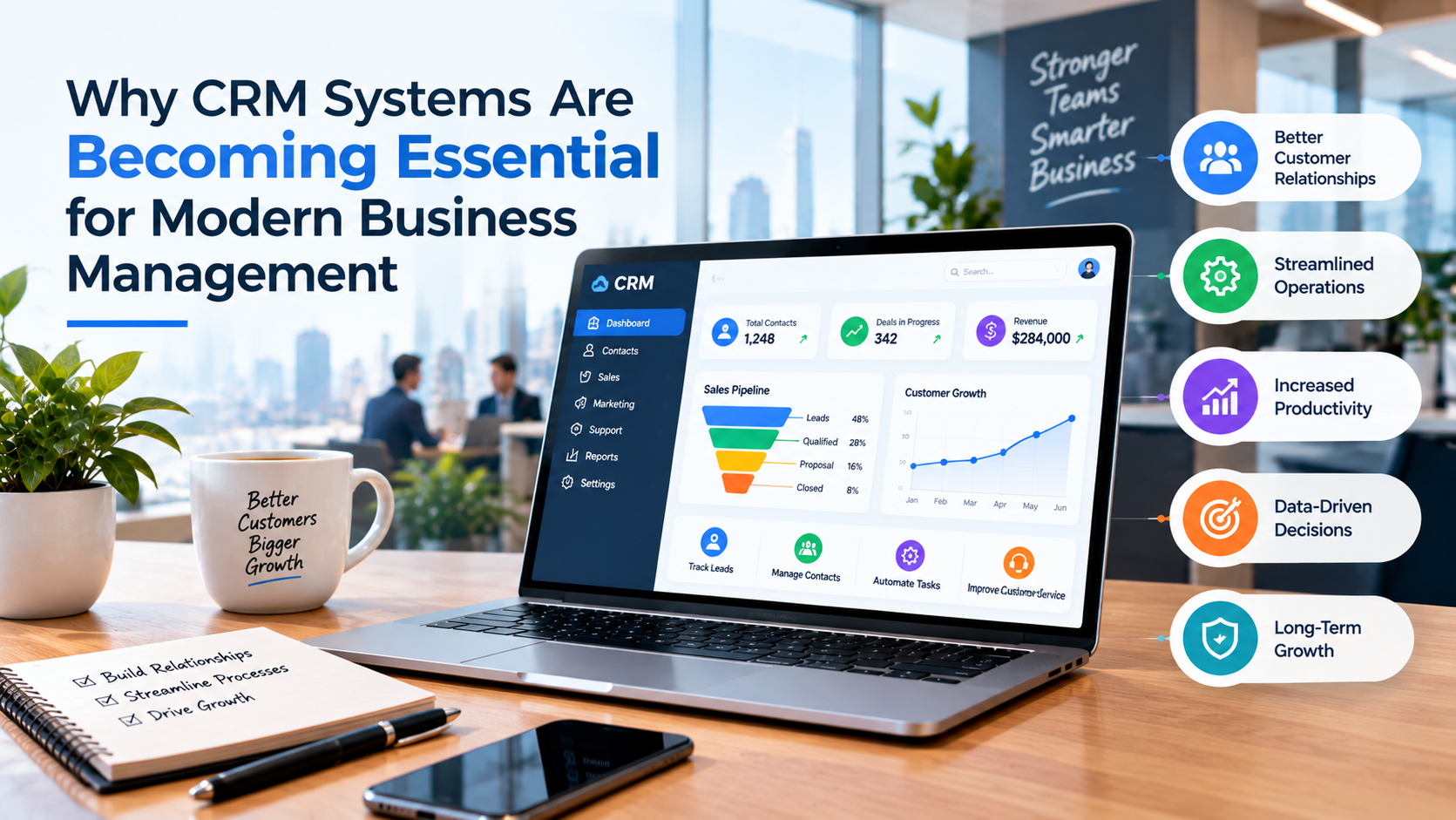
Modern business also involves many activities. Companies must interact with customers, track sales leads, schedule employee work, and organize necessary information. When companies manage these tasks with various tools or paper records, it can be hard to monitor information. Many of these activities can be combined into a single place with the aid of a Customer Relationship Management system, also known as a CRM.
CRM systems are becoming increasingly important in business management because they help companies manage and strengthen customer relationships. They can store customer information, track communications, support sales activities, and enhance teamwork. A well-integrated CRM can streamline daily operations and help teams deliver higher-quality customer service, regardless of business size.
What is CRM System?
A CRM (Customer Relationship Management System) is software designed to help businesses manage relationships and contacts with current and prospective customers. It can store customer information such as names, contact details, previous interactions, purchases, inquiries, and sales.
Instead of employees sifting through emails, spreadsheets, or paper, they can find important customer information in one place. This saves time and makes it easier to organize teams.
Keeps Customer Information Organized
Any business needs customer information. Without a proper system, managing large amounts of information can be tricky. A CRM keeps customer records structured and easy to access.
Employees can instantly view past conversations, customer requests, purchase history, and other useful information. This helps teams get to know their customers better and assist them more effectively.
Improves Customer Service
Customer service can also help a business build a long-term relationship. Customers want prompt responses and do not want to repeat the same details each time they call.
CRM enables employees to review past interactions and understand the customer’s history. This helps them respond more quickly and provide a smoother experience. Businesses that want customer management software to support sales, customer care, marketing, and overall operations can consider CRM software in the UAE. The right system helps teams work more efficiently and improves communication.
Helps Manage Sales Leads.
Sales teams usually focus on many potential customers at different stages of the buying process. Some leads may be interested, while others may be ready to buy. A CRM helps sales teams monitor these leads and track key follow-up dates. Employees can identify prospects that need attention and opportunities closer to conversion. This renders the sales process more organized.
Makes Follow-Ups Easier
Following up with customers is a key part of sales and customer care. Nevertheless, when busy, employees may overlook calling a potential customer at the right time.
With CRM, teams can plan follow-ups and track key activities. This helps businesses stay in regular touch with prospects and prevents them from missing crucial opportunities.
Supports Better Teamwork
Various departments may need customer information. Sales, marketing, and customer support teams can access records efficiently.
CRM offers a central database that employees with the required permissions can use to view and update customer information. This reduces confusion and helps teams work toward shared business objectives.
Saves Time and Reduces Manual Work
Many business tasks are time-consuming when done manually. When employees enter the same customer information across multiple files or scroll through multiple spreadsheets, they can slow down.
CRM software can automate daily chores like follow-up notifications, reminders, data updates, and reports. By reducing redundancy, employees can devote more time to critical business.
Presents Useful Business Insights
Good business decisions require the right information. CRM systems can provide sales, customer, lead, and team performance reports and data.
With this information, managers can identify which products are selling well, where leads come from, and which sales activities need improvement. These insights can help managers make smarter decisions and plan more effectively.
Supports Marketing Activities
CRM systems may also help marketing departments learn about customers and likely buyers. With customer information, businesses can develop more relevant marketing campaigns.
For example, a business can group clients by their interests, purchase history, or past interactions. This enables marketing personnel to send fewer irrelevant messages, rather than sending the same message to everyone.
Improves Customer Retention
Getting new customers matters, but retaining those matters as much. A CRM helps businesses understand what customers need and stay in touch with them even after a sale.
Customer records let companies identify past purchases, service requests, and preferences. This data enables companies to support clients more efficiently and design appropriate offers.
Helps Businesses Grow
As a business expands, the customer base, number of employees, and the daily operations normally increase. A small customer base may be manageable with a certain system, but the same system can become hard to operate when the customer base grows.
CRM provides a systematic approach to managing growing customer data and business. It can also help businesses add users, departments, and features as their needs change.
Enhances Data Security
Customer data should be protected. CRM systems can offer controlled access, allowing businesses to determine which employees can access, review, or modify specific information.
One way to secure valuable business data is to update it regularly, use strong passwords, and implement access controls and other security measures. Enterprises are also advised to use reliable software and observe good data security habits.
Conclusion
CRM systems have become a significant part of modern business management because they unite customer information, sales activities, communication, and business-related data. They help companies save time, improve customer service, manage leads, plan follow-ups, and support teamwork.
A CRM is not just a place to store customer details. It helps companies understand their customers, make better decisions, and run daily operations more effectively. As companies grow and customer demands increase, applying a structured CRM can provide a strong foundation for improved management and future business expansion.