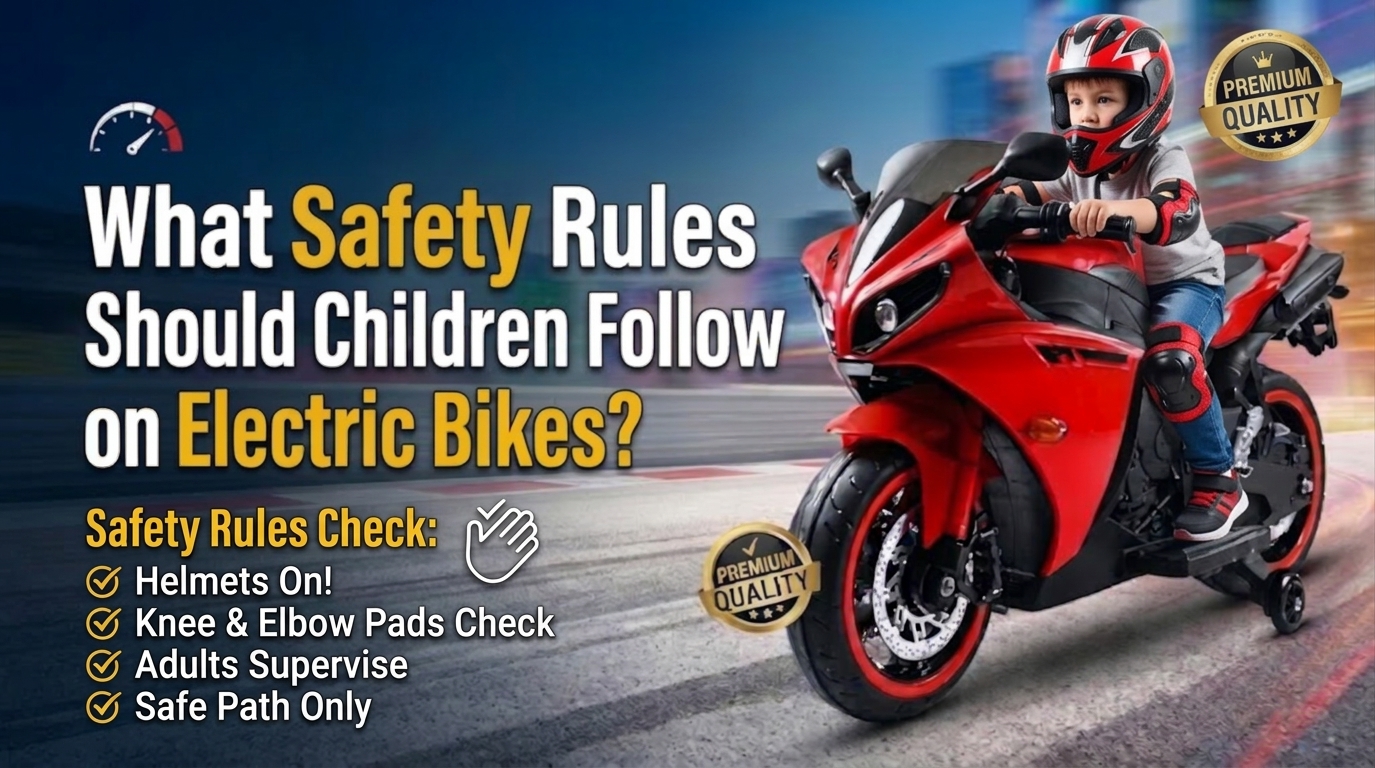
Electric bikes can make playtime more enjoyable for children, but safe riding depends on choosing the right model, following the manufacturer’s instructions, and supervising children during use. Parents should pay attention to the child’s age, riding ability, protective equipment, and the area where the bike will be used.
When choosing an Electric Bike For Kids, it is important to understand the difference between a battery-operated ride-on toy and a road-going electric bicycle. These products can have very different speeds, controls, and safety requirements. A toy motorbike designed for young children should only be used according to its stated age range, weight limit, and operating instructions.
Parents shopping through an Online Toys Shop in Pakistan should also review the product specifications before placing an order. This guide covers the main safety rules children should follow, how parents can prepare a safe riding area, and what to check before every ride.
What Safety Rules Should Children Follow on Electric Bikes?
Children should ride only on a suitable model for their age and abilities, wear appropriate protective equipment, follow the manufacturer’s instructions, and remain under adult supervision when required. Parents should check the bike before use, choose a clear riding area, and keep children away from traffic, stairs, pools, and other hazards.
Here are the main rules parents should teach their children:
- Ride only in an approved, supervised area.
- Wear a properly fitted helmet and other recommended protective equipment.
- Keep both hands on the handlebars while riding.
- Use the accelerator and stopping controls as instructed.
- Never carry another child unless the product is specifically designed for passengers.
- Do not ride near roads, moving vehicles, steep slopes, or water.
- Stop immediately if the bike makes unusual noises or its controls stop working properly.
- Follow all age, weight, charging, and maintenance instructions.
These rules help parents establish safe habits before children begin using a battery-powered ride-on bike.
Choose an Electric Bike Suitable for Your Child’s Age
One of the first safety steps is choosing a bike that matches your child’s physical development and abilities. A model that is suitable for one child may not be appropriate for another child of the same age.
Parents should check the recommended age range, maximum weight, seat height, handlebar position, and ease of operating the controls. Children should be able to sit comfortably and reach the controls without stretching excessively.
Check the manufacturer’s age recommendations
Toyishland’s Bikes For Kids collection includes battery-operated models with different age recommendations.
For example, the Mini Ducati is listed for children aged 2–5 years, while the R1 Bike is listed for children aged 3–7 years. These age ranges are product recommendations, not a guarantee that every child in the range can operate the bike safely.
Before choosing either model, parents should review the current product specifications and operating instructions.
You can compare the available models in the Toyishland Bikes For Kids collection.
Make Helmet Use and Protective Equipment a Priority
A fall can happen even when a child is riding at a low speed. Protective equipment helps reduce the risk of injury, so parents should select equipment appropriate for the type of riding involved.
For regular bicycles, a correctly fitted bicycle helmet is important. The helmet should sit level on the head, cover the forehead, and have a securely adjusted chin strap. It should not slide around or block the child’s vision.
For miniature motorbikes or other powered riding products, follow the manufacturer’s protective-equipment requirements. Depending on the vehicle and its speed, this may include a suitable helmet, gloves, long sleeves, long trousers, and protective footwear.
How can parents check a child’s helmet?
Before each ride:
- Make sure the helmet is designed for the activity.
- Check that it fits securely without slipping.
- Adjust the chin strap according to the manufacturer’s instructions.
- Replace a helmet that has been damaged or involved in a serious impact.
- Encourage children to wear their protective equipment every time they ride.
The American Academy of Pediatrics provides additional advice in its guide to bike helmets for children.
Important: A helmet does not make an unsuitable vehicle safe for a young child. Parents must still choose the correct product and follow its safety instructions.
Always Supervise Young Children
Young children may not understand how quickly a powered bike can move or how to react when an unexpected obstacle appears. Adult supervision is therefore an important part of safe riding.
Stay close enough to intervene when necessary. Watch how your child operates the accelerator, steers, and uses the stopping controls. Do not assume that a child can ride safely simply because they understand how to switch the bike on.
Parents should also explain simple rules before every ride.
For example, tell children to stop when an adult asks, keep their hands on the handlebars, and avoid riding toward other children. If a child cannot follow these instructions consistently, postpone riding until they are ready.
Never leave a young child alone with a powered ride-on toy while it is switched on.
Choose a Safe Place for Riding
The riding environment can affect a child’s safety as much as the bike itself. A clear, level surface gives children more room to steer and stop without encountering unexpected obstacles.
For battery-operated toy bikes, choose an area suitable for the specific model. A private, level space away from traffic is generally more appropriate than a public road or crowded walkway.
Places children should avoid
Children should not ride near:
- Busy roads or moving vehicles.
- Steep slopes and uneven surfaces.
- Swimming pools, ponds, or other bodies of water.
- Staircases, balconies, or raised edges without appropriate barriers.
- Crowded walkways where they may collide with pedestrians.
- Wet surfaces or areas that could damage electrical components.
For families in Pakistan, a clear section of a private courtyard or another suitable supervised area may work for a small ride-on toy, provided the surface and space match the manufacturer’s instructions.
Do not assume that a battery-operated toy motorbike is suitable for public-road use. Road-going electric bicycles are different vehicles and may be subject to separate age, equipment, and traffic requirements.
Teach Children How to Use the Controls
Before the first ride, parents should explain how the bike starts, moves, and stops. Children need to understand the controls before using the bike independently.
Battery-operated ride-on bikes may use hand accelerators, pedals, switches, or other controls depending on the model. The exact operation should always be taken from the manufacturer’s manual.
What should children practise before riding?
With an adult present, children should become familiar with:
- Sitting correctly and holding the handlebars.
- Switching the bike on and off, where appropriate.
- Operating the accelerator gently.
- Using the designated stopping control.
- Steering without making sudden movements.
- Stopping when an adult gives an instruction.
Keep the first sessions short and use the lowest available speed setting if the model provides one. If the child struggles to control the bike, stop the session rather than encouraging them to continue.
Never modify a toy bike to increase its speed or bypass its safety features.
Follow Battery Charging and Electrical Safety Rules
Battery care is another important part of owning an electric ride-on bike. Incorrect charging, damaged wiring, or an unsuitable charger can create electrical and fire hazards.
Parents should handle charging and follow the manufacturer’s instructions, especially when the child is too young to understand the risks.
Safe charging practices
- Use only the charger specified or approved by the manufacturer.
- Inspect the charger, cable, plug, and battery for visible damage.
- Charge the bike in a dry, suitable location.
- Keep the charging equipment away from children.
- Do not charge the battery while sleeping or leave charging unattended.
- Stop using a battery or charger that becomes unusually hot, swells, leaks, or shows other signs of damage.
- Follow the manufacturer’s guidance for storage and battery replacement.
Do not attempt to repair or modify a damaged battery yourself. Contact the seller or a qualified service provider for advice.
These precautions are particularly important when buying an Electric Bike For Kids online, because parents should understand the charging requirements before the product arrives.
Inspect the Bike Before Every Ride
A quick inspection can help parents identify problems before the child starts riding. Even a new bike should be checked after assembly, and a bike that has been stored for a long time may need additional attention.
Electric bike safety checklist
| What to check | What parents should look for |
| Tyres and wheels | Visible damage, loose parts, or problems with movement |
| Handlebars | Secure attachment and smooth steering |
| Brakes and controls | Correct operation according to the manual |
| Seat and footrests | Secure fittings and comfortable positioning |
| Battery and wiring | Visible damage, loose connections, or unusual heat |
| Accelerator and switch | Normal operation without sticking |
| Body and fasteners | Cracks, loose screws, or damaged components |
If a component is damaged or the bike does not respond correctly, do not allow the child to ride until the problem has been addressed.
Parents should also follow the recommended maintenance schedule. Regular checks are particularly important for products used frequently or shared by several children.
Set Clear Rules About Speed and Riding Behaviour
Children can become excited while riding, especially when the bike resembles a real motorbike. Parents should explain that safe riding means maintaining control rather than moving as quickly as possible.
Teach children to start slowly, steer carefully, and stop when needed. They should not race other children, make sudden turns, ride down steep slopes, or attempt tricks that the product is not designed for.
If the bike includes different speed settings, use the setting recommended for the child’s ability and the riding area. Do not assume that a low-speed setting removes the need for supervision.
Parents should also avoid allowing children to ride two at a time unless the manufacturer explicitly states that the vehicle is designed for passengers.
For road-going electric bicycles, children must follow the applicable traffic rules and age requirements. A toy motorbike intended for private play should not be treated as a road vehicle.
Check Product Information Before Buying Online
Parents can reduce avoidable problems by reviewing the product details before making a purchase. This is especially important when shopping through an Online Toys Shop in Pakistan, where the product may be delivered without an opportunity to inspect it beforehand.
Before placing an order, check:
- The manufacturer’s recommended age range.
- Maximum weight and product dimensions.
- Battery voltage and charging requirements.
- Available speed settings and stopping controls.
- Assembly and maintenance instructions.
- Whether protective equipment is included or sold separately.
- Delivery, return, exchange, and warranty conditions.
Read the description for the exact model you intend to purchase. Similar-looking bikes may have different specifications, so do not assume that features listed for one model apply to another.
Toyishland’s Bikes For Kids category provides product listings that parents can compare. Check the current listings for the latest specifications, prices, and availability before ordering.
Store the Bike Safely After Use
Safe riding habits should continue after the bike has been switched off. Proper storage helps protect the product and keeps it away from children when it is not in use.
Switch off the bike after every session and store it in a suitable, dry location. Keep the keys, charger, and other accessories away from young children.
Do not leave a powered bike where it could roll down a slope, block an exit, or fall onto a child. Follow the manufacturer’s instructions for battery storage, particularly if the bike will not be used for an extended period.
If the bike develops a fault, label it or place it somewhere it cannot be used until it has been checked or repaired.
Frequently Asked Questions About Electric Bike Safety for Kids
At what age can a child use an electric bike?
The appropriate age depends on the type of vehicle and the manufacturer’s recommendations. Battery-operated toy motorbikes may be designed for younger children, while road-going electric bicycles have different risks and may have minimum-age requirements. Parents should check the exact product and applicable local rules.
Should children wear helmets on electric ride-on bikes?
Parents should follow the manufacturer’s protective-equipment instructions and choose a helmet appropriate for the type of riding. A correctly fitted helmet is particularly important for bicycles and powered motorbike-style vehicles. A helmet does not replace adult supervision or safe riding practices.
Can children ride electric toy bikes on public roads?
Do not assume that an electric ride-on toy is suitable for public-road use. Many are intended for private play rather than road travel. Check the product instructions and local requirements before considering any use outside the intended riding area.
How can parents make an electric bike safer for children?
Choose a suitable model, check its controls and condition, provide appropriate protective equipment, and supervise the child. Use a clear riding area away from traffic and hazards, and teach the child to stop when instructed.
Is it safe to charge a kids’ electric bike overnight?
Avoid charging a battery while sleeping or leaving it unattended. Use the recommended charger, follow the manufacturer’s charging instructions, and stop charging if the battery or charger shows signs of damage or unusual overheating.
What should parents check before buying an electric bike for kids?
Review the recommended age, weight limit, dimensions, controls, battery details, charging instructions, and safety requirements. Also check the seller’s delivery, return, and warranty policies before placing an order.
What should I do if my child’s electric bike stops working during a ride?
Have the child stop riding and switch off the bike if it is safe to do so. Check for obvious damage without touching exposed wiring or a hot or damaged battery. Follow the manufacturer’s troubleshooting instructions or contact the seller for assistance.
Conclusion
Children can enjoy battery-operated ride-on bikes more safely when parents choose a suitable model, establish clear riding rules, and supervise each session. The main precautions include using appropriate protective equipment, selecting a clear riding area, teaching children how to operate the controls, and checking the bike before use.
Battery charging and regular maintenance also deserve attention. Always follow the manufacturer’s instructions and stop using a bike if its controls, battery, or other components appear damaged.
If you are considering an Electric Bike For Kids, review the available models in the Toyishland Bikes For Kids collection. Check each product’s specifications and age recommendations before deciding which option is suitable for your child.
For parents shopping through an Online Toys Shop in Pakistan, reading the product information and safety instructions before ordering can help you make a more informed decision.