Purchasing commercial real estate in Orange County involves more than negotiating a property’s purchase price. Buyers must also account for closing expenses, financing charges, inspections, title insurance, and other transaction-related costs. These expenses can influence the total investment required and the amount of capital available for future property improvements. Investors and business owners exploring commercial real estate for sale in orange county should understand these financial obligations before submitting an offer. Preparing a detailed acquisition budget helps buyers evaluate opportunities with greater confidence and avoid unexpected financial pressure during closing.
What Are Commercial Real Estate Closing Costs?
Commercial real estate closing costs are expenses associated with completing a property purchase and transferring ownership from the seller to the buyer. These costs typically involve escrow services, title insurance, financing, professional assistance, and certain government charges. Unlike residential transactions, commercial acquisitions may require additional due diligence involving environmental conditions, existing tenants, building systems, and property operations. The final amount depends on the property’s value, location, financing structure, and negotiated purchase agreement. Understanding these expenses early allows buyers to prepare more accurate financial projections.
How Much Should Buyers Budget for Closing Costs?
Commercial property closing costs vary considerably because transactions differ in complexity and financing requirements. For preliminary planning, some buyers use an estimated range of 2% to 5% of the purchase price, although actual expenses may be higher or lower. A cash purchase may avoid certain lender fees, while a financed acquisition can involve additional underwriting and appraisal expenses. Environmental assessments, legal reviews, and property inspections may also increase the overall budget. Buyers should obtain transaction-specific estimates rather than relying exclusively on a general percentage.
What Escrow Fees Should Commercial Property Buyers Expect?
Escrow services help coordinate the transfer of funds, documents, and ownership interests during a commercial property transaction. An escrow company generally manages agreed closing instructions and helps ensure that necessary conditions are satisfied before the transaction is completed. Fees depend on factors such as the transaction value, complexity, and services provided. Responsibility for these expenses is typically determined by the purchase agreement and may reflect local transaction practices. Buyers should request an escrow fee estimate before finalizing their acquisition budget.
Who Pays Escrow Fees in Orange County?
The allocation of escrow fees is generally negotiable between buyers and sellers. Some transactions divide these expenses, while others assign responsibility to one party. The final arrangement should be clearly documented in the purchase agreement. Buyers should not assume that customary practices automatically determine their financial obligations. Reviewing the agreed terms with escrow and legal professionals can help prevent unexpected charges at closing.
How Much Does Title Insurance Cost for Commercial Properties?
Title insurance helps protect against certain covered ownership disputes, liens, and title defects. Commercial buyers typically review a preliminary title report to identify recorded matters affecting the property. Insurance premiums depend on the property value, policy type, applicable endorsements, and insurer pricing. Financing arrangements may also require a separate lender’s title insurance policy. Buyers should obtain written title insurance estimates and review coverage limitations before closing.
Why Is a Preliminary Title Report Important?
A preliminary title report provides information about recorded interests and restrictions associated with a property. These may include easements, liens, access rights, and other matters affecting ownership or use. Some title issues may require further investigation or resolution before the transaction can proceed. Buyers should review the report with qualified professionals to understand its implications. Early investigation can reduce the likelihood of unexpected title-related complications.
What Financing Costs Apply to Commercial Real Estate Purchases?
Commercial property financing can introduce several expenses beyond the initial down payment. Lenders may charge origination fees, underwriting expenses, appraisal fees, and other processing costs. Depending on the loan structure, buyers may also encounter legal expenses, third-party report fees, and reserve requirements. These charges can vary significantly between traditional commercial mortgages, SBA-backed financing, and other lending arrangements. Comparing complete loan proposals helps buyers understand the actual cost of borrowing.
Understanding Commercial Loan Origination Fees
Loan origination fees compensate lenders or financing intermediaries for arranging and processing a loan. These charges may be calculated as a percentage of the financed amount or established through another pricing structure. Larger loans can generate substantial upfront fees even when the percentage appears relatively small. Buyers should evaluate origination charges alongside interest rates, repayment terms, and other financing conditions. Reviewing total borrowing costs provides a more accurate comparison between lenders.
What Due Diligence Expenses Should Buyers Include?
Due diligence allows buyers to investigate a property’s condition, financial performance, legal status, and suitability before completing the acquisition. Buyers reviewing commercial real estate for sale should account for inspections, environmental assessments, surveys, and other professional evaluations. These investigations may reveal issues that influence negotiations, financing, or future operating expenses. Some due diligence costs are incurred before closing and may not be recoverable if the transaction is canceled. Establishing a dedicated due diligence budget helps buyers evaluate potential risks without overlooking important expenses.
Commercial Building Inspections
Commercial building inspections evaluate important physical components of a property. Depending on the building, assessments may cover roofing, structural systems, electrical infrastructure, plumbing, and heating and cooling equipment. Larger properties may require a formal property condition assessment conducted by qualified professionals. Inspection findings can identify deferred maintenance and potential future capital expenditures. Buyers should consider both the inspection cost and the financial implications of recommended repairs.
Environmental Site Assessments
Environmental assessments are particularly relevant when purchasing industrial properties, automotive facilities, or sites with potentially sensitive historical uses. A Phase I Environmental Site Assessment evaluates potential environmental concerns through records research, site observations, and other recognized procedures. Additional testing may be recommended if the initial assessment identifies conditions requiring further investigation. Environmental findings can affect financing, liability exposure, redevelopment plans, and future property use. Buyers should consult qualified environmental professionals to determine which assessments are appropriate.
What Property Taxes Should Buyers Expect at Closing?
Property taxes are an important consideration when acquiring commercial real estate in California. Existing taxes may be prorated between the buyer and seller based on the closing date and contractual arrangements. A change in ownership may also trigger reassessment under applicable California property tax rules. This can result in future tax obligations that differ substantially from the seller’s historical payments. Buyers should estimate both closing adjustments and potential post-acquisition tax expenses.
How Does Proposition 13 Affect Commercial Property Buyers?
California Proposition 13 generally limits annual increases in assessed property value, subject to applicable exceptions. However, qualifying changes in ownership can trigger reassessment based on the property’s applicable current market value. This means a recently purchased commercial building may have a different tax basis than it had under the previous owner. Buyers should avoid using the seller’s existing tax bill as their only estimate of future expenses. A qualified tax advisor can help evaluate potential reassessment implications.
Are Documentary Transfer Taxes Required in Orange County?
Documentary transfer taxes may apply when commercial property ownership is transferred in California. The standard county documentary transfer tax is generally $0.55 for each $500 of consideration, or fractional portion, subject to applicable rules and exemptions. Certain municipalities may impose additional local transfer taxes. Responsibility for paying these charges depends on the negotiated purchase agreement. Buyers should confirm the applicable taxes with escrow or title professionals before closing.
Why Does the Property’s Location Matter?
Orange County includes commercial markets such as Newport Beach, Irvine, Costa Mesa, Santa Ana, Anaheim, and Huntington Beach. Local regulations and transaction requirements can differ depending on the property’s jurisdiction. These differences may influence development approvals, inspections, transfer-related expenses, and future operating obligations. Buyers should investigate requirements associated with the specific property rather than relying on countywide assumptions. Local market expertise can help identify considerations that affect the acquisition budget.
What Legal and Professional Fees Should Buyers Consider?
Commercial property purchases often involve attorneys, accountants, tax advisors, engineers, and other specialized professionals. Legal assistance may be needed to review purchase agreements, financing documents, title matters, and contractual obligations. Accounting professionals can help evaluate financial records and potential tax implications. Complex acquisitions involving multiple tenants, environmental concerns, or unusual ownership structures may require additional expertise. Buyers should account for these services when preparing their transaction budgets.
When Is a Commercial Real Estate Attorney Necessary?
Commercial real estate attorneys can help buyers understand contractual responsibilities and potential legal exposure. They may review contingencies, representations, indemnification provisions, and other important transaction terms. Legal counsel can also assist with title issues, financing documents, and unusual ownership arrangements. Early professional review may identify problems before substantial funds are committed. Buyers should select advisors familiar with California commercial property transactions.
How Do Closing Costs Differ Between Office, Retail, and Industrial Properties?
Different commercial property types involve distinct due diligence requirements and operational considerations. Office acquisitions may require detailed evaluations of tenant leases, building systems, and common area expenses. Retail properties may involve tenant agreements, signage restrictions, and property-specific operating obligations. Industrial facilities can require more extensive environmental reviews and evaluations of specialized infrastructure. Understanding these differences helps buyers anticipate expenses associated with their preferred asset class.
Closing Costs for Owner-Users and Investors
Owner-users generally purchase commercial properties to accommodate their own business operations. Investors typically focus on rental income, tenant performance, property appreciation, and long-term returns. Both buyer groups encounter similar closing expense categories, but their due diligence priorities may differ. Owner-users may emphasize renovation and occupancy requirements, while investors often examine lease obligations and property financial statements. The intended ownership strategy should guide the acquisition budget.
How Can Buyers Compare Orange County and Inland Empire Closing Costs?
Orange County and the Inland Empire offer different commercial real estate opportunities across Southern California. Buyers researching commercial real estate inland empire properties should compare more than acquisition prices. Closing expenses can vary because of financing requirements, property conditions, environmental concerns, and jurisdiction-specific charges. A lower purchase price does not automatically mean a property will produce lower total ownership costs. Buyers should evaluate acquisition expenses alongside transportation access, operational requirements, and long-term investment objectives.
Comparing Total Acquisition Expenses Across Markets
A meaningful comparison should include the purchase price, financing charges, inspections, and estimated closing expenses. Buyers should also account for renovation costs, property taxes, insurance, and future maintenance obligations. Location can influence transportation expenses, workforce accessibility, and business operations. These factors may affect the financial value of a property beyond its initial acquisition price. Comparing total ownership costs helps buyers select properties that align with their objectives.
What Closing Costs Apply to a 1031 Exchange?
A Section 1031 exchange may allow qualifying investors to defer recognition of certain capital gains when exchanging eligible real property held for investment or productive business use. Investors exploring 1031 exchange commercial real estate transactions should account for qualified intermediary fees, escrow expenses, title charges, and professional advisory costs. Deferred exchanges generally involve strict identification and completion deadlines. Certain closing expenses and transaction payments may affect the exchange’s tax treatment. Investors should consult qualified tax and legal professionals before structuring an exchange.
Why Is Timing Important for 1031 Exchange Buyers?
Deferred exchanges generally require replacement property identification within 45 days and completion within 180 days, subject to applicable tax return deadlines and other rules. Missing these deadlines can jeopardize the intended tax treatment. Buyers should begin evaluating replacement properties and financing options as early as possible. Coordination between the qualified intermediary, escrow company, lender, and other professionals is essential. Careful planning helps reduce delays during time-sensitive transactions.
How Can Buyers Avoid Unexpected Commercial Property Closing Costs?
Buyers can reduce financial surprises by requesting detailed estimates before entering the closing process. These estimates should cover escrow, title insurance, financing, inspections, legal services, and applicable taxes. The purchase agreement should clearly identify which expenses are assigned to each party. Maintaining a contingency reserve can help address unexpected due diligence findings or additional professional requirements. Regular budget updates allow buyers to monitor expenses as the transaction progresses.
Create a Commercial Real Estate Closing Cost Checklist
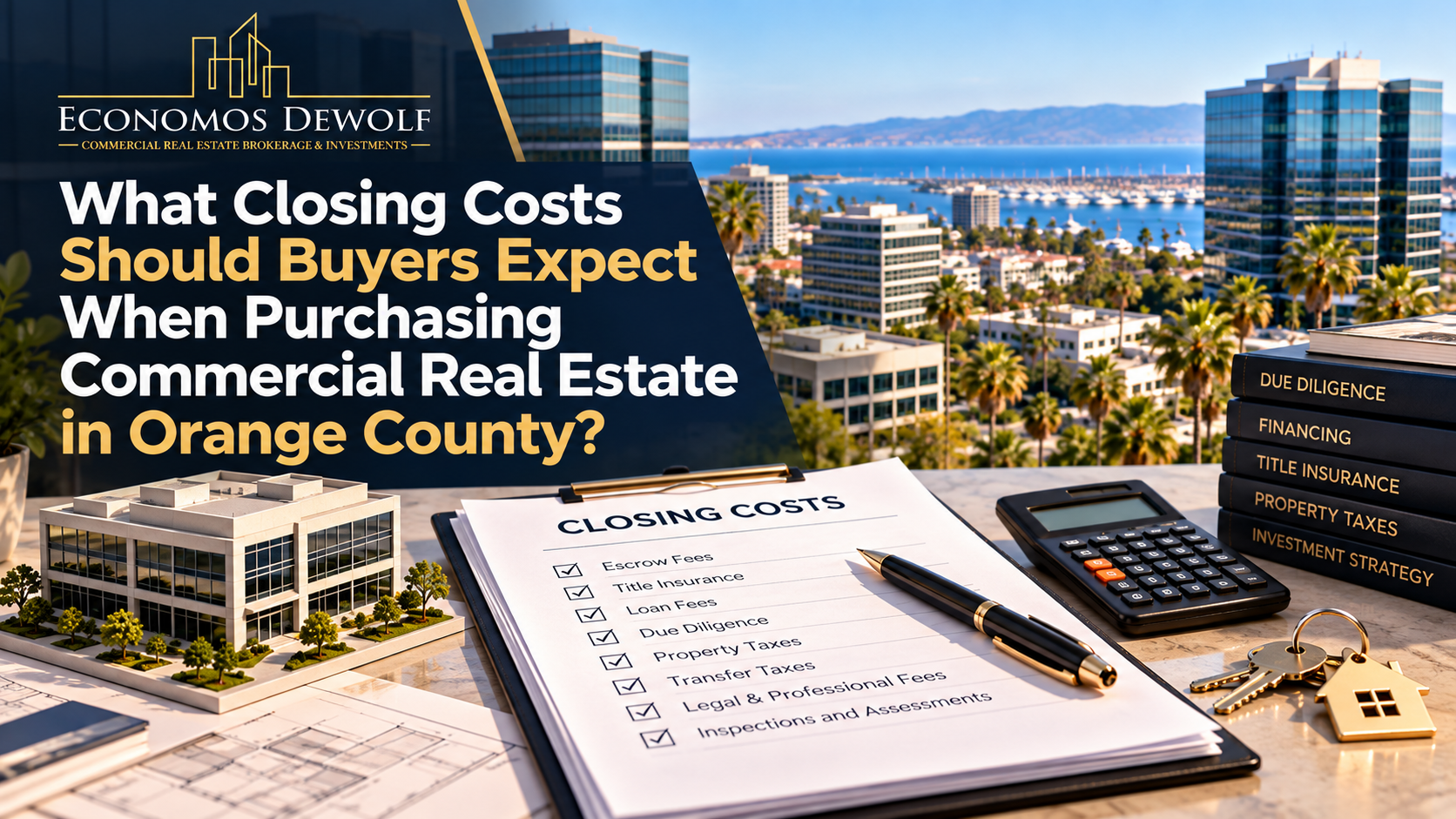
A closing cost checklist should identify every expected transaction expense and its estimated amount. Buyers should include lender fees, escrow charges, title insurance, transfer taxes, and professional services. Inspection expenses, environmental reports, surveys, and potential property improvements should also be documented. Each item should have a responsible party and an expected payment date. A structured checklist improves financial visibility and reduces the likelihood of overlooked expenses.
Why Is Local Commercial Real Estate Expertise Important?
Commercial property transactions involve market-specific considerations that can influence pricing, due diligence, and closing expenses. Buyers evaluating commercial real estate for sale in orange county should understand how property type, location, and transaction structure affect their financial commitments. A commercial brokerage professional can help buyers identify suitable properties and coordinate important stages of the acquisition process. Local knowledge can also support informed negotiations and realistic budgeting expectations. Buyers should complement brokerage guidance with independent legal, financial, and tax advice.
How Can Economos DeWolf Help Commercial Property Buyers?
Economos DeWolf is a commercial real estate brokerage based in Newport Beach, California, serving Orange County and the broader Southern California market. The firm works with business owners, investors, and property owners involved in commercial real estate transactions. Buyers searching for commercial real estate for sale orange county opportunities can explore available properties and evaluate acquisition considerations with experienced commercial real estate professionals. Understanding property characteristics, market conditions, and transaction requirements can help buyers make more informed decisions. A well-planned acquisition strategy supports financial clarity throughout the purchasing process.
Plan Your Orange County Commercial Property Purchase With Confidence
Commercial real estate closing costs can significantly influence the total investment required to acquire a property. Escrow fees, title insurance, financing charges, inspections, transfer taxes, and professional expenses should all be considered before closing. Businesses exploring commercial real estate orange county opportunities should evaluate these costs alongside property suitability and long-term ownership objectives. Buyers can also review the available market inventory and work with qualified professionals to prepare realistic acquisition budgets. Careful planning helps investors and owner-users approach commercial property purchases with greater financial confidence.
Ready to explore commercial real estate opportunities in Orange County? Economos DeWolf can help you evaluate available properties and navigate important acquisition considerations.
Explore Orange County Commercial Properties: View Available Properties
Browse Commercial Listings: Explore Current Listings
Location: Newport Beach, Orange County, California, United States.
Disclaimer: This article provides general educational information and does not constitute legal, tax, accounting, or financial advice. Closing expenses, transfer taxes, property tax reassessments, and transaction responsibilities vary according to property characteristics and contractual terms. Buyers should obtain transaction-specific estimates and consult qualified professionals before making investment decisions.