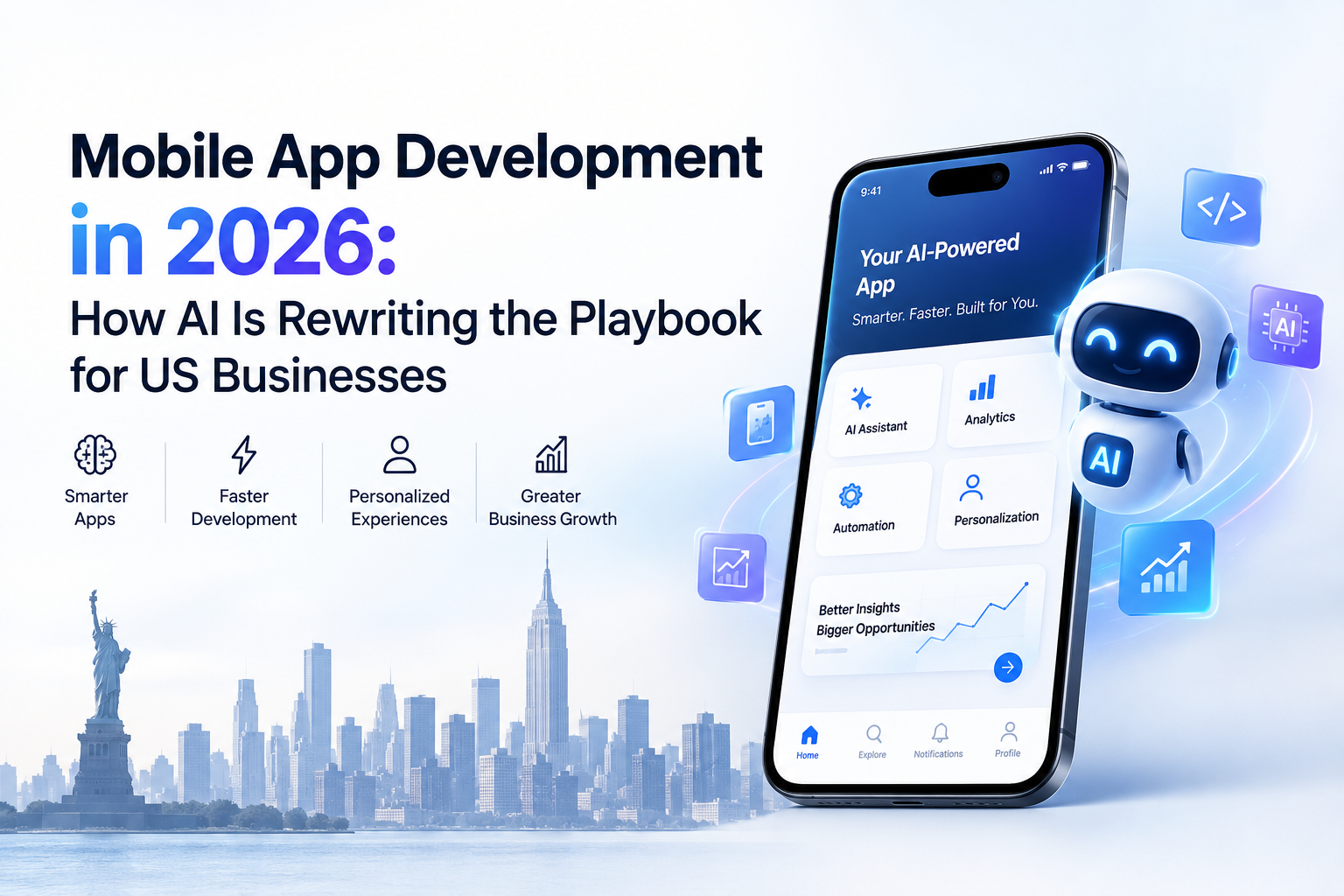
How Is AI Changing Mobile App Development in 2026?
AI is changing mobile app development in three ways: how apps are built, how they behave, and how they are maintained.
During development, AI coding assistants now draft boilerplate code, generate test cases, and flag bugs before release. Design teams use AI to turn rough wireframes into clickable prototypes in hours. After launch, AI monitors crashes and user behavior, then recommends fixes automatically.
The result is a shorter path from idea to App Store and Google Play. Experienced App developers still make the architecture, security, and user-experience decisions. AI simply removes repetitive work so they can focus on those higher-value choices.
What AI Features Do US Customers Expect in Apps Now?
American users have grown used to apps that feel personal and respond instantly. The most common AI-driven features businesses are adding include:
- Personalized recommendations: Retail, food delivery, and media apps tailor content to each user’s habits.
- Conversational assistants: In-app chat and voice help replace long menus and static FAQs.
- On-device AI: Running models directly on the phone improves speed and keeps sensitive data private.
- Predictive analytics: Fitness, finance, and logistics apps anticipate needs before users ask.
- Smart automation: Onboarding, support tickets, and scheduling run with less manual effort.
If your app does not offer at least a few of these, users will notice, especially when your competitor’s app does.
Why Does Compliance Matter More With AI-Powered Apps in the US?
AI makes apps smarter, but it also raises the stakes for data handling. US businesses must navigate a patchwork of rules, including California’s CCPA/CPRA, HIPAA for healthcare apps, and a growing list of state-level privacy and AI transparency laws in places like Colorado, Texas, and Virginia.
A reliable mobile app development company builds privacy into the architecture from day one: clear consent flows, encrypted data storage, and documented AI decision-making. Retrofitting compliance later is far more expensive than planning for it up front.
How Much Does AI-Driven Mobile App Development Cost in the US?
Costs vary widely by scope. A simple app with basic AI features may start in the tens of thousands of dollars, while complex platforms with custom models, integrations, and regulated data can climb well into six figures. Three factors drive the price most:
- Feature complexity: A chatbot costs far less than a custom recommendation engine.
- Platform choice: Native iOS and Android builds cost more than cross-platform frameworks like Flutter or React Native.
- Team location and experience: US-based teams typically charge more than offshore ones, but offer time-zone alignment and stronger familiarity with US regulations.
AI-assisted workflows are helping shrink timelines, which often reduces total spend, but quality still depends on the team behind the tools.
How Do You Choose the Right Mobile App Development Company?
When comparing partners, look beyond price. Strong candidates share these traits:
- A portfolio with live apps in the US App Store and Google Play
- Proven experience integrating AI and machine learning, not just mentioning it
- Clear security and compliance practices for your industry
- Transparent communication, defined milestones, and post-launch support
- Client reviews and case studies you can verify
Ask how their App developers use AI internally. A team that uses AI responsibly in its own process is more likely to build it well into yours.
Which US Industries Are Seeing the Biggest Gains?
Healthcare providers in cities like Boston and Houston are using AI-enabled apps for virtual triage and remote patient monitoring. Retailers across New York and Los Angeles rely on personalization to lift repeat purchases. Fintech startups in San Francisco and Austin use AI for fraud detection and smarter budgeting tools. Logistics and field-service companies in the Midwest use predictive routing to cut delays.
The pattern is consistent: businesses that treat AI as part of the product strategy, not a bolt-on feature, see stronger engagement and retention.
Frequently Asked Questions
What is mobile app development? Mobile app development is the process of designing, building, testing, and launching software for smartphones and tablets, typically for iOS and Android.
How long does it take to build an app in 2026? Most business apps take roughly three to nine months, depending on complexity. AI-assisted workflows can shorten parts of that timeline, especially testing and prototyping.
Should I hire freelance App developers or a mobile app development company? Freelancers can suit small, well-defined projects. A full-service company is usually better for apps that need design, security, compliance, AI integration, and long-term support.
Is AI safe to use in a mobile app? Yes, when built responsibly. Use encryption, obtain user consent, limit data collection, and follow applicable US privacy laws.
Key Takeaways
- AI is now central to modern mobile app development, from coding to personalization.
- US businesses must plan for privacy and compliance early.
- The right mobile app development company combines AI expertise with local regulatory knowledge.
- Skilled App developers remain essential for strategy, security, and user experience.
Ready to Build Smarter?
If you are planning an app for 2026, start with a clear business goal, choose a partner with real AI experience, and build compliance in from the beginning. The businesses that move now will set the standard their competitors have to follow.