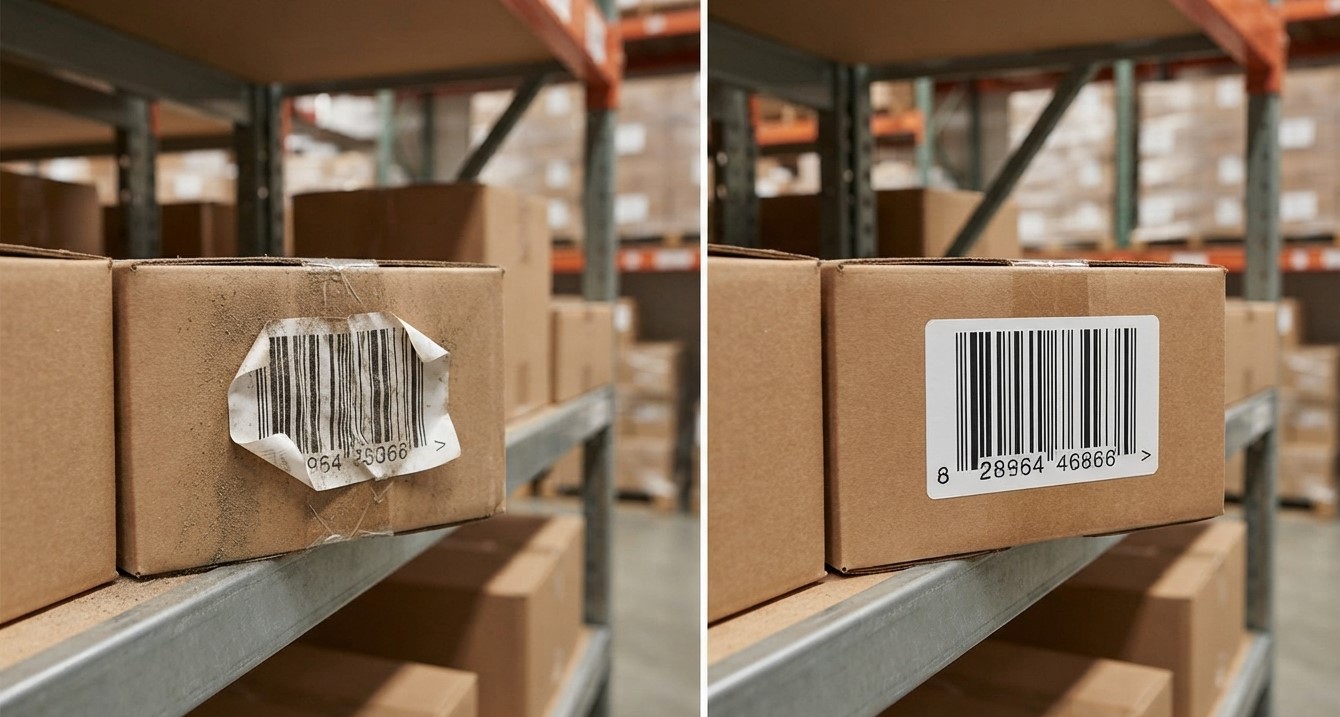
Barcode labels are an essential part of modern business operations. Retail stores, warehouses, manufacturers, logistics companies, and distribution centers use barcode labels for product identification, inventory tracking, shipping, asset management, and stock control. However, even a well-printed barcode can become ineffective if the label starts peeling away from the surface.
Peeling barcode labels can create more than a cosmetic problem. A loose or missing label can lead to scanning difficulties, incorrect product identification, inventory errors, rework, and unnecessary replacement costs. Fortunately, businesses can reduce these problems by choosing the right label material and adhesive and by applying labels correctly.
Pointus Solutions provides barcode and Printing Products that can support businesses with their labeling and identification requirements. Whether you need labels for products, packaging, inventory, or warehouse operations, understanding why labels peel off can help you choose a more reliable solution.
Table of Contents
- Why Do Barcode Labels Peel Off?
- Why Proper Barcode Label Adhesion Matters
- Choosing the Right Label Material
- Selecting the Correct Adhesive
- Surface Preparation Before Applying Labels
- How Temperature Affects Label Adhesion
- The Impact of Moisture and Humidity
- Why Dust and Contamination Cause Labels to Peel
- Applying Labels Correctly
- Choosing the Right Label for Different Applications
- Proper Storage of Barcode Labels
- How Printing Quality Can Affect Labels
- How to Prevent Barcode Labels from Peeling
- Common Barcode Label Mistakes
- When Should You Replace Your Barcode Labels?
- FAQs
- Conclusion and CTA
Why Do Barcode Labels Peel Off?
There is rarely just one reason why a barcode label comes loose. The problem can be caused by the adhesive, label material, application surface, environmental conditions, or handling.
Common causes include:
- Incorrect adhesive
- Dirty or dusty surfaces
- Uneven surfaces
- Excessive moisture
- Extreme temperatures
- Poor label storage
- Incorrect application
- Low-quality label material
- Frequent handling
- Exposure to chemicals or abrasion
Understanding the cause is the first step toward finding the right solution.
Why Proper Barcode Label Adhesion Matters
A barcode label must remain attached and readable for as long as it is needed.
When labels peel off, businesses may experience:
- Failed barcode scans
- Inventory identification problems
- Shipping delays
- Product tracking issues
- Increased manual data entry
- Reprinting expenses
- Reduced operational efficiency
For example, a warehouse may depend on barcode labels to identify cartons, pallets, storage locations, and products. If labels fall off during handling or transportation, employees may need to manually identify the items or replace the labels.
Reliable adhesion helps ensure that the barcode remains available throughout the required lifecycle of the product or asset.
Choosing the Right Label Material
One of the most important steps is selecting a label material suitable for the application.
Common barcode label materials include:
- Paper
- Polypropylene
- Polyester
- Other synthetic materials
Paper labels can be suitable for many indoor applications where environmental exposure is limited.
Synthetic labels may be more appropriate for applications involving moisture, abrasion, chemicals, temperature changes, or frequent handling.
Choosing the wrong material can cause labels to deteriorate before the barcode’s required lifespan has been reached.
Selecting the Correct Adhesive
The adhesive is just as important as the label material.
Different adhesives are designed for different surfaces and environments. Some are intended for permanent applications, while others are designed for removable labeling.
Before selecting barcode labels, consider:
- Surface type
- Required label lifespan
- Temperature range
- Moisture exposure
- Chemical exposure
- Surface texture
- Indoor or outdoor use
A label designed for cardboard packaging may not perform the same way on plastic, glass, metal, or textured surfaces.
Surface Preparation Before Applying Labels
One of the simplest ways to improve label adhesion is to prepare the surface properly.
Dust, grease, oil, moisture, and other contaminants can prevent the adhesive from making proper contact with the surface.
Before applying a barcode label:
- Make sure the surface is clean.
- Remove dust and debris.
- Ensure the surface is dry.
- Remove excessive oil or grease where appropriate.
- Make sure the surface is reasonably smooth.
- Apply the label firmly.
Even a high-quality adhesive may fail if the application surface is contaminated.
How Temperature Affects Label Adhesion
Temperature can have a significant effect on adhesive performance.
Very cold conditions can make some adhesives less flexible and reduce their ability to bond properly. This can be particularly important in cold storage, refrigerated warehouses, and other temperature-controlled environments.
High temperatures can also affect certain adhesives and label materials.
Businesses should consider the temperature conditions during:
- Label application
- Storage
- Transportation
- Product use
If labels are being applied in a cold environment, select materials and adhesives designed for those conditions.
The Impact of Moisture and Humidity
Moisture can cause both the label material and adhesive to perform differently.
Labels used around water, condensation, refrigeration, or high humidity may require specialized materials.
For example, paper labels may not be the best option for applications where frequent exposure to moisture is expected.
Synthetic materials and suitable adhesives can provide better performance for demanding applications.
Why Dust and Contamination Cause Labels to Peel
Warehouses and manufacturing facilities can contain dust, particles, oil, and other contaminants.
When a label is applied to a contaminated surface, the adhesive may bond to the dirt rather than the surface itself.
This creates a weak connection that can cause the edges to lift and eventually result in the entire label peeling away.
Keeping application areas clean can therefore improve label performance.
Applying Labels Correctly
Even the right label can fail if it is applied incorrectly.
When applying a barcode label:
- Position it correctly the first time.
- Avoid touching the adhesive surface unnecessarily.
- Press the label firmly against the surface.
- Make sure the edges are properly attached.
- Avoid applying labels over dirt or moisture.
- Give the adhesive appropriate time to bond when required.
Do not repeatedly remove and reposition a label unless the product is specifically designed for repositioning.
Choosing the Right Label for Different Applications
Different applications require different label specifications.
Product Labels
Product labels may need to remain attached throughout storage, retail handling, and customer use.
Shipping Labels
Shipping labels must withstand sorting, transportation, handling, and changing environmental conditions.
Warehouse Labels
Warehouse labels may need to resist frequent handling, dust, temperature changes, and abrasion.
Asset Labels
Asset labels often need long-term adhesion because they may remain on equipment or property for years.
Outdoor Labels
Outdoor applications may require resistance to sunlight, moisture, temperature changes, and physical wear.
Choosing labels based on the actual application is much more effective than using the same label type for every purpose.
Proper Storage of Barcode Labels
Barcode labels can also be affected by how they are stored before use.
Poor storage conditions may affect adhesive performance and label quality.
Store unused labels in an environment that is:
- Clean
- Dry
- Temperature controlled
- Protected from excessive humidity
- Protected from direct sunlight
- Free from contaminants
Keep labels in their original packaging when possible until they are ready for use.
How Printing Quality Can Affect Labels
Printing quality does not usually determine whether an adhesive will bond, but printing and handling practices can affect overall label performance.
Excessive heat, incorrect printer settings, or unsuitable media can damage the label surface or produce poor-quality prints.
A barcode label should combine:
- Suitable label material
- Appropriate adhesive
- Clear barcode printing
- Correct printer settings
- Proper application
This creates a more reliable identification solution.
How to Prevent Barcode Labels from Peeling
Businesses can take several practical steps to reduce peeling problems.
1. Match the Adhesive to the Surface
Select an adhesive designed for the specific surface.
2. Consider the Environment
Choose materials based on temperature, moisture, chemicals, and handling conditions.
3. Clean the Surface
Remove dust, oil, grease, and moisture before application.
4. Use the Correct Label Material
Choose paper or synthetic materials based on the application’s requirements.
5. Apply Labels Properly
Press labels firmly and ensure the entire adhesive area contacts the surface.
6. Store Labels Correctly
Protect unused labels from excessive heat, humidity, and contamination.
7. Test Labels Before Large-Scale Use
Before ordering a large quantity, test the label on the intended surface and under realistic conditions.
Testing can help identify adhesion problems before they affect hundreds or thousands of products.
Common Barcode Label Mistakes
Businesses often encounter peeling problems because they use a one-size-fits-all approach.
Common mistakes include:
- Using paper labels in wet environments
- Applying labels to dirty surfaces
- Ignoring temperature requirements
- Choosing labels based only on price
- Using the wrong adhesive
- Storing labels improperly
- Applying labels to uneven surfaces
- Failing to test labels before bulk purchasing
Avoiding these mistakes can improve label reliability and reduce waste.
When Should You Replace Your Barcode Labels?
If labels repeatedly peel, become damaged, or fail under normal operating conditions, it may be time to reconsider the label specification.
Instead of simply replacing the same labels, review:
- Material
- Adhesive
- Size
- Surface compatibility
- Environmental requirements
- Printing method
- Expected lifespan
A better-matched label can often solve the problem more effectively than repeatedly replacing failed labels.
How Pointus Solutions Can Help
Finding the right barcode label can be difficult because every business has different products, surfaces, environments, and durability requirements.
Pointus Solutions can help businesses identify suitable barcode and labeling solutions based on their operational needs. From barcode labels and printers to ribbons and other Printing Products, selecting compatible products can help improve label reliability and reduce unnecessary replacement.
Businesses can also explore Shop Barcode solutions for barcode labeling and identification requirements.
Frequently Asked Questions
1. Why do my barcode labels keep peeling off?
Common causes include incorrect adhesive, dirty surfaces, moisture, temperature changes, unsuitable label material, or improper application.
2. How can I make barcode labels stick better?
Clean and dry the application surface, choose an adhesive suitable for the surface and environment, and apply the label firmly.
3. Are synthetic barcode labels better than paper labels?
Not necessarily. Synthetic labels can be more suitable for demanding environments, while paper labels can be a practical choice for many standard indoor applications.
4. Can cold temperatures cause barcode labels to peel?
Yes. Cold conditions can affect the performance of some adhesives. Businesses operating in refrigerated or cold environments should choose labels designed for those conditions.
5. Why do barcode labels peel from plastic surfaces?
Plastic surfaces can vary significantly in texture and surface energy. The adhesive must be compatible with the particular plastic and application conditions.
6. How should unused barcode labels be stored?
Store them in a clean, dry environment away from excessive heat, humidity, direct sunlight, and contaminants.
7. Should I test barcode labels before buying them in bulk?
Yes. Testing labels on the actual surface and under expected operating conditions can help prevent large-scale adhesion problems.
Conclusion
Barcode labels are only effective when they remain securely attached and readable throughout their required lifespan. Peeling can occur because of unsuitable adhesives, incorrect label materials, poor surface preparation, moisture, temperature changes, contamination, or improper application.
Businesses can reduce these problems by selecting labels based on their surface, environment, durability requirements, and application method. Testing labels before large-scale use and storing them correctly can also help prevent unnecessary waste and replacement costs.
If your business needs reliable barcode labels, printers, ribbons, or other Printing Products, Pointus Solutions can help you identify solutions suited to your specific requirements. Explore Shop Barcode options and choose barcode labeling products designed for your operational environment.
Call to Action
Are your barcode labels constantly peeling, lifting, or becoming unreadable?
Contact Pointus Solutions to discuss your barcode labeling requirements and find the right solution for your business. From everyday product labels to durable labels for demanding environments, the right Printing Products can help improve identification, tracking, and operational efficiency.