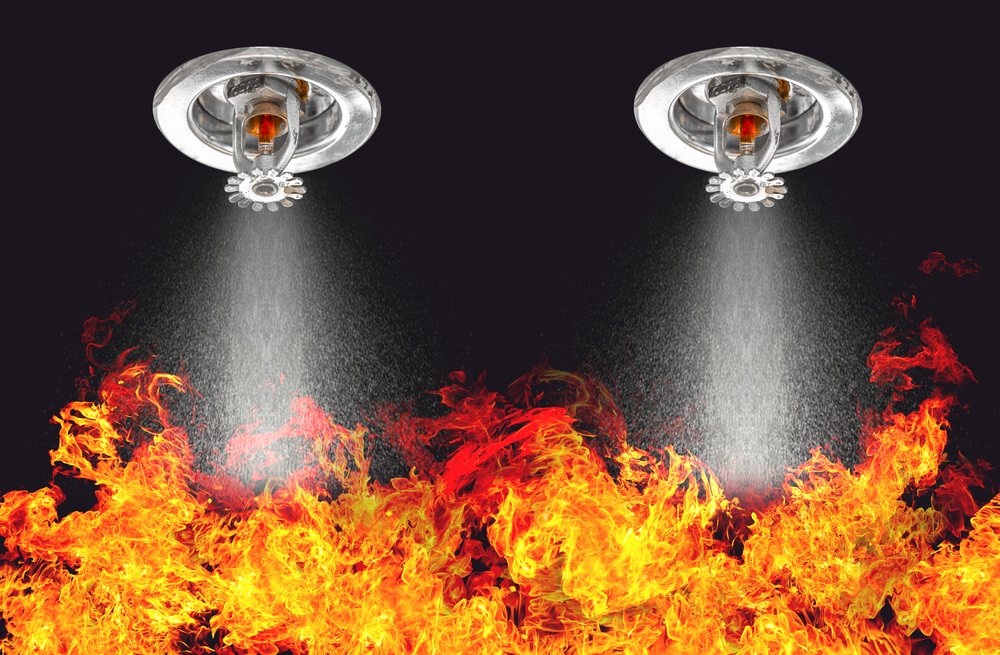
A fire starts in a storage room after an electrical fault. At first, the flames are small, but heat begins collecting near the ceiling. Before the fire has time to spread across the room, the temperature around one sprinkler head rises enough to activate it. Water is released over the affected area, helping slow the fire while people begin moving toward safety.
This simple sequence explains why a fire sprinkler is more than a pipe fitted with water outlets. A properly designed sprinkler system responds to heat from a developing fire and helps control its growth before conditions become more severe. NFPA describes automatic sprinkler systems as systems commonly activated by fire heat that discharge water over the fire area.
What Happens When a Sprinkler Detects Heat?
A sprinkler head does not normally spray water simply because smoke enters a room. Most conventional automatic sprinkler heads operate when their heat-sensitive element reaches its designed activation temperature.
As a fire develops, hot gases rise toward the ceiling. The increasing temperature affects the sprinkler closest to the developing fire. Once its operating element activates, water is discharged through that sprinkler head.
The basic sequence can be understood through these stages:
- Heat from the fire rises toward the ceiling.
- The heat-sensitive element reaches its operating temperature.
- The sprinkler head opens.
- Pressurized water enters the sprinkler outlet.
- Water is distributed over the affected area.
This heat-based response is different from smoke detection. A sprinkler and a fire alarm system can work together, but they do not perform the same function.
How Does Water Help Slow a Fire?
Water controls fire mainly by removing heat from the burning material and surrounding environment. As water reaches heated surfaces, it absorbs energy and can reduce temperatures around the fire.
The objective is usually fire control rather than assuming that every sprinkler discharge will immediately extinguish the entire fire. A controlled fire may burn less intensely, spread more slowly, or remain confined long enough for occupants and emergency responders to act.
The actual performance depends on several conditions, including:
- The type and quantity of combustible material
- The available water supply
- Sprinkler design and discharge characteristics
- Ceiling height and room configuration
- Ventilation and airflow
- The building’s hazard classification
These factors explain why sprinkler systems need to be designed for the space they protect rather than installed according to a simple one-size-fits-all formula.
Why Does Only One Sprinkler Sometimes Activate?
A common misunderstanding is that every sprinkler head in a building opens as soon as one detects a fire. In many standard automatic sprinkler systems, individual heads operate when their own heat-sensitive elements reach the required temperature.
If a fire is concentrated in one location, the sprinkler nearest that heat source may activate first. Other heads may remain closed because the temperature around them has not reached their operating point.
As the fire develops, additional sprinklers may operate if heat reaches them. NFPA material describes wet-pipe systems as using heat-actuated sprinklers that discharge individually to control or extinguish a fire.
Can Sprinklers Control Different Types of Building Fires?
Sprinkler systems are not designed around a single universal fire scenario. Buildings contain different fuels, storage arrangements, room dimensions, ceiling configurations, and operational hazards.
A warehouse storing ordinary combustible materials presents a different challenge from an office, manufacturing area, parking facility, or high-risk industrial space. The sprinkler design must account for the hazard being protected.
For example, system planning can consider:
- What materials are present in the protected area
- How those materials are stored
- How high the storage reaches
- How the building is used
- What type of sprinkler arrangement is appropriate
- Whether the available water supply meets the design demand
NFPA 13 is the principal NFPA standard covering the design and installation of automatic sprinkler systems, and its current edition listed by NFPA is the 2025 edition.
How Do Sprinklers Work Alongside Fire Extinguishers?
Sprinklers and portable extinguishers serve different purposes. A sprinkler system is fixed in place and can respond automatically when its operating conditions are reached. An extinguisher normally requires a person to identify the fire, retrieve the equipment, and operate it correctly.
A portable extinguisher can be selected for a particular hazard. For example, a wet chemical fire extinguisher is associated with certain cooking-related fire risks, where the extinguishing agent is designed for the conditions found around commercial cooking equipment.
The two systems should not be viewed as competing forms of protection. Depending on the building, a fire safety arrangement may include several layers, such as:
- Automatic sprinklers
- Portable fire extinguishers
- Fire detection and alarm systems
- Emergency lighting
- Clearly marked escape routes
- Fire doors and compartmentation
- Emergency response procedures
The exact combination depends on the building’s hazards, occupancy, design, and applicable requirements.
Why Is the Water Supply So Important?
A sprinkler system can only perform as designed when its water supply can support the required demand. Pipes, valves, pumps, tanks, and other components form part of the system that delivers water to operating sprinkler heads.
A problem with one supporting component can affect the system’s ability to respond. Examples can include a closed control valve, damaged pipework, inadequate water supply, or an issue with a pump.
This is why a sprinkler installation should be considered as a complete system rather than a collection of ceiling-mounted heads.
Important supporting components can include:
- Water storage or an approved water source
- Control valves
- Distribution pipework
- Fire pumps where required
- Waterflow alarm arrangements
- Sprinkler heads
- Testing and monitoring provisions
The exact arrangement varies according to the system design and building requirements.
What Happens When a Sprinkler System Is Properly Maintained?
Fire protection equipment can lose reliability when maintenance is ignored. Sprinkler heads may become obstructed, valves can be changed accidentally, pipes can be damaged, and building modifications can alter the conditions for which the original system was designed.
Regular inspection and maintenance can help identify issues before an emergency occurs. NFPA 25 addresses inspection, testing, and maintenance of water-based fire protection systems.
Maintenance should take account of conditions such as:
- Damaged or corroded sprinkler components
- Obstructed sprinkler discharge areas
- Valve position and accessibility
- Changes to building layout
- Changes in storage arrangements
- Problems affecting water supply
- Previous fire or heat exposure
Any inspection or repair should follow the applicable requirements and the manufacturer’s instructions.
Can a Sprinkler System Protect People as Well as Property?
Fire sprinklers can contribute to life safety by helping control fire growth, but they should not be treated as a substitute for evacuation planning.
A building still needs suitable alarm arrangements, usable escape routes, emergency procedures, and occupant awareness. People should leave when conditions require evacuation rather than remaining inside because a sprinkler system is installed.
A wider fire safety plan can connect several functions:
- Detection identifies signs of a developing fire.
- Alarm systems warn occupants.
- Sprinklers respond to heat and help control fire growth.
- Escape routes provide a way to leave the building.
- Emergency response supports evacuation and firefighting operations.
Each layer has a different purpose, so one system should not be expected to perform every fire safety function.
Frequently Asked Questions
Does a fire sprinkler detect smoke?
A typical automatic sprinkler head responds to heat, not simply to the presence of smoke. Smoke detection is generally handled by a separate detection and alarm system.
Do all sprinkler heads activate at once?
No. Individual sprinkler heads normally activate when their own heat-sensitive operating elements reach the required temperature. Fire development determines which heads may eventually operate.
Can a sprinkler extinguish a fire completely?
It can, depending on the fire and system design, but sprinkler systems are generally designed around specific protection objectives that may include controlling fire growth. Performance depends on factors such as the hazard, water supply, sprinkler design, and fire conditions.
Can a sprinkler system replace fire extinguishers?
Not necessarily. Sprinklers and portable extinguishers have different functions. A building may require several layers of fire protection based on its hazards and applicable requirements.
Can furniture or storage affect sprinkler performance?
Yes. Objects placed too close to sprinkler heads can interfere with the intended water distribution. Changes to storage layouts or room configurations should be reviewed against the system’s design requirements.
Why is sprinkler maintenance necessary?
Maintenance helps identify conditions that could prevent the system from operating as intended. Valves, water supplies, pipes, sprinkler heads, alarms, and other components can all require inspection or testing according to applicable requirements.
Conclusion
A sprinkler system helps control building fires by responding to heat and delivering water to the area where fire conditions develop. Its performance depends on more than the sprinkler head itself. Water supply, pipework, valves, system design, maintenance, and the characteristics of the protected building all matter.
When these elements are properly considered, automatic sprinkler protection can provide an important layer of response during a developing fire. It should still operate alongside detection, alarms, evacuation procedures, portable extinguishers, and other measures suited to the building’s specific risks.