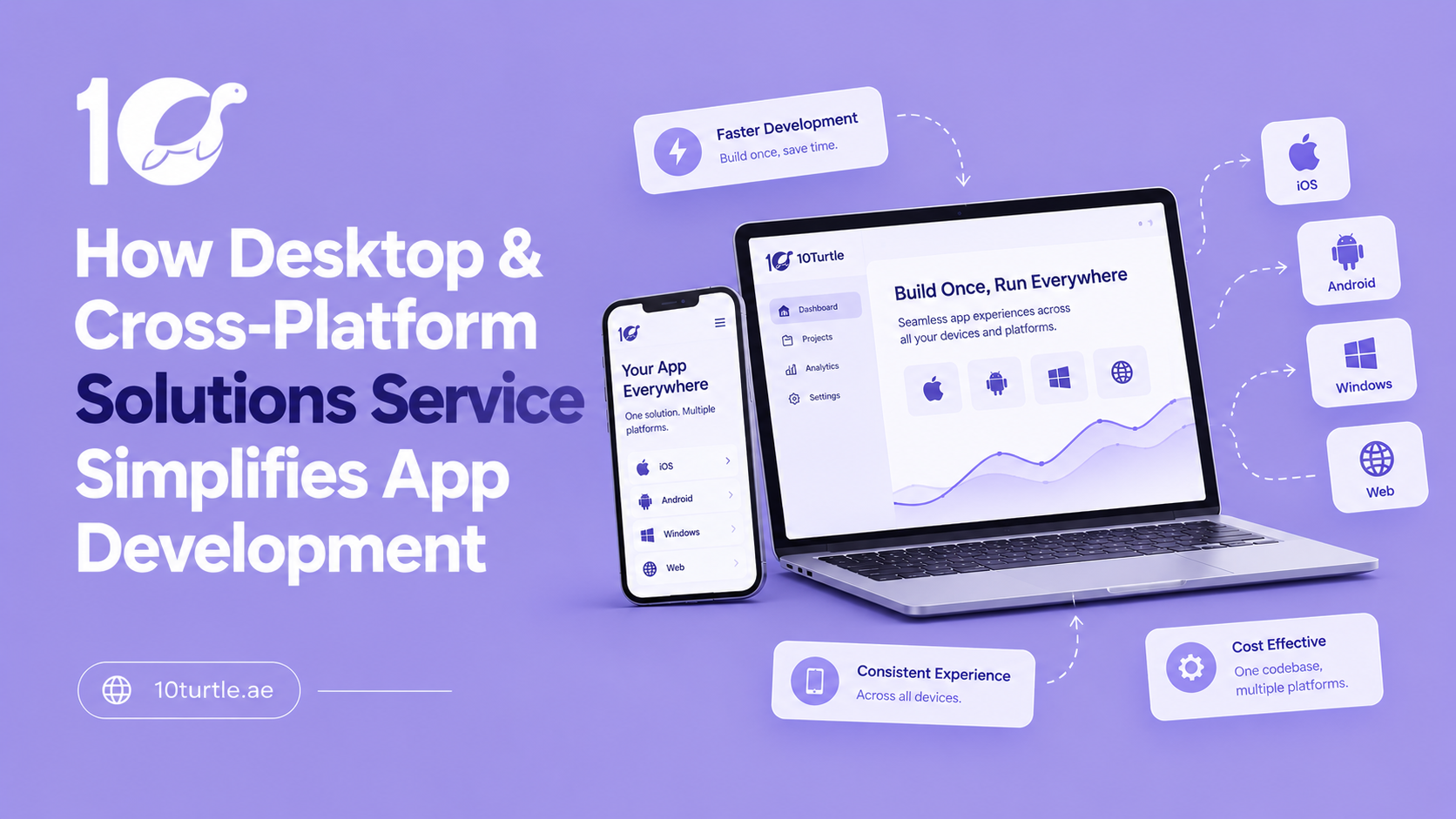
Building separate apps for Windows, macOS, iOS and Android is slow and expensive, and keeping them all in sync is harder still. Many businesses in the UAE now work with a [cross-platform app development company in Dubai] to build one product that runs everywhere. A well-planned desktop and cross-platform solutions service removes duplicated effort, keeps the user experience consistent, and gets your product to market sooner.
This guide explains how that approach works, where it fits, and how to decide whether it suits your project.
What Are Desktop & Cross-Platform Solutions Service?
Desktop development covers software installed on Windows, macOS or Linux machines, such as internal dashboards, point-of-sale systems, design tools and reporting software. Cross-platform development uses shared code and frameworks to deliver an app on several operating systems at once.
In practice, the two often go together. A company might need a desktop tool for office staff and a mobile companion for field teams, both running the same business logic.
Common Frameworks in Use
- Flutter: one codebase for mobile, web and desktop, with a consistent interface.
- React Native: well suited to teams with existing JavaScript expertise.
- Electron: packages web technologies into desktop apps.
- .NET MAUI: a natural fit for organisations already on the Microsoft stack.
The right choice depends on your performance needs, team skills and long-term roadmap, not on what is fashionable.
How This Service Simplifies App Development
One Codebase Instead of Many
The biggest saving comes from writing core logic once. Instead of maintaining separate Android, iOS and desktop codebases, developers share most of the code and customise only the platform-specific parts. Fewer codebases mean fewer places for bugs to hide.
Faster Time to Market
Shared code means features are built once and released everywhere. For startups and growing companies in Dubai’s competitive market, getting a working product in front of users early gives you real feedback sooner and lets you refine before investing further.
Consistent User Experience
Users move between devices constantly. A shared design system keeps navigation, branding and behaviour recognisable on every screen, which reduces confusion and support requests.
Simpler Updates and Maintenance
When a bug is fixed or a feature is added, the change usually applies across platforms together. This keeps versions aligned and makes ongoing maintenance more predictable and easier to budget.
Lower Overall Cost of Ownership
Cross-platform development typically needs a smaller team than building several native apps in parallel. The savings extend beyond the build phase into testing, updates and long-term support.
Cross-Platform vs Native Development: Which Fits Your Project?
Cross-platform is not always the right answer. Native development can still be the better choice for apps that depend heavily on device-specific features or demanding graphics performance.
| Factor | Cross-Platform | Native |
|---|---|---|
| Development speed | Faster, shared code | Slower, separate builds |
| Budget | Generally lower | Generally higher |
| Performance | Strong for most business apps | Best for heavy graphics or hardware use |
| Maintenance | Single update cycle | Multiple update cycles |
| Best for | Business apps, MVPs, internal tools | Games, hardware-intensive apps |
A good development partner will tell you honestly which approach suits your goals, even when that means recommending native.
Where UAE Businesses Use These Solutions
- Retail and e-commerce: inventory tools, POS software and customer apps that share one backend.
- Logistics and operations: fleet dashboards and field apps that sync with office systems.
- Real estate: property management tools used by agents on laptops and phones.
- Healthcare and services: appointment and records platforms with a consistent interface.
- Finance and professional services: secure internal tools that must work across mixed device fleets.
Multilingual support, including Arabic with right-to-left layouts, is a practical requirement for many UAE projects and is easier to plan from the start than to retrofit.
What to Look for in a Development Partner
- Relevant portfolio: look for shipped apps similar to yours, not just design mockups.
- Clear technical reasoning: they should explain why a framework fits your project.
- Security practices: data protection and secure authentication should be part of the build.
- Testing across devices: apps must be tested on real operating systems and screen sizes.
- Post-launch support: updates, monitoring and bug fixes matter after release.
- Transparent pricing: scope, timelines and assumptions should be documented up front.
Planning the Development Process
Most successful projects follow a similar path:
- Discovery: define goals, users, platforms and integrations.
- Design: build wireframes and a shared design system.
- Development: build core features with regular demos.
- Testing: check functionality, performance and security on every target platform.
- Launch and support: release, gather feedback and iterate.
Starting with a focused first version, rather than every feature at once, keeps cost and risk under control.
Frequently Asked Questions
Is cross-platform development suitable for large business applications?
Yes, in many cases. Modern frameworks support complex business apps, though performance-critical or hardware-heavy products may still need native components.
Does cross-platform mean lower quality?
Not when it is built well. Quality depends on architecture, testing and developer experience rather than on the framework alone.
How long does a typical project take?
It depends on scope, integrations and the number of platforms. A focused first version can often be delivered in a few months, but a proper discovery phase gives a reliable estimate.
Can an existing desktop application be extended to mobile?
Often, yes. Shared business logic and APIs can be reused, and a cross-platform approach can bring the product to new devices without a full rebuild.
Final Thoughts
Desktop & Cross-Platform Solutions Service simplifies the work of building and maintaining software by reducing duplicated effort, speeding up releases and keeping the user experience consistent. It suits most business applications, though the right choice always depends on your goals, users and technical requirements. For Dubai businesses planning a new app or modernising existing software, a clear scope and an honest technical recommendation are the best starting points. [Explore the service] to see how 10Turtle can support your project.